NASA Captures Rare Close-Up of Jupiter's Moon Thebe
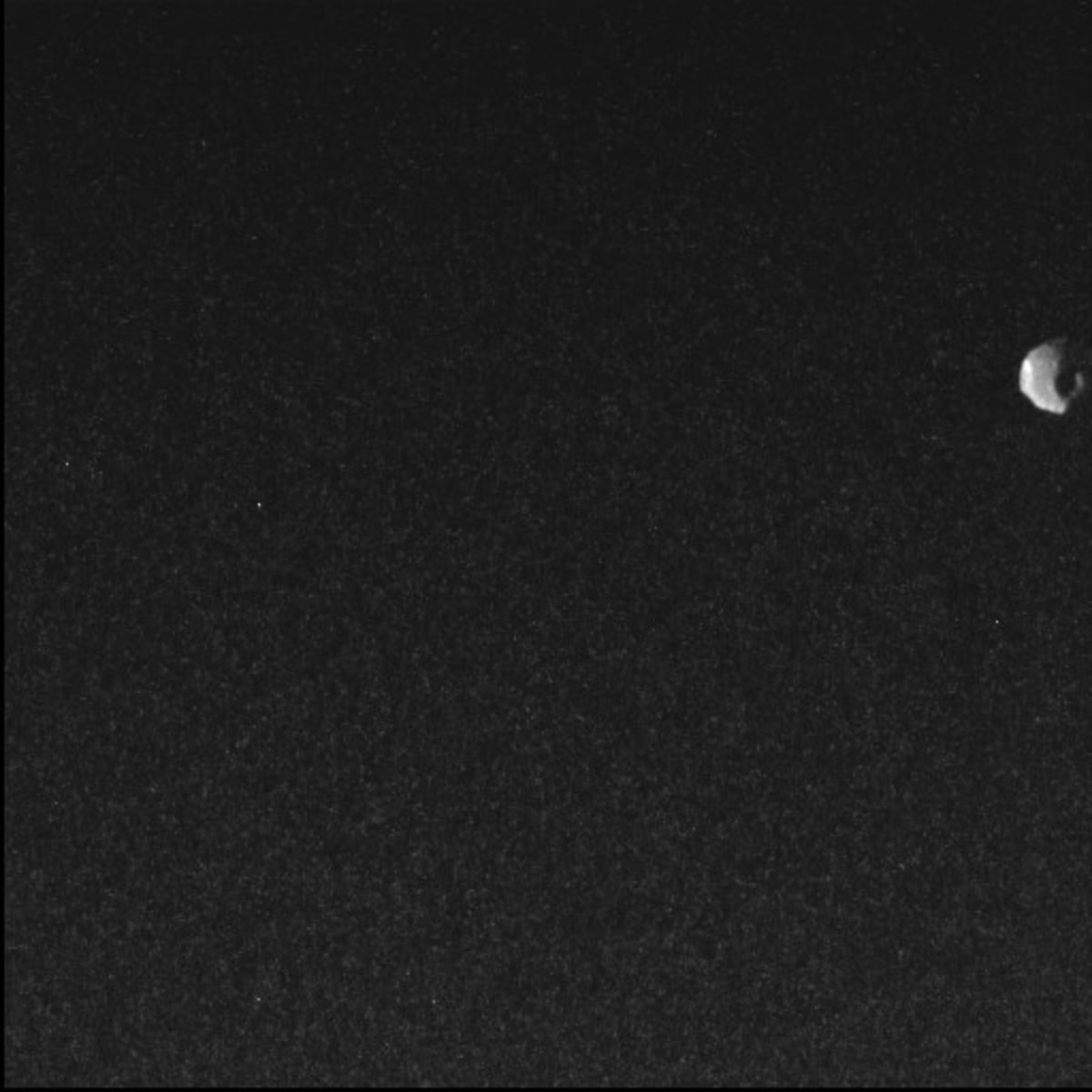
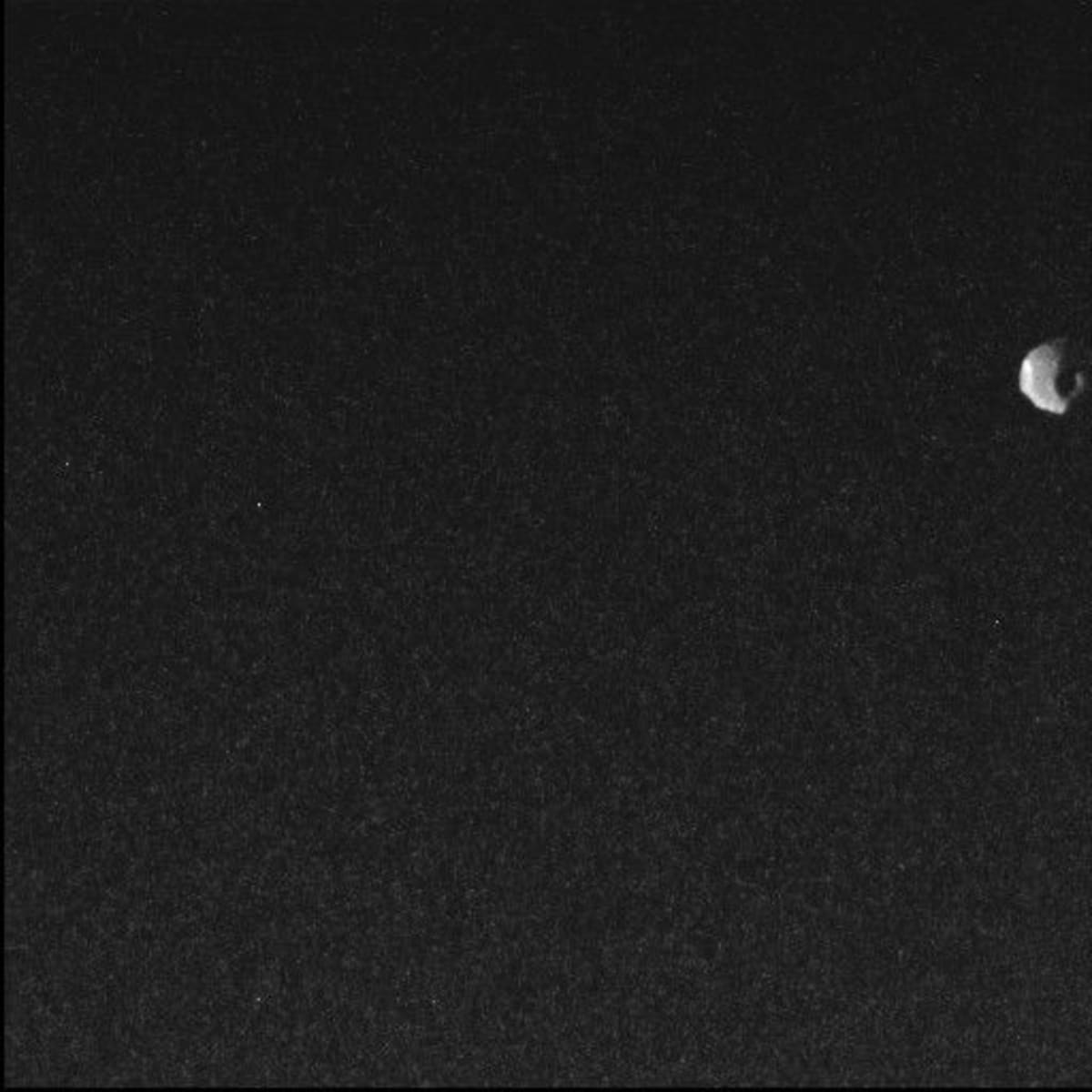
NASA's Juno spacecraft just snapped the closest photos ever taken of Thebe, one of Jupiter's mysterious inner moons, from just 3,100 miles away. The images could help scientists finally understand how Jupiter's delicate gossamer rings form.
A spacecraft half a billion miles from Earth just gave us our best view yet of a tiny moon that helps create one of the solar system's most beautiful mysteries.
On May 1, 2026, NASA's Juno spacecraft flew within 3,100 miles of Thebe, Jupiter's fourth largest moon. That might sound far, but it's incredibly close in space terms, and the resulting images are the clearest we've ever captured of this small, irregularly shaped world.
Thebe sits at the outer edge of Jupiter's faint ring system, quietly playing a cosmic role scientists are still piecing together. As the moon orbits the giant planet, it sheds dust particles that feed Jupiter's gossamer rings, those thin, delicate bands that are almost invisible compared to Saturn's famous hoops.
The photos came from an unexpected hero: Juno's Stellar Reference Unit, a camera designed simply to photograph stars for navigation. But its ability to see clearly in low light has turned it into a powerful science tool, previously discovering shallow lightning in Jupiter's atmosphere and capturing stunning images of the planet's ring system.
At a resolution of 1.9 miles per pixel, these new images reveal surface details of Thebe never seen before. Scientists can now study the moon's geology and better understand how it interacts with Jupiter's magnetic field and radiation belts.
Why This Inspires
Juno's success reminds us that exploration often brings unexpected gifts. A simple navigation camera, doing its everyday job, becomes a window into worlds we've never clearly seen.
The mission keeps proving that our curiosity pays off in beautiful ways. Since arriving at Jupiter in 2016, Juno has transformed our understanding of the solar system's largest planet, revealing secrets about its atmosphere, interior, and the family of moons that dance around it.
This close encounter with Thebe shows we're still in the golden age of space exploration, where every flyby can rewrite textbooks and every image can reveal something never witnessed before.
Scientists at NASA's Jet Propulsion Laboratory and the Southwest Research Institute are now analyzing the data, searching for clues about Thebe's composition and history. What they learn could help explain not just this small moon, but how ring systems form around giant planets throughout the universe.
The universe keeps opening up to us, one close pass at a time.
More Images

Based on reporting by NASA
This story was written by BrightWire based on verified news reports.
Spread the positivity!
Share this good news with someone who needs it