NASA Finds 33 Amino Acids on Asteroid Sample from Bennu
Scientists discovered life's building blocks formed in frozen, distant regions of space, not just in warm water near the sun. This means the ingredients for life could exist throughout the universe.
The building blocks of life might be scattered across the cosmos in places we never expected to find them.
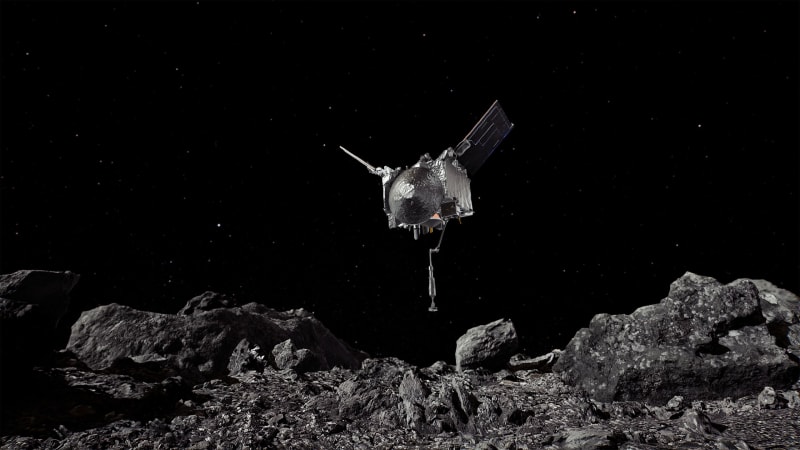
NASA scientists analyzing samples from asteroid Bennu discovered at least 33 different amino acids in the space rock material. These included 14 of the 20 amino acids that life on Earth uses, plus 19 others that Earth's life doesn't use at all.
The discovery gets even more exciting when you look at where these amino acids came from. For years, scientists believed amino acids formed in warm, watery conditions close to the infant sun about 4.5 billion years ago. But the new analysis tells a completely different story.
"This confirms that life's building blocks can be formed in a diversity of environments throughout the universe," said Allison Baczynski, an organic chemist at Penn State University who led the research. Her team examined the isotopes within the amino acids, focusing on the simplest one called glycine.
The isotope patterns revealed something unexpected. These amino acids formed in frozen conditions far from the young sun, not in warm water like scientists previously thought. They still needed solar ultraviolet radiation to trigger their formation, but the cold, icy environment was completely different from what researchers had assumed.
The early solar system had a boundary called the "snow line" that divided frozen water from liquid water. The evidence suggests Bennu's parent body formed beyond this snow line in the frozen outer reaches of the solar system. At some point, that parent body was smashed apart by a collision, and Bennu is one of the large fragments that survived.
The research team compared Bennu's amino acids to those found in the Murchison meteorite that fell in Australia in 1969. The isotopic compositions were completely different, confirming that amino acids can form through multiple pathways in different regions of space.
The Bright Side
This discovery opens up the possibilities for where life could exist in the universe. If amino acids can form in cold, frozen environments far from stars and not just in warm, watery zones, then the ingredients for life might be far more common than we ever imagined.
Scientists also uncovered an intriguing mystery. Amino acids come in left-handed and right-handed versions, like mirror images. Life on Earth only uses left-handed amino acids, and nobody knows why. The Bennu sample showed that these supposedly identical mirror versions actually have different nitrogen isotopes, which could eventually help solve this ancient puzzle.
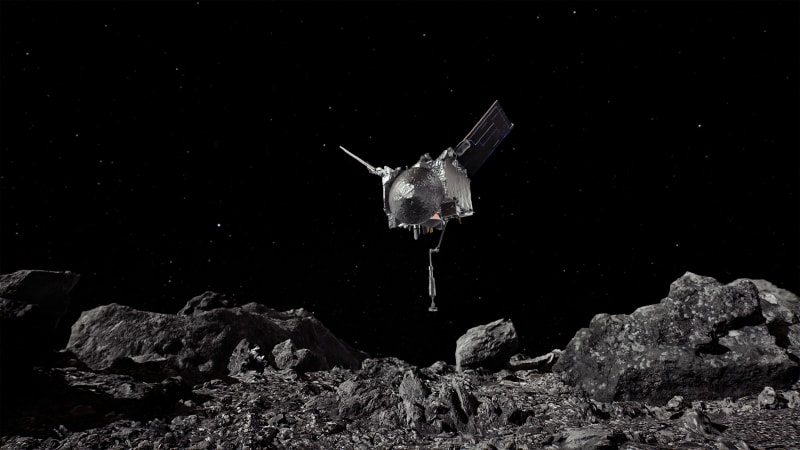
The sample arrived on Earth in September 2023 after NASA's OSIRIS-REx spacecraft visited Bennu and collected material from its surface. Every new analysis reveals more surprises about how life's ingredients spread through space, bringing us closer to understanding our cosmic origins.
More Images

Based on reporting by Space.com
This story was written by BrightWire based on verified news reports.
Spread the positivity!
Share this good news with someone who needs it