NASA Launches Nancy Roman Telescope to Map the Universe
NASA's newest space telescope launched on August 30th to unlock mysteries of dark matter, dark energy, and distant worlds. The mission promises unprecedented views that could reshape our understanding of the cosmos.
NASA just sent humanity's next great eye into space, and what it will show us could change everything we know about the universe.
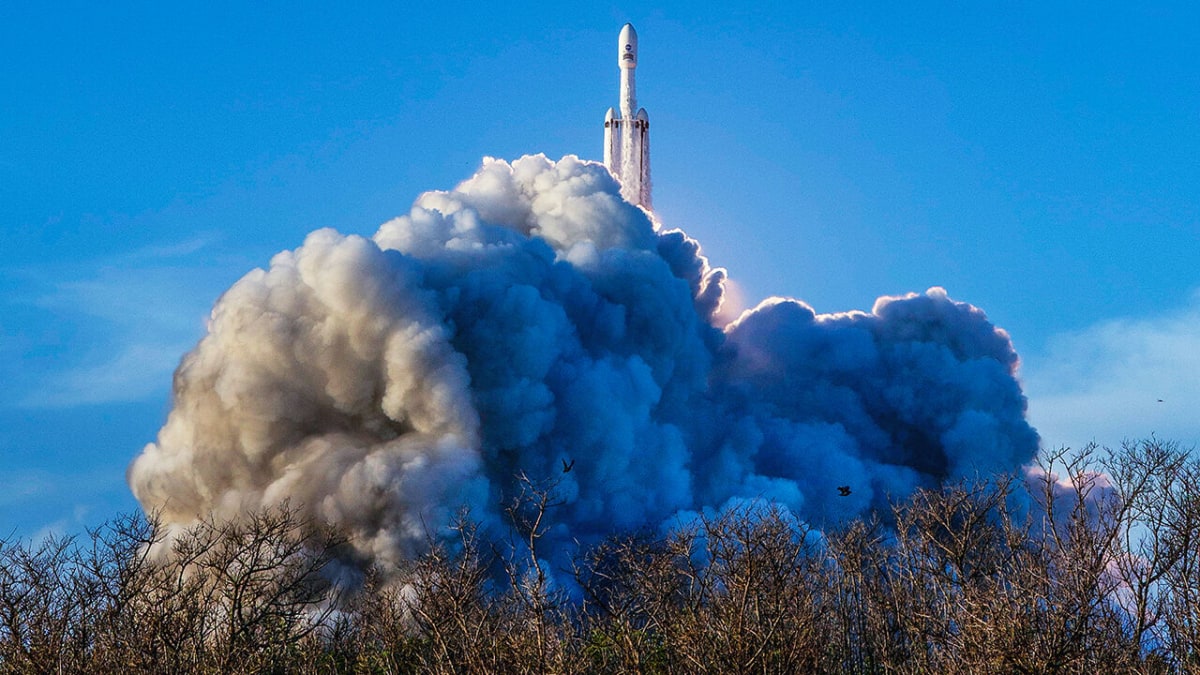
The Nancy Grace Roman Space Telescope lifted off aboard a SpaceX Falcon Heavy rocket from Florida's Kennedy Space Centre on August 30th at 11:26 Universal Time. Named after NASA's first chief astronomer, the telescope is now traveling to its permanent home 1.6 million kilometers from Earth.
From this distant vantage point, Roman will tackle some of the biggest questions in science. The telescope will study dark matter and dark energy, two mysterious forces that make up most of the universe but remain largely invisible to us. It will also search for planets orbiting distant stars, potentially expanding our knowledge of worlds beyond our solar system.
Nancy Grace Roman herself blazed trails at NASA as the first woman to hold an executive position at the agency. She championed the development of space telescopes during her career, advocating for instruments that would let humanity see deeper into space than ever before. Now, decades after her pioneering work, a telescope bearing her name carries that vision forward.
The mission represents years of collaboration between thousands of scientists, engineers, and technicians. Unlike previous telescopes with narrow fields of view, Roman can photograph large portions of the sky at once, making it incredibly efficient at mapping the cosmos.
Why This Inspires
This launch reminds us that human curiosity knows no bounds. While we face challenges here on Earth, we're still pushing outward, asking bigger questions and building tools to answer them. The Roman telescope shows what we can achieve when we invest in understanding our place in the universe.
The data Roman gathers will be shared freely with researchers worldwide, democratizing access to cutting-edge cosmic observations. Students and scientists across the globe will analyze these images, potentially making discoveries that reshape physics and astronomy.
Every answer the telescope provides will likely spark a dozen new questions, keeping future generations of scientists busy for decades.
The Nancy Grace Roman Space Telescope proves we're still reaching for the stars, and the view from up there keeps getting better.
More Images


Based on reporting by Google News - Science
This story was written by BrightWire based on verified news reports.
Spread the positivity!
Share this good news with someone who needs it