NASA Mars Helicopter Rotor Breaks the Speed of Sound
NASA engineers just spun next-generation Mars helicopter blades so fast their tips broke the speed of sound, opening new possibilities for exploring the Red Planet. The breakthrough could let future Mars aircraft carry heavier science equipment across terrain rovers can't reach.
NASA just proved that future Mars helicopters can fly faster and carry more than ever before, setting the stage for a bold new era of Red Planet exploration.
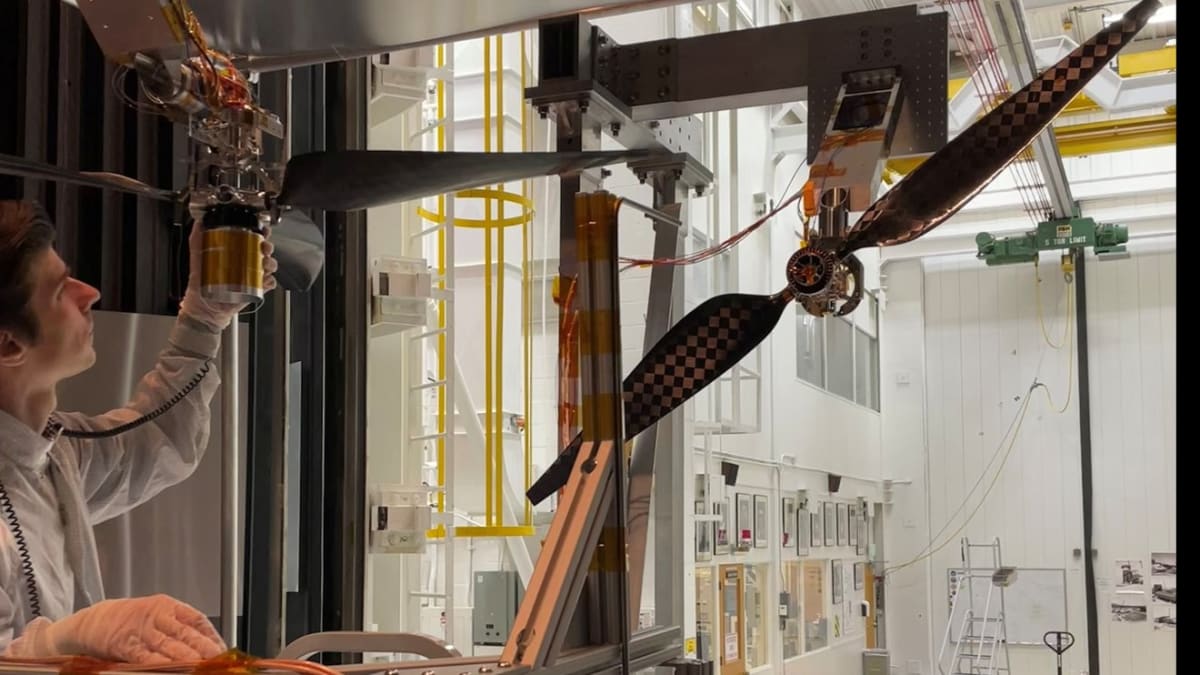
Engineers at NASA's Jet Propulsion Laboratory in Southern California wrapped up 137 tests in March, spinning experimental helicopter blades until their tips reached Mach 1.08. The rotors held strong without any damage, even at supersonic speeds.
The tests happened inside a special chamber that mimics Mars' thin atmosphere by replacing regular air with low-density carbon dioxide. This gives scientists real data on how aircraft will perform 140 million miles from Earth.
The payoff is huge. Engineers say the new rotor designs could boost lift capability by 30%, meaning future Mars helicopters can haul heavier science instruments, bigger batteries, and travel farther than current models.
NASA's tiny Ingenuity helicopter proved the concept worked when it completed the first powered flight on another planet in April 2021. Over nearly three years, the scrappy rotorcraft flew 72 missions before completing its mission, far exceeding what anyone expected from a prototype.
But Ingenuity was just the opening act. These next-generation helicopters are being designed as full science vehicles, not just proof-of-concept experiments.
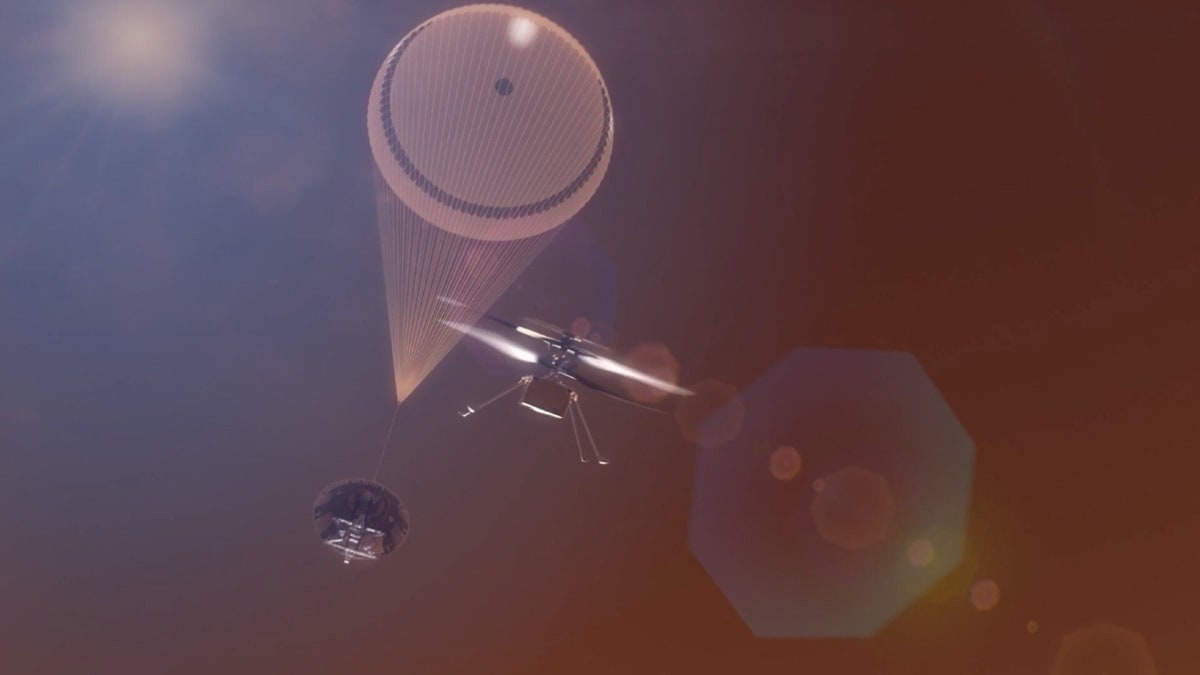
The team tested two rotor types. A three-bladed version reached supersonic speeds with no issues. They also tested a longer, two-bladed design for SkyFall, a mission concept that could send three advanced helicopters to Mars as early as December 2028.
The longer blades on the two-bladed version reached nearly supersonic speeds with fewer rotations per minute, which means less wear and tear on the motors. That data is now being folded into SkyFall's official design plans.
Why This Inspires
These helicopters fill a critical gap in Mars exploration. Rovers move slowly and can't climb steep terrain. Orbiting spacecraft see the big picture but miss fine details. Flying vehicles can zip to hard-to-reach places and study them up close, combining the best of both approaches.
NASA's Al Chen, who manages the Mars Exploration Program, says the space agency is asking these next-generation aircraft to do even more at the Red Planet. With successful supersonic testing complete, that ambitious goal just became achievable reality.
The skies above Mars are about to get much busier.
More Images

Based on reporting by Space.com
This story was written by BrightWire based on verified news reports.
Spread the positivity!
Share this good news with someone who needs it

%2Ffile%2Fattachments%2Forphans%2FIMG_46372_797479.jpg)