NASA Plans to Map Continents on Distant Earth-Like Planets
Scientists are developing technology to create actual images of continents and features on planets orbiting distant stars. The breakthrough could let us see alien worlds in visible light for the first time.
Imagine looking at a planet 40 trillion miles away and seeing its continents, oceans, and weather patterns as clearly as we see Earth from space. NASA just funded a project that could make this science fiction dream a reality within our lifetime.
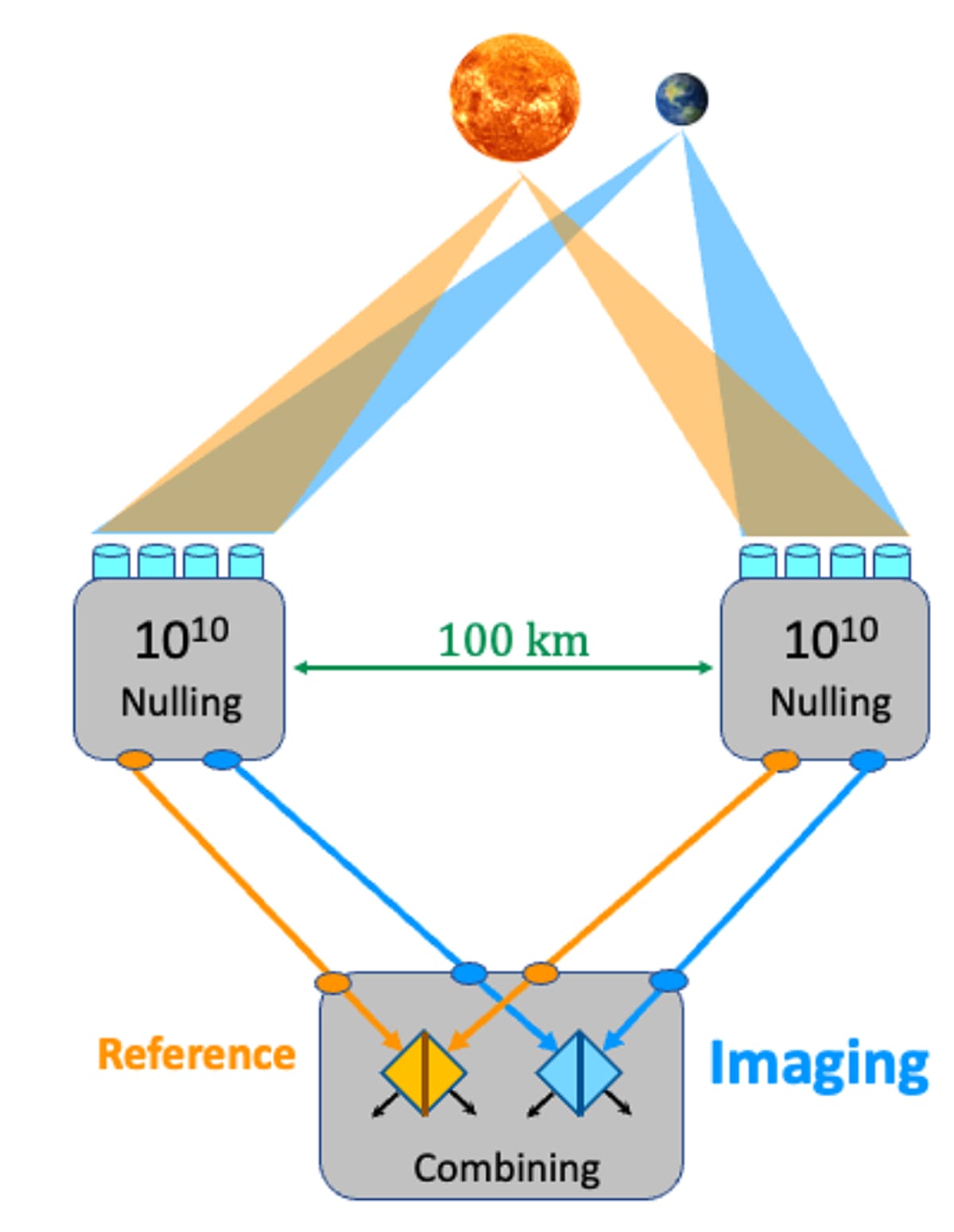
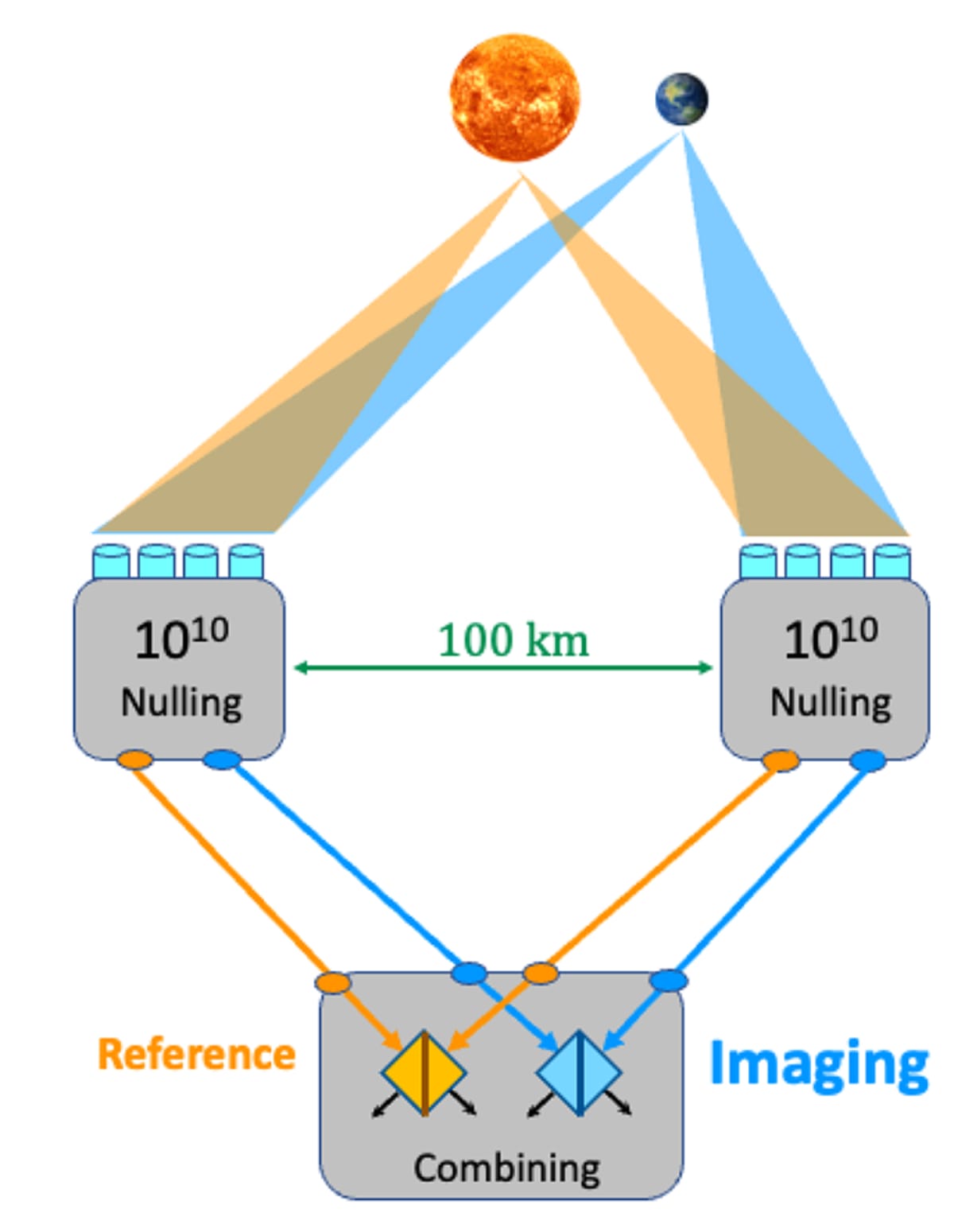
Researcher Paul Stankus from Brookhaven Science Associates received backing to develop a revolutionary telescope system that can photograph Earth-like planets around nearby stars. The challenge isn't just distance. It's separating the faint light reflecting off a small planet from the blinding glare of its parent star, which is 10 billion times brighter.
The solution combines two incredible innovations working together. First, a new type of "dynamic hierarchical nulling" interferometer blocks out starlight while preserving the planet's light, like putting a shade over a spotlight to see a firefly next to it. Second, two spacecraft positioned 60 miles apart will combine their observations to achieve the extreme zoom needed to resolve actual surface features.
The system works in visible light, the same light our eyes use. That means the images would show planets as we would actually see them if we could visit, not false-color representations or artist concepts. We could potentially watch weather systems move, track seasonal changes, and identify landmasses and bodies of water.
Previous exoplanet detection methods only told us planets existed. We learned their size, orbit, and sometimes atmospheric composition by analyzing how they blocked or reflected their star's light. This technology would let us actually see them as worlds in their own right.
The Ripple Effect
Being able to map alien continents changes how we search for life beyond Earth. Instead of just detecting water vapor or oxygen in an atmosphere, scientists could watch for changes that living ecosystems create. Seasonal greening like Earth's forests, persistent patterns like algae blooms, or even unnatural geometric shapes could all become visible.
The technology also pushes human innovation forward in unexpected ways. The precision optics and spacecraft coordination required will advance fields from medical imaging to telecommunications. Sometimes our wildest dreams deliver practical benefits we never anticipated.
This project represents something deeper than technical achievement. For all of human history, other worlds were just points of light or philosophical concepts. Soon we might pull up actual photographs of alien landscapes, making the universe feel suddenly more real and less lonely.
The first target stars are already picked out, waiting for the day these spacecraft launch and turn their revolutionary eyes skyward.
More Images

Based on reporting by NASA
This story was written by BrightWire based on verified news reports.
Spread the positivity!
Share this good news with someone who needs it