NASA Powers Down Voyager 1 Instrument After 49 Years
The spacecraft built to last five years is still going strong nearly 50 years later, and NASA just made a tough call to keep it exploring even longer. Engineers shut down one science tool to squeeze extra life from humanity's most distant messenger.
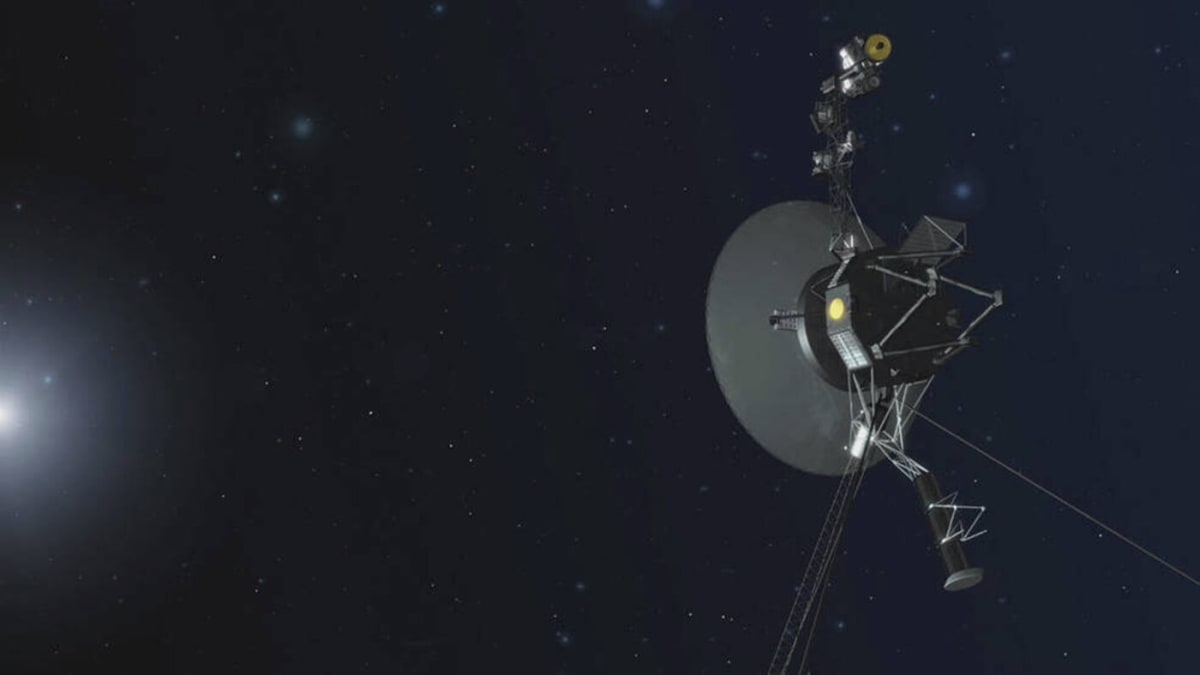
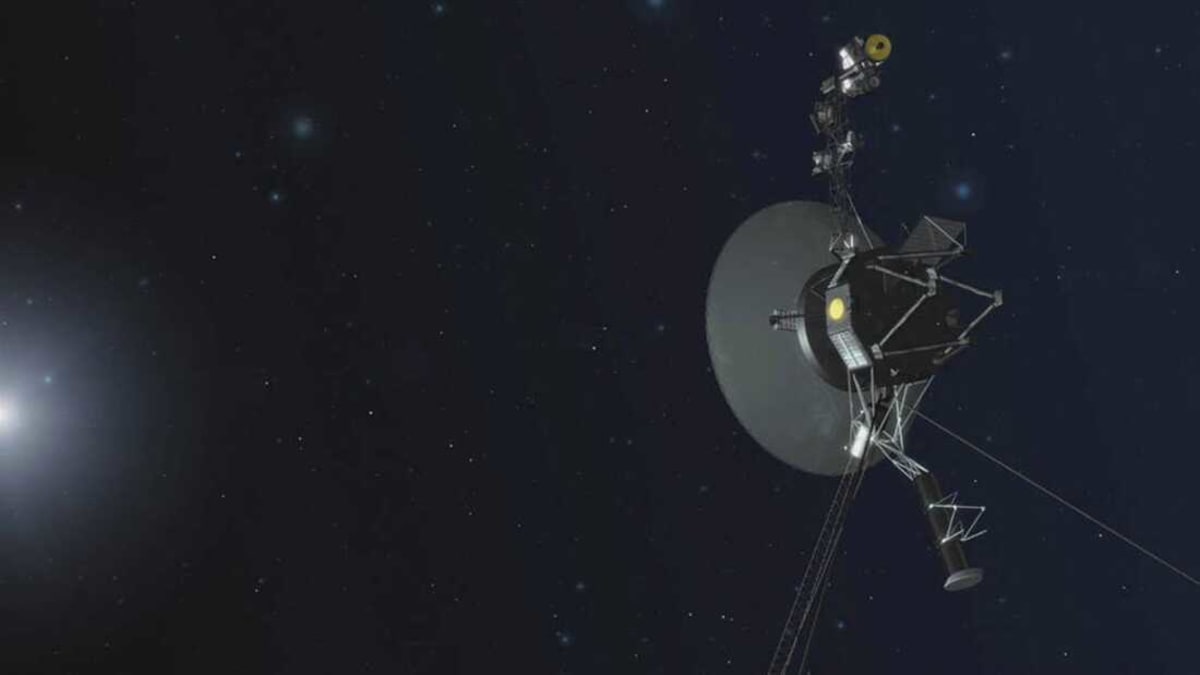
A spacecraft the size of a small car, launched in 1977 for what was supposed to be a five-year mission, just reached a bittersweet milestone. NASA turned off one of Voyager 1's science instruments this week, not because it failed, but to keep the little probe exploring for at least another year.
Voyager 1 is now more than 15 billion miles from Earth, making it the farthest human-made object ever built. It takes radio signals over 23 hours to reach the probe traveling at the speed of light, yet engineers at NASA's Jet Propulsion Laboratory still tend to it daily, carefully managing every watt of power.
The spacecraft runs on a nuclear battery that loses about four watts each year as its plutonium slowly decays. After nearly half a century, that power decline finally caught up. During a routine check in late February, power levels dropped so low that the probe nearly triggered an emergency shutdown on its own.
Engineers had to make a choice. They deactivated the Low-energy Charged Particles experiment, an instrument that has been measuring cosmic rays and mapping interstellar space since Voyager 1 became the first human-made object to leave our solar system in 2012.
The decision wasn't made lightly. Years ago, the Voyager team agreed on exactly which instruments to shut down and when, choosing to preserve the most valuable science for as long as possible. The LECP was next on that carefully planned list.
Why This Inspires
What started as a mission to photograph Jupiter and Saturn turned into humanity's longest-running space exploration. The Voyager program launched because of an astronomical coincidence: the outer planets aligned in a pattern that happens once every 175 years, allowing spacecraft to slingshot from planet to planet using gravity alone.
Voyager 1 revealed active volcanoes beyond Earth for the first time when it spotted them on Jupiter's moon Io in 1979. It gave us unprecedented close-ups of Saturn's rings in 1980. Then it just kept going, crossing into the space between stars and sending back data no other instrument could collect.
Two science instruments still remain active: one listening for plasma waves, one measuring magnetic fields. The engineering team is already planning their next move, informally called "the Big Bang," where they'll swap multiple systems at once to conserve even more power.
The spacecraft built for five years has given us 49 and counting, proving that some missions are worth every extra mile.
More Images

Based on reporting by Google News - Science
This story was written by BrightWire based on verified news reports.
Spread the positivity!
Share this good news with someone who needs it