Scientists Discover Magnetic Fields Around 7 Distant Planets
Astronomers have directly measured magnetic fields around planets beyond our solar system for the first time, opening a new pathway to finding worlds that could support life. The accidental discovery reveals which distant planets might protect atmospheres the way Earth does.
Scientists just stumbled onto something remarkable while studying distant planets. They've detected magnetic fields around seven worlds beyond our solar system, giving us a brand new tool to find places where life might exist.
The discovery happened by accident. A massive international team was simply trying to measure wind speeds on seven ultra-hot Jupiters, gas giants that orbit so close to their stars they reach scorching temperatures of 4,200 degrees Fahrenheit.
What they found surprised everyone. The winds on these planets moved slower than expected, ranging from 4,500 to 16,000 miles per hour instead of the breakneck speeds scientists predicted. Something was slowing them down.
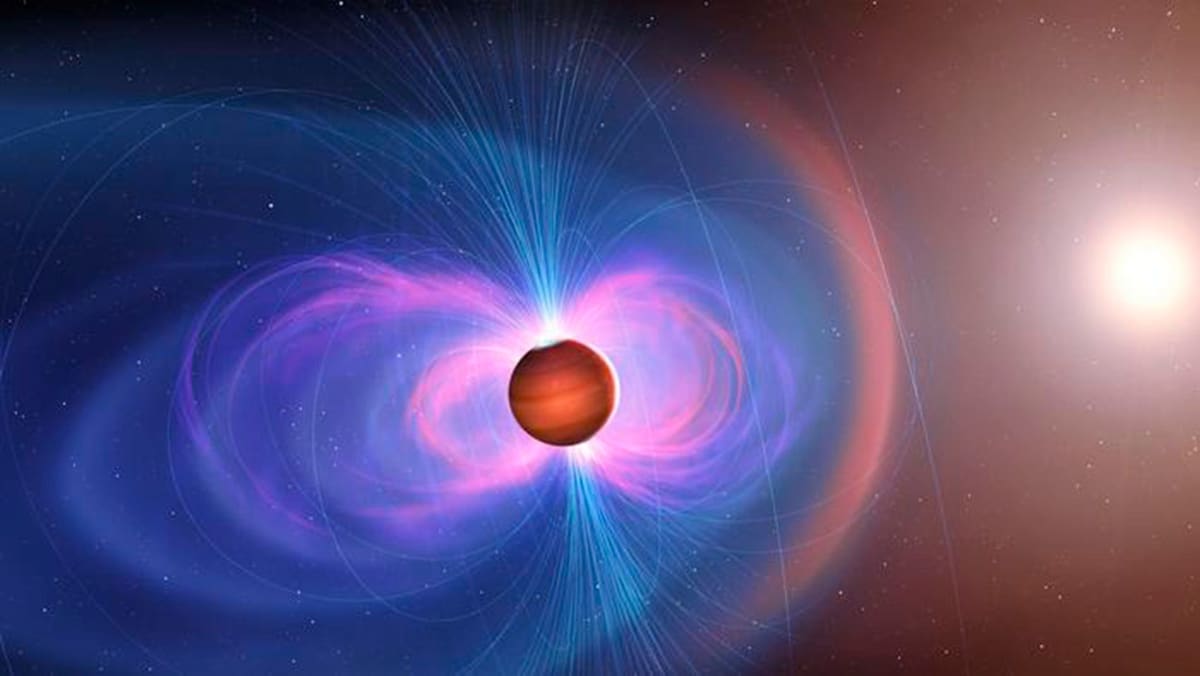
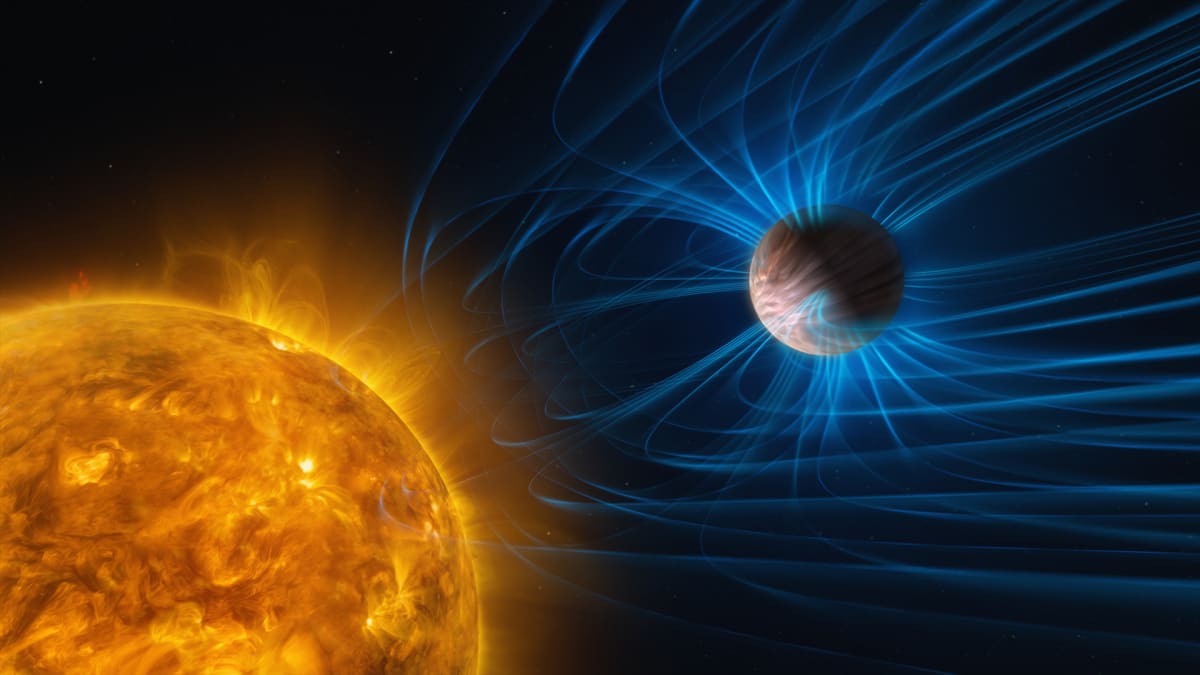
That something turned out to be magnetic fields. The invisible shields were acting like brakes, slowing charged particles in the planets' atmospheres just like Earth's magnetic field protects us from harmful radiation.
The team used powerful spectrographs at telescopes in Chile and Hawaii to track iron moving through the planets' atmospheres. This technique allowed them to clock the wind speeds and infer the strength of the magnetic fields slowing them down.
The measurements revealed another surprise. These magnetic fields measured only a few gauss in strength, similar to the cooler gas giants in our own solar system, not the hundreds of gauss that models predicted.
Why This Inspires
This breakthrough gives astronomers their first real glimpse into the magnetic environments protecting other worlds. Magnetic fields are essential for habitability because they shield planets from stellar radiation that would otherwise strip away atmospheres.
Earth's magnetic field has protected our planet for billions of years, allowing water to stay liquid and life to flourish. Meanwhile, Mars lost most of its magnetic field early on and became the barren world we see today.
Being able to detect and measure these protective shields around distant planets means scientists can now identify which worlds might hold onto their atmospheres long enough for life to take hold. It's like finding a cosmic security system that tells us which houses are best protected.
Julia Seidel, an astronomer at the Lagrange Laboratory in Nice, France, calls it a completely new window on exoplanet research. For the first time, scientists can compare the magnetic environments of other worlds and understand which planets can stay alive and keep their water.
The technique could guide the search for habitable planets as next-generation telescopes come online and begin studying Earth-like worlds throughout the universe.
More Images
Based on reporting by Live Science
This story was written by BrightWire based on verified news reports.
Spread the positivity!
Share this good news with someone who needs it