NASA Satellite Captures Ocean Bloom Around Chatham Islands
A NASA satellite caught stunning swirls of green and blue phytoplankton blooming around New Zealand's remote Chatham Islands this January. The natural spectacle reveals a thriving underwater ecosystem that feeds everything from rock lobsters to whales.
Space-based cameras just revealed nature putting on a light show 800 kilometers east of New Zealand, and the images are breathtaking.
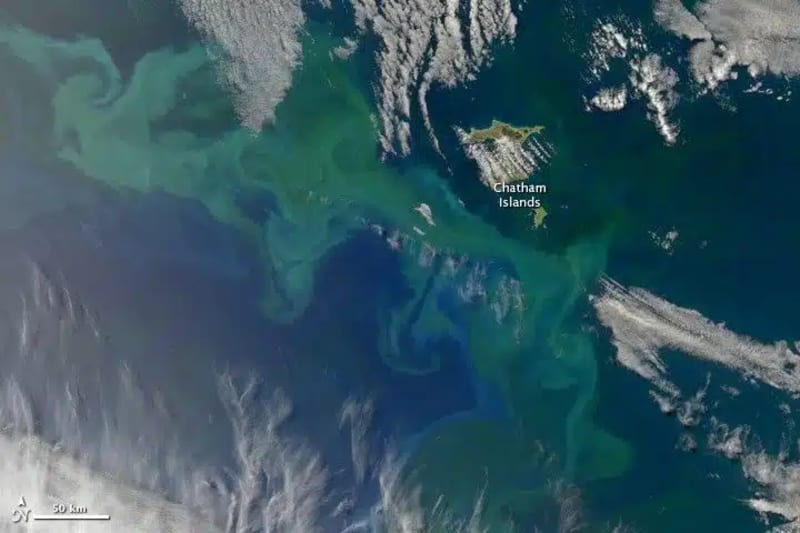
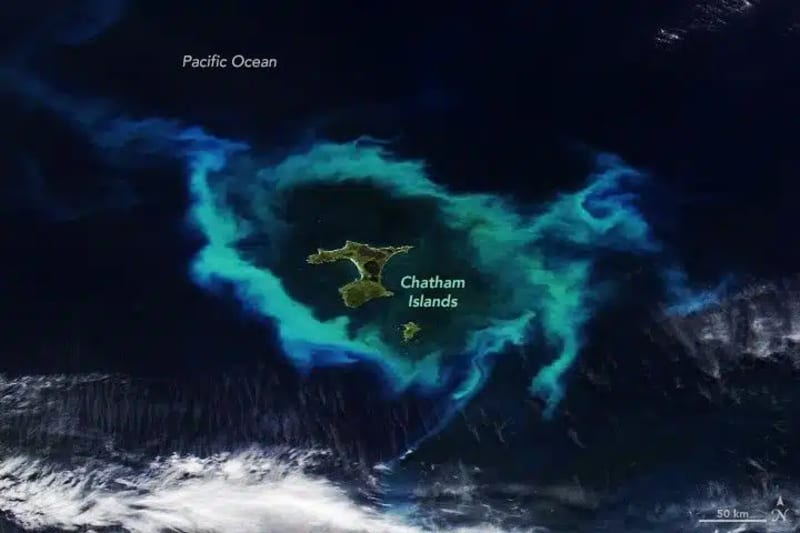
On January 10, NASA's NOAA-20 satellite captured massive swirls of phytoplankton blooming around the Chatham Islands. The green and blue patterns spiraled across the ocean surface like an artist's brushstrokes, visible even from space.
These microscopic organisms might be tiny, but when they bloom together, their chlorophyll reflects sunlight in ways satellites can detect. The ring-shaped formation around the islands showed delicate wisps and spirals shaped by ocean currents and eddies.
The location makes all the difference. The Chatham Rise, a broad underwater plateau extending from New Zealand, sits where cold Antarctic waters meet warmer subtropical currents.
This intersection creates perfect conditions during the austral summer. Long daylight hours combined with nutrient-rich waters from below trigger explosive phytoplankton growth each year.
This year's bloom stood out for its intensity and clarity. The satellite imagery came through NASA's Joint Polar Satellite System, capturing nature's seasonal rhythm in stunning detail.
The Ripple Effect
These blooms aren't just pretty pictures. They fuel an entire marine ecosystem that supports thriving fisheries and abundant wildlife around the islands.
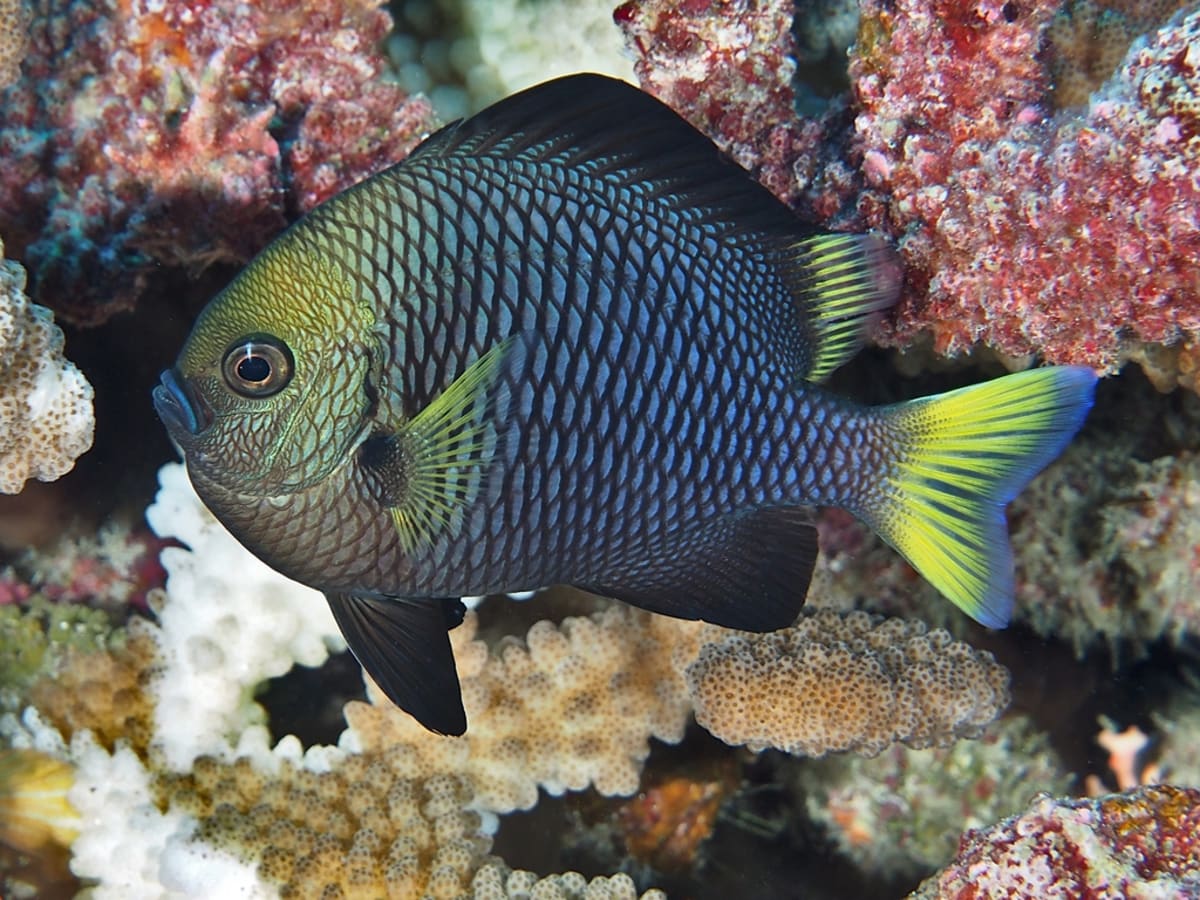
Phytoplankton sit at the base of the ocean food web. Their abundance means better fishing for species like rock lobster, blue cod, and pāua, all of which depend on these tiny organisms directly or indirectly.
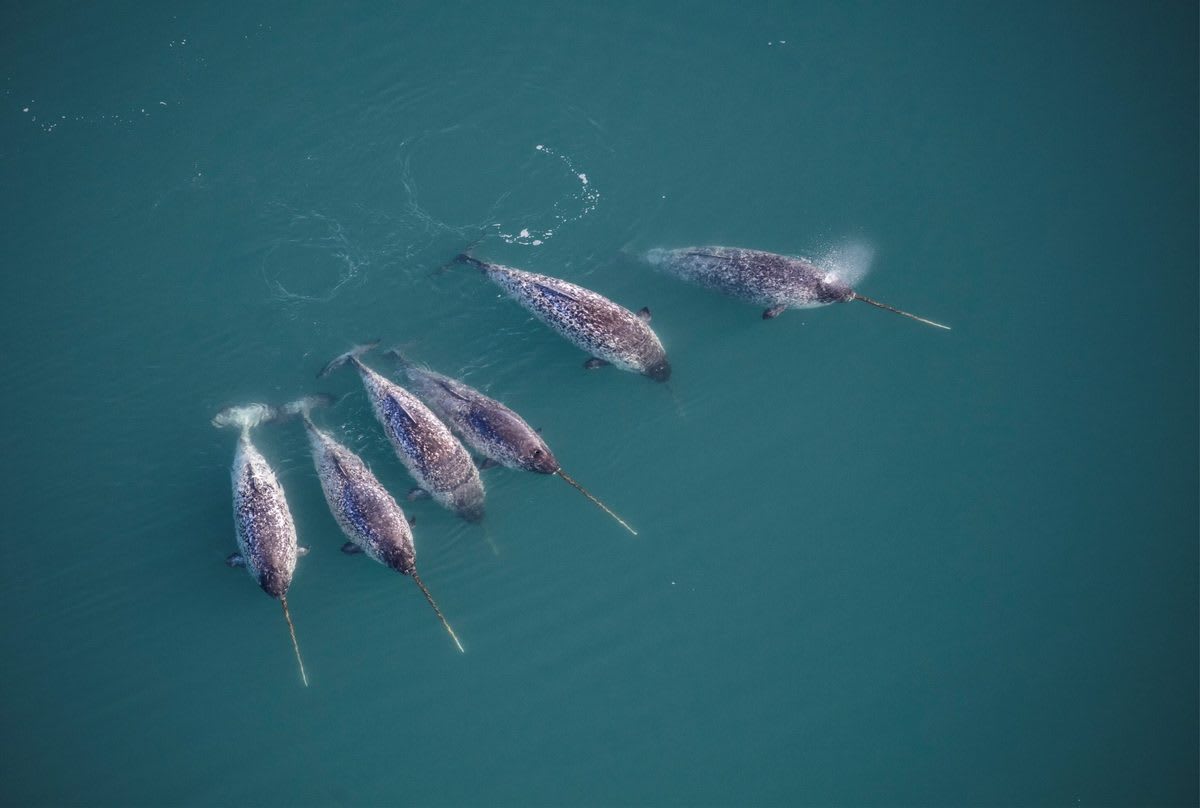
The rich waters also attract at least five seal species and 25 types of whales and dolphins. The same underwater topography that traps nutrient-rich cold water creates feeding grounds that draw marine mammals from across the region.
Local fisheries benefit from this natural cycle year after year. The Chatham Rise has become known as one of the most biologically productive areas in New Zealand's waters.
Research published in the New Zealand Journal of Marine and Freshwater Research confirms the Chatham Rise as a consistent hotspot for phytoplankton activity. Scientists can now track these seasonal patterns with increasing precision thanks to improving satellite technology.
The bloom reminds us that Earth's natural systems continue their ancient rhythms, supporting life from the microscopic to the magnificent, all visible now from our eyes in the sky.
More Images

Based on reporting by Google News - Science
This story was written by BrightWire based on verified news reports.
Spread the positivity!
Share this good news with someone who needs it