NASA Sends 3 New Experiments to Moon by 2028
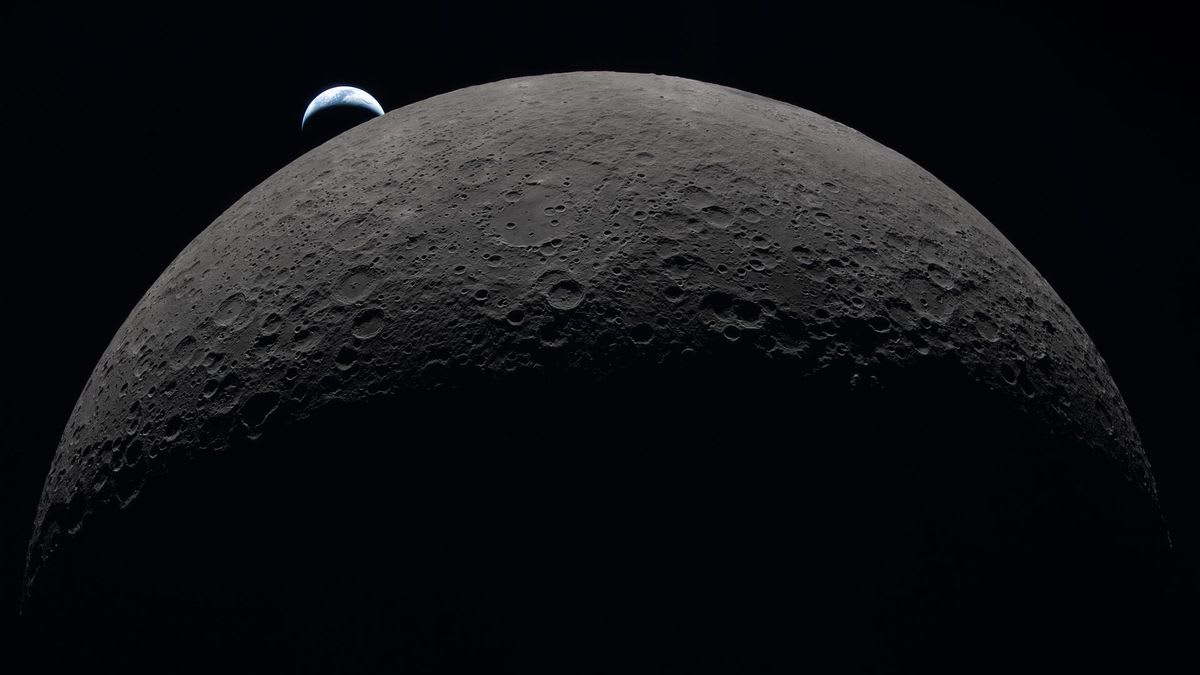
NASA just announced three new scientific missions headed to the Moon to study its terrain, radiation, and inner heat. These experiments will help keep future astronauts safe and unlock secrets about how the Moon formed billions of years ago.
Humanity's return to the Moon just got a major science boost with three groundbreaking experiments launching no earlier than 2028.
NASA announced Tuesday that private American companies will deliver three research payloads to the lunar surface as part of the Artemis campaign. These missions represent a new era where government and commercial innovation work side by side to unlock the Moon's mysteries.
The first experiment, EMILIA-3D, will create detailed three-dimensional thermal maps of the Moon's surface using temperature sensors and stereo cameras. Understanding how lunar dust and soil react to extreme temperature swings will help future astronauts navigate safely across the harsh terrain.
The second payload, LISTER, takes a more hands-on approach by drilling several feet beneath the Moon's surface. By measuring temperature changes at different depths, scientists will piece together the Moon's thermal history and learn how heat flows from its interior.
The third investigation, SELINE, tackles one of the biggest challenges for long-term lunar exploration: radiation. For the first time, instruments on the lunar surface will study how cosmic rays interact with Moon dust, giving mission planners critical data to protect astronauts during extended stays.
The Ripple Effect
These missions do more than advance lunar science. They're building a blueprint for human safety on worlds beyond Earth. The radiation data from SELINE could inform protection strategies for Mars missions decades from now. The thermal mapping from EMILIA-3D will guide landing site selection for future Moon bases where astronauts might live and work for months at a time.
NASA's approach through the Commercial Lunar Payload Services program is creating a steady pipeline of Moon deliveries while supporting a growing private space economy. American companies gain valuable experience flying to the Moon, and NASA gets flexible, cost-effective access to the lunar surface for cutting-edge research.
Andrew Ryan at the University of Arizona, Seiichi Nagihara at Texas Tech University, and Drew Turner at Johns Hopkins University will lead their respective investigations. These payloads can collect meaningful data regardless of where they land, giving NASA flexibility in scheduling launches and choosing delivery partners.
The Moon is becoming less of a distant destination and more of a testing ground where we learn to live and work on other worlds.
More Images
Based on reporting by Google News - Science
This story was written by BrightWire based on verified news reports.
Spread the positivity!
Share this good news with someone who needs it