NASA's Roman Telescope Heads to Cosmic Sweet Spot in 2026
NASA's new space telescope will travel nearly a million miles from Earth to a special location where gravity creates the perfect workspace for exploring the universe. The Nancy Grace Roman Space Telescope joins other observatories at a cosmic sweet spot that saves fuel and offers unmatched views.
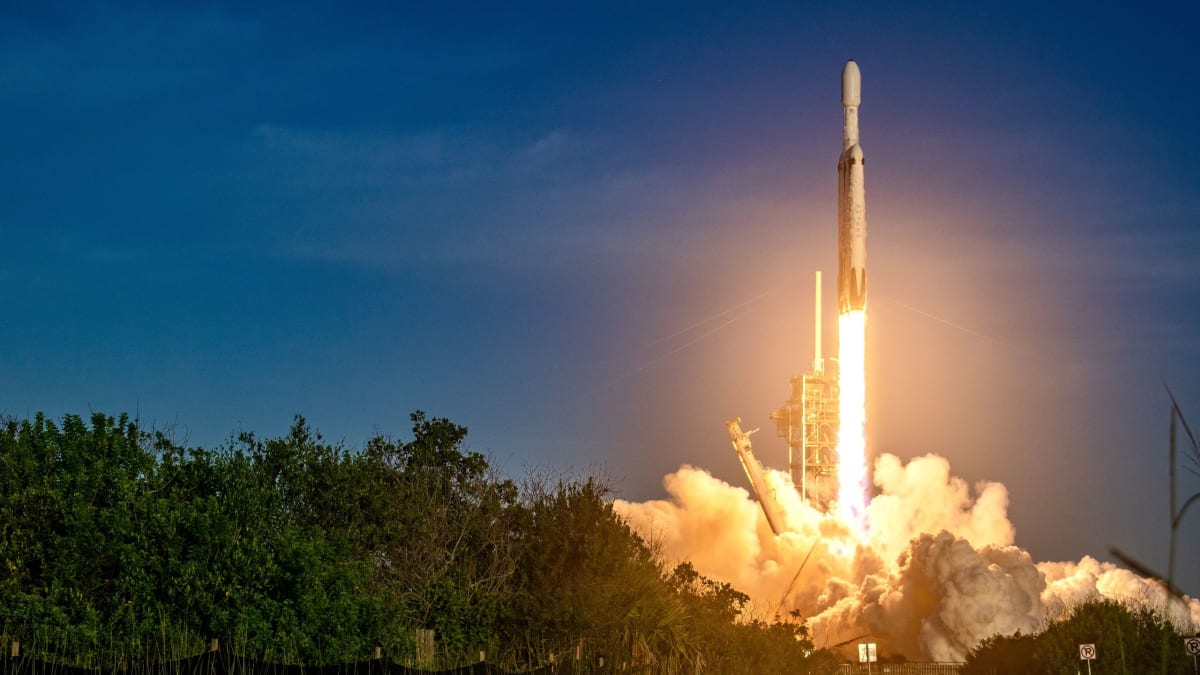
In August 2026, NASA will launch a telescope to a location so precisely balanced by gravity that it can orbit the sun alongside Earth while staying nearly a million miles away.
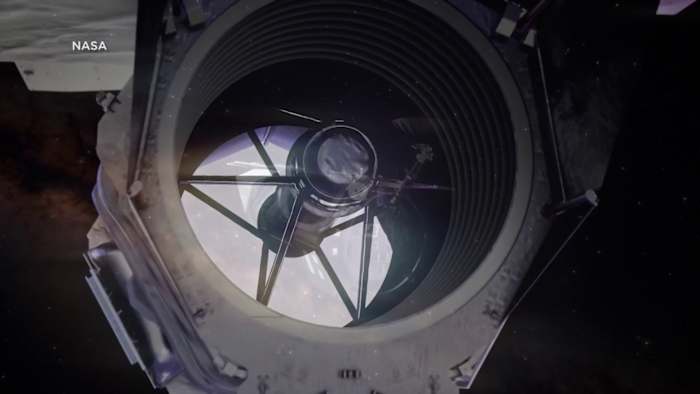
The Nancy Grace Roman Space Telescope is heading to L2, short for the second Sun-Earth Lagrange point. This spot sits 930,000 miles from Earth in the direction opposite the sun, where the combined gravitational pull of both bodies allows spacecraft to keep pace with our planet as it travels around the sun.
Italian-French mathematician Joseph-Louis Lagrange first described these special locations in 1772 while solving complex orbital problems. Of the five Lagrange points in the Sun-Earth system, L2 has become the favorite parking spot for space telescopes.
The location offers practical advantages that make it ideal for deep space observation. From L2, the sun, Earth, and moon all occupy the same general portion of the sky, allowing Roman to point its protective shields toward all three heat sources at once while its instruments face outward into the cosmos.
This arrangement keeps the telescope's temperature steady, which is crucial for the infrared measurements Roman will use to study distant galaxies and search for planets beyond our solar system. The stable temperature prevents heat interference that could blur its cosmic vision.
The Ripple Effect
Roman won't be alone at L2. The James Webb Space Telescope and the European Space Agency's Euclid mission already call this region home, creating a neighborhood of cosmic explorers working together to unlock the universe's secrets.
The area around L2 is large enough that each telescope can follow its own looping path without ever coming close to the others. Roman will trace a quasi-halo orbit larger than the moon's orbit around Earth, circling an invisible point in space rather than a physical object.
Because L2 is gravitationally unstable, small forces would eventually push an unattended spacecraft away. Roman will occasionally fire its thrusters to correct this drift, but the fuel required is far less than maintaining any other distant orbit.
The telescope's distance from Earth means our planet blocks almost none of its view, while its solar panels can face the sun continuously for power. This cosmic sweet spot transforms what could be a challenging mission into an elegant dance of gravity and motion.
Roman will help scientists discover thousands of new worlds and peer deeper into space than ever before, all from a location that didn't even have a name until Lagrange's mathematical genius revealed it over 250 years ago.
More Images


Based on reporting by Google: James Webb telescope
This story was written by BrightWire based on verified news reports.
Spread the positivity!
Share this good news with someone who needs it