NASA Launches Roman Telescope to Unlock Universe's Secrets
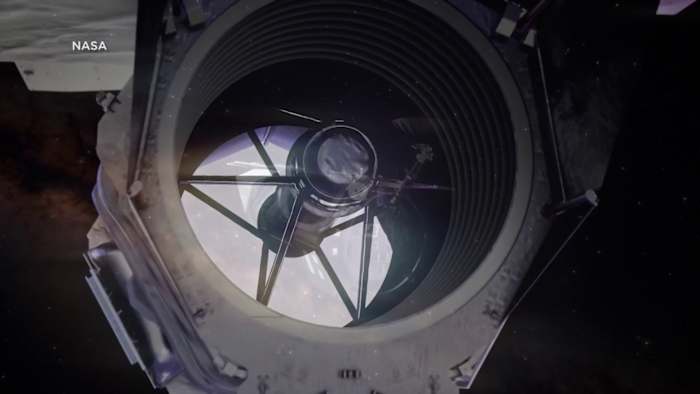
NASA's newest space telescope successfully launched Sunday on a million-mile journey to uncover the mysteries of dark energy and discover over 100,000 new planets. The tour-bus-sized observatory will help answer one of humanity's biggest questions: Are we alone?
A million miles might sound lonely, but NASA's newest telescope is headed there to help us understand we're part of something much bigger.
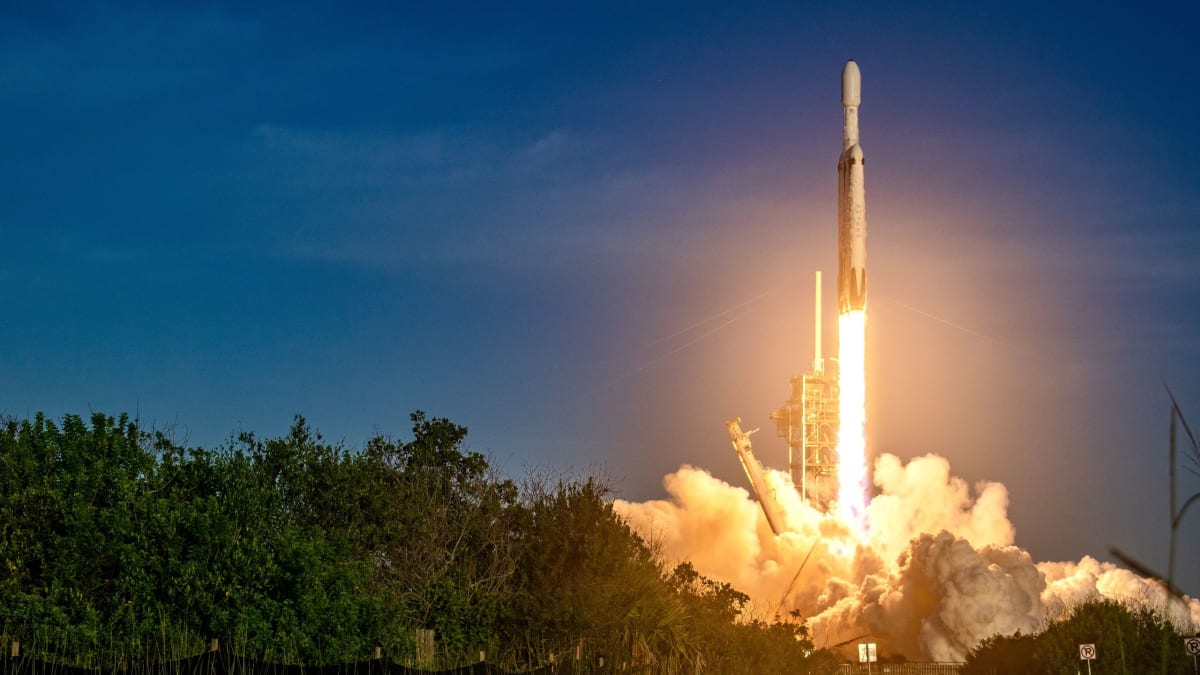
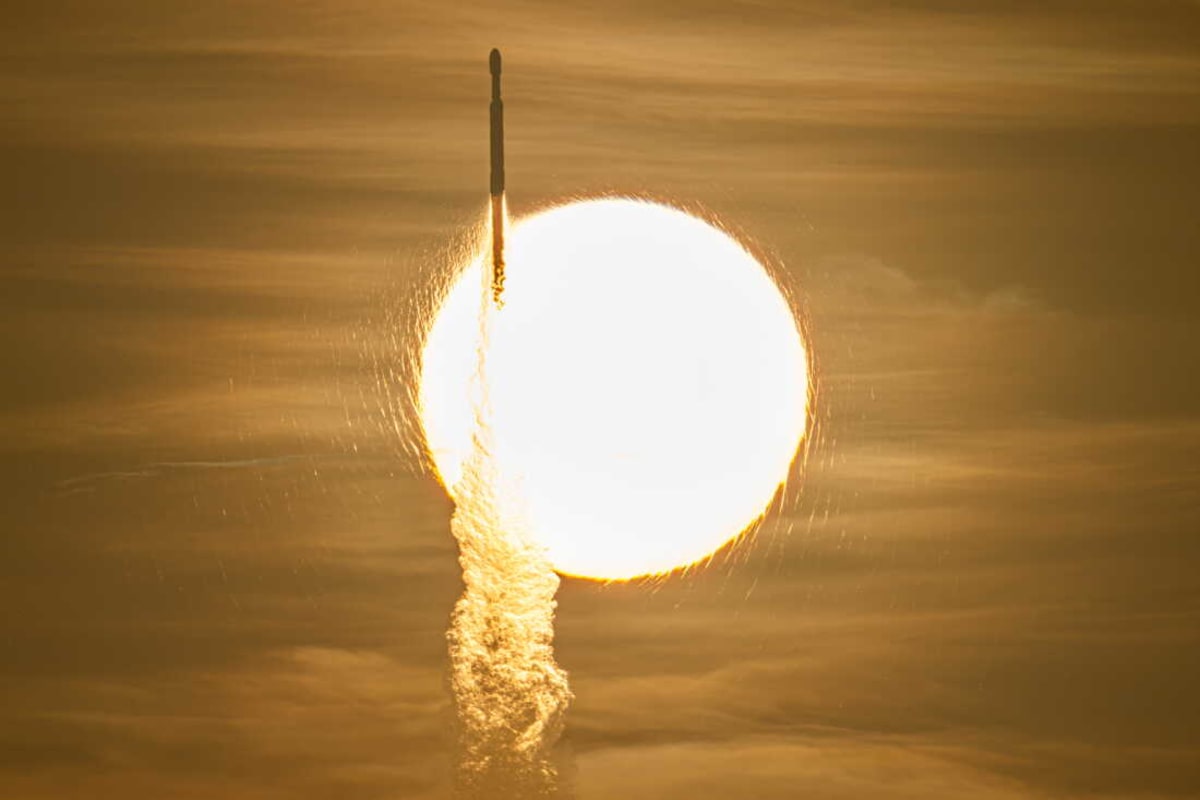
The Nancy Grace Roman Space Telescope lifted off at 7:26 a.m. Sunday from Florida's Kennedy Space Center aboard a SpaceX Falcon Heavy rocket. Minutes after the 18,000-pound spacecraft began its journey, NASA's project manager Jackie Townsend declared it "a glorious dawn launch" as the telescope deployed its solar panels exactly as planned.
Roman is named after NASA's first chief astronomer, known as the "Mother of Hubble" for championing that iconic telescope. Her namesake observatory packs Hubble's sharpness with a field of view 100 times larger, letting it photograph massive sections of sky in a single shot.
The telescope will spend three months traveling to its new home at a special point a million miles away where Earth's and the Sun's gravity balance perfectly. This spot, called L2, gives Roman an unobstructed view of the cosmos while using minimal fuel to stay in position.
The Ripple Effect
Roman is essentially a cosmic detective, hunting for clues about dark matter and dark energy. These invisible forces make up most of our universe, yet scientists barely understand them. Dark matter's gravity appears to hold galaxies together, while dark energy drives the universe's expansion in ways that still puzzle astronomers.
The telescope will map both visible and dark matter across huge stretches of space, tracking how gravity bends light over vast distances. It will also catalog exploding stars called Type Ia supernovas, which shine at predictable brightness and help scientists measure dark energy's effects.
But Roman isn't just chasing ghosts in space. NASA expects it to discover more than 100,000 planets orbiting other stars by detecting tiny dips in starlight as planets pass in front of them. It will find another thousand through microlensing, spotting changes in background starlight caused by distant planets' gravity.
"One of our main goals at NASA is answering the question: Are we alone in the universe," said Nicky Fox, NASA's associate administrator of science. Roman carries technology that can photograph distant planets by blocking their star's light, revealing atmospheres that might support life.
The telescope has an unusual backstory too. Originally designed as a spy telescope for the National Reconnaissance Office, it was donated to NASA instead, transforming a tool built to watch Earth into one that will explore the cosmos.
After reaching its destination and completing calibrations, Roman will begin its sky surveys, sending back data that could fundamentally reshape how we understand everything from the universe's structure to our place within it.
More Images

Based on reporting by Google: James Webb telescope
This story was written by BrightWire based on verified news reports.
Spread the positivity!
Share this good news with someone who needs it