NASA Spacecraft Nails Mars Flyby on Way to Metal Asteroid
NASA's Psyche spacecraft just used Mars as a cosmic speed boost, slingshotting past the red planet at 2,864 miles up and gaining 1,000 mph on its journey to explore a Massachusetts-sized metal asteroid. Along the way, it captured stunning crescent views of Mars that Earth-based observers could never see.
A NASA spacecraft just completed a perfectly executed dress rehearsal 140 million miles from home, and the photos it sent back are breathtaking.
The Psyche mission, launched in October 2023, swung past Mars last Friday in a carefully choreographed gravity assist maneuver. The spacecraft skimmed just 2,864 miles above the Martian surface, using the planet's gravity like a slingshot to gain a 1,000 mph speed boost and shift its orbit by one degree.
"Although we were confident in our calculations and flight plan, monitoring the signal in real time during the flyby was still exciting," said Don Han, the mission's navigation lead. The maneuver worked flawlessly, putting Psyche on track to reach its destination in summer 2029.
That destination is the asteroid Psyche, a mysterious metal world floating in the asteroid belt between Mars and Jupiter. Rich in iron, nickel, and other metals, it's the size of Massachusetts but remains a fuzzy blob even through powerful telescopes.
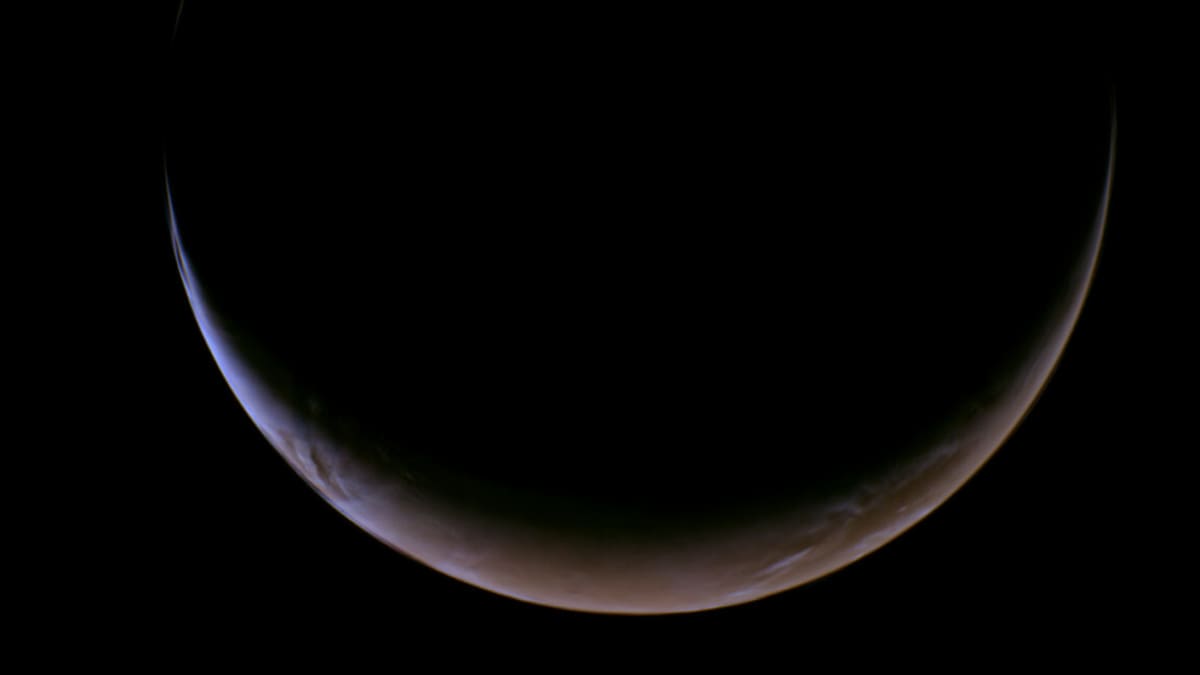
During the Mars encounter, the spacecraft's cameras captured something Earthlings never get to see: a thin crescent Mars glowing against the blackness of space. The wispy Martian atmosphere shimmered with dust clouds suspended dozens of miles above the planet's rust-colored surface.
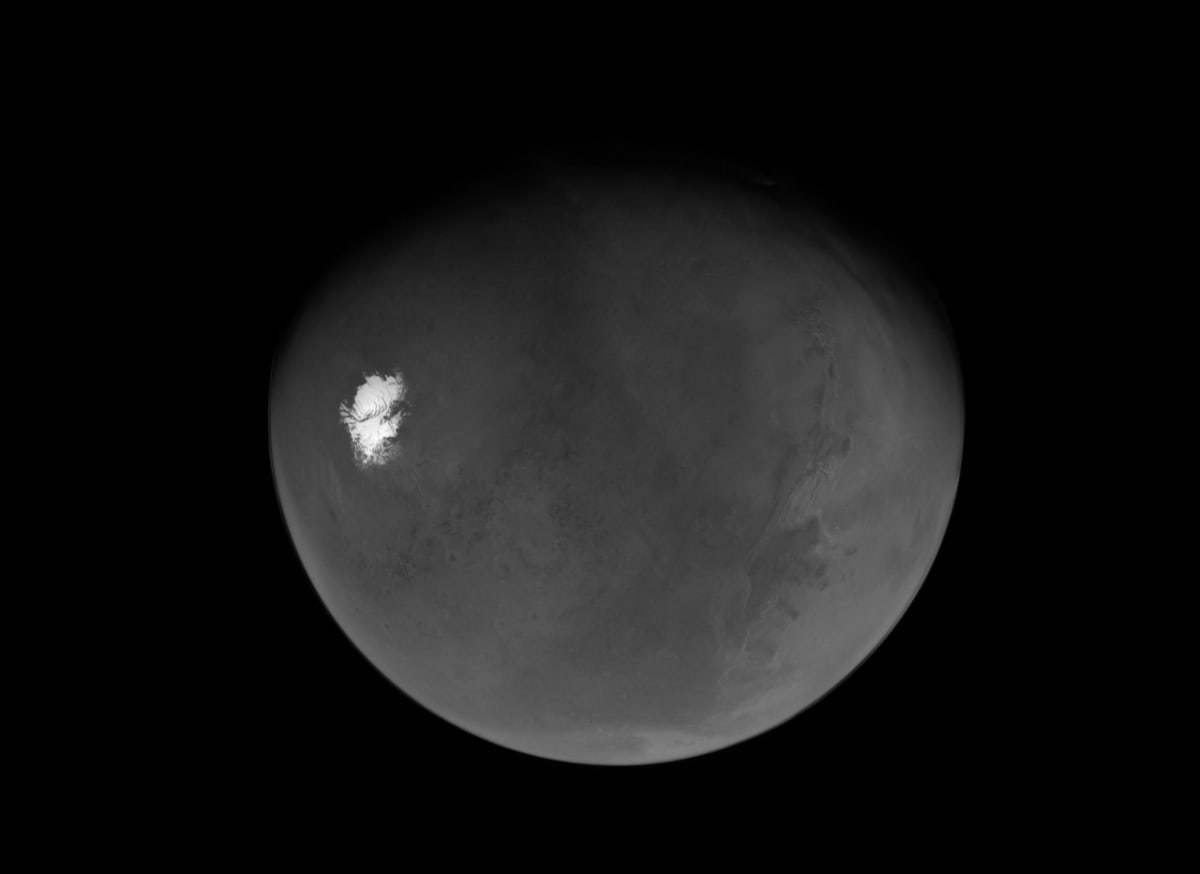
The spacecraft snapped thousands of images, including spectacular overhead views of Mars' southern polar ice cap and the vast Valles Marineris canyon system. These weren't just pretty pictures. Scientists used the flyby to test and calibrate all three of Psyche's instruments, comparing their readings against data from other Mars missions.
The magnetometer detected signatures of solar wind interacting with Mars' atmosphere. The spectrometers measured the chemical composition of the Martian surface below. The imaging team, led by Jim Bell at Arizona State University, gathered crucial performance data for the cameras.
Why This Inspires
This mission represents more than just impressive space navigation. The Psyche spacecraft has now traveled 2.2 billion miles using innovative plasma engines that gradually build speed over years, proving technologies that could power future deep space exploration.
The asteroid itself may hold answers to fundamental questions about how rocky planets like Earth formed. Scientists believe Psyche could be the exposed metallic core of an early planet that never fully developed, offering a window into planetary formation we can't get any other way.
When Psyche arrives at its namesake asteroid in three years, it will have more than two years to study this uncharted metal world up close. That's far longer than the fleeting glimpse it got of Mars, and enough time to reveal secrets hidden in the asteroid belt for billions of years.
The mission proves that with careful planning and innovative technology, humanity can reach places we've only imagined.
More Images



Based on reporting by Ars Technica Science
This story was written by BrightWire based on verified news reports.
Spread the positivity!
Share this good news with someone who needs it