NASA Telescope to Map 600 Million Galaxies This Fall
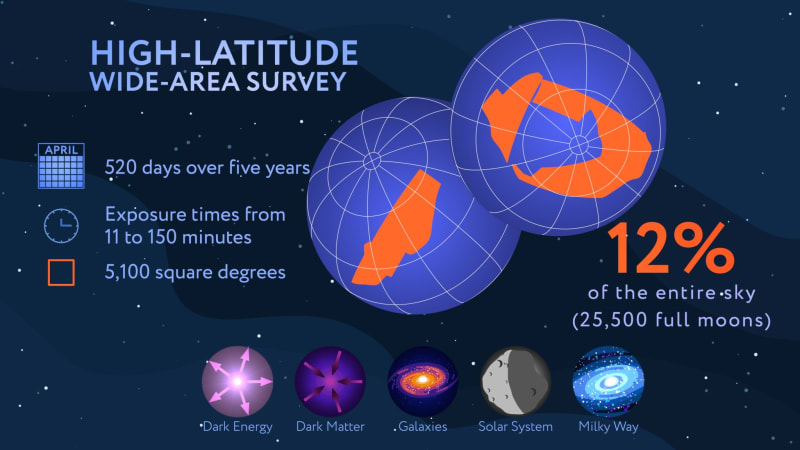
NASA's Nancy Grace Roman Space Telescope will launch this fall to photograph hundreds of millions of galaxies and unlock the mysteries of dark matter and dark energy. The mission will create the most detailed map of the cosmos ever made, covering 12% of the sky in just 18 months.
Imagine creating a photo album of 600 million galaxies, each one revealing clues about the invisible forces shaping our universe. That's exactly what NASA plans to do when its Nancy Grace Roman Space Telescope launches this fall.
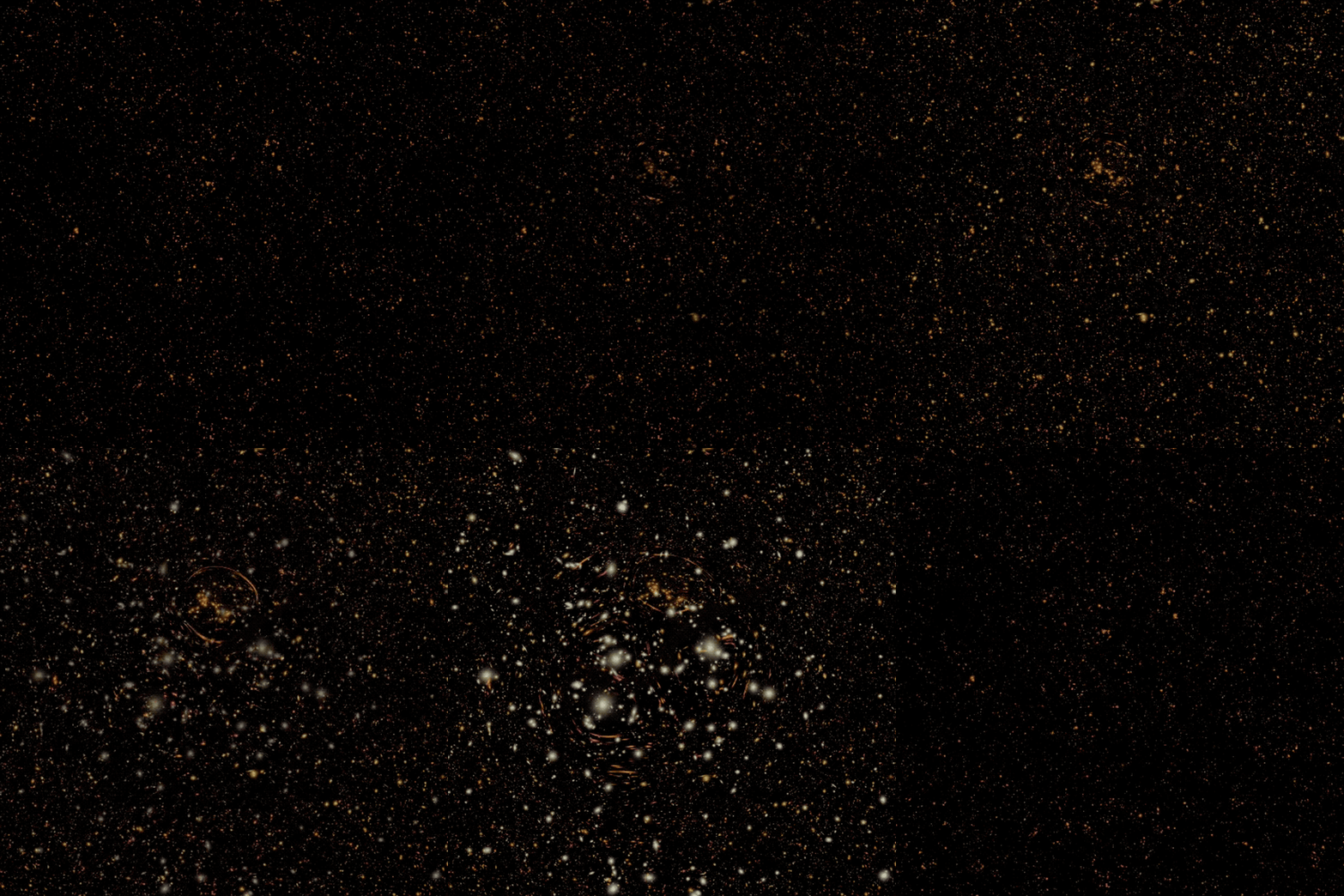
The Roman telescope will spend just under a year and a half photographing more than 5,000 square degrees of space. That's about 12% of the entire sky, captured in stunning detail that rivals the famous Hubble telescope.
Scientists designed the mission to answer one of physics' biggest mysteries: why is the universe expanding faster and faster? The culprit appears to be dark energy, a mysterious pressure that makes gravity push instead of pull across billions of light years.
"Cosmic acceleration is the biggest mystery in cosmology and maybe in all of physics," said David Weinberg, an astronomy professor at Ohio State University who helped design the survey. The telescope will measure how the universe has grown and changed over time, giving astronomers critical clues to solve this puzzle.
The telescope will also map dark matter, the invisible material that makes up most of the universe's mass. We can't see dark matter directly, but Roman will spot how its gravity bends and warps the light from distant galaxies like a cosmic funhouse mirror.
Ryan Hickox, a Dartmouth College professor who co-chaired the design committee, explained that this warping effect is usually too subtle to see in a single galaxy. But Roman will photograph more than a billion galaxies, with about 600 million detailed enough to study these tiny distortions.
The survey will look far above and below our Milky Way galaxy's dusty plane to get the clearest possible view of deep space. To display the entire survey at full resolution, you'd need half a million 4K televisions covering 200 football fields.
Why This Inspires
This mission represents a giant leap in our ability to understand the universe's hidden architecture. For the first time, scientists will have Hubble-quality images across a massive swath of sky, combining detailed photographs with light analysis to trace how structures formed and grew from shortly after the Big Bang until today.
The data won't just help solve dark energy's mystery. Olivier Doré, a senior research scientist at NASA's Jet Propulsion Laboratory, emphasized that the incredibly high-quality data will benefit the entire astronomy community and almost certainly lead to unexpected discoveries.
This fall, humanity gets a powerful new tool to illuminate the universe's dark side and reveal how the cosmos really works.
More Images


Based on reporting by NASA
This story was written by BrightWire based on verified news reports.
Spread the positivity!
Share this good news with someone who needs it