NASA's 50 Years of Space Tech Now Powers Life on Earth
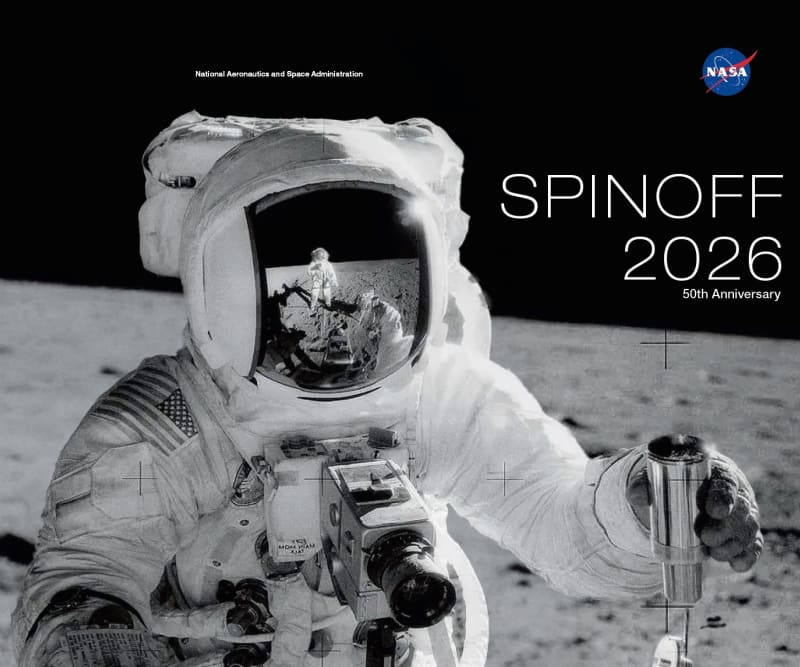
For half a century, NASA's innovations designed for the Moon and Mars have been quietly transforming everyday life on Earth. The agency just released its 50th Spinoff edition, celebrating technologies that now save lives, build homes, and improve everything from your mattress to your smartphone.
That memory foam mattress you sleep on and the camera in your pocket both started as solutions to problems in space.
NASA just celebrated 50 years of its Spinoff publication, which tracks how technologies built for astronauts end up changing life on Earth. The milestone edition reveals how innovations designed for Moon bases and Mars missions are already making waves here at home.
Two companies working on 3D printing technology for building lunar habitats have pivoted their expertise earthward. One is now creating custom wall panels and building facades, while the other is printing entire neighborhoods of affordable housing.
The robots NASA envisions maintaining Moon bases are already getting to work on our planet. Software developed to support lunar missions now powers robots cleaning bathrooms and constructing homes. Another company has created humanoid robots handling warehouse and assembly line work.
The medical breakthroughs are equally remarkable. Technology originally designed to make astronaut life easier aboard the International Space Station has evolved into an implantable heart monitor keeping heart failure patients out of hospitals. Personal locator beacons used in search and rescue operations now rely on NASA's satellite communication technology.
The Ripple Effect
The pattern has repeated itself for decades. Food safety procedures NASA created for Apollo astronauts became the foundation for global food production regulations. Scratch-resistant lenses use diamond-hard coatings first developed for aerospace applications. Even wireless headsets trace their roots to NASA's hands-free communication systems for astronauts.
"NASA's work has always delivered returns well beyond the mission itself," said NASA Administrator Jared Isaacman. As the agency prepares for sustained lunar presence and Mars exploration, those innovations will continue unlocking new capabilities across medicine, aviation, and agriculture.
The 50th edition includes a special section featuring 20 technologies ready for commercialization right now. Anyone can explore licensing opportunities from NASA's portfolio of 1,300 available inventions.
Technology Transfer program executive Dan Lockney sees even more potential ahead. Missions to put a rotorcraft on Saturn's moon Titan or study interstellar objects in deep space will demand breakthroughs we can't yet imagine.
The next generation of space-inspired innovations is already waiting to come home.
More Images
Based on reporting by NASA
This story was written by BrightWire based on verified news reports.
Spread the positivity!
Share this good news with someone who needs it