NASA's Nuclear Dragonfly to Hunt for Life on Titan in 2034
NASA is building a car-sized flying robot powered by nuclear energy to explore Saturn's moon Titan, a world with slow-motion rain, underground oceans, and the best conditions in our solar system for finding signs of life. Launching in 2028, Dragonfly will cover more ground than any rover in history.
A nuclear-powered helicopter is heading to one of the most exciting places in our solar system, and it could help answer whether we're alone in the universe.
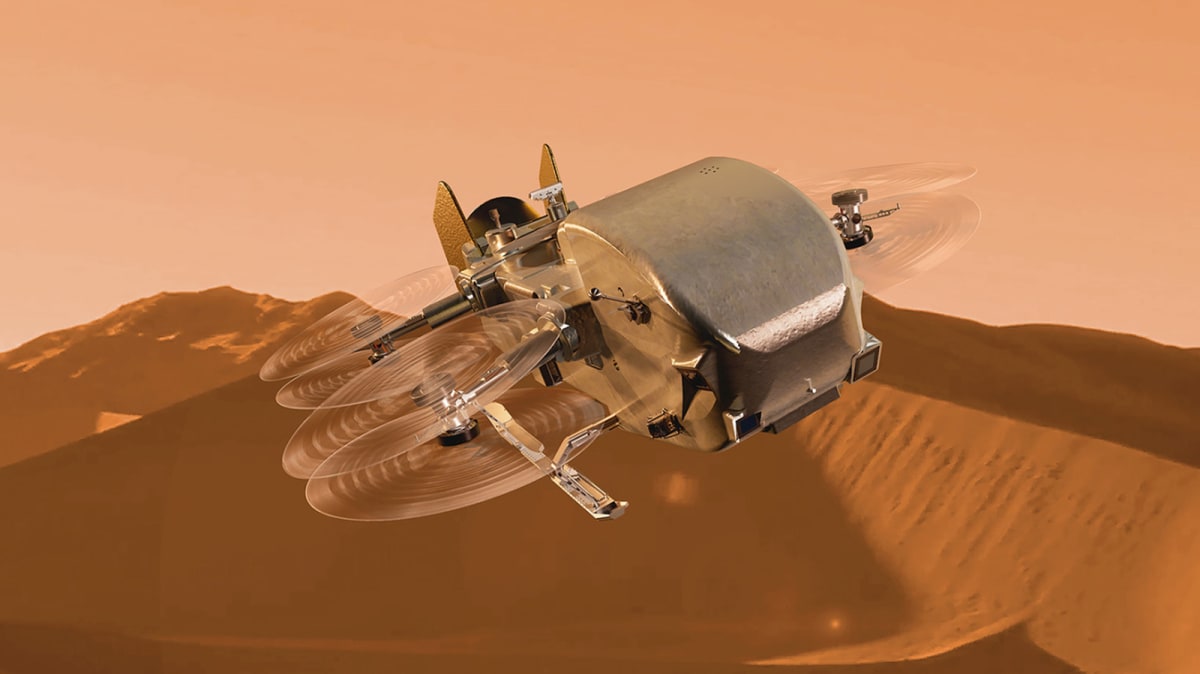
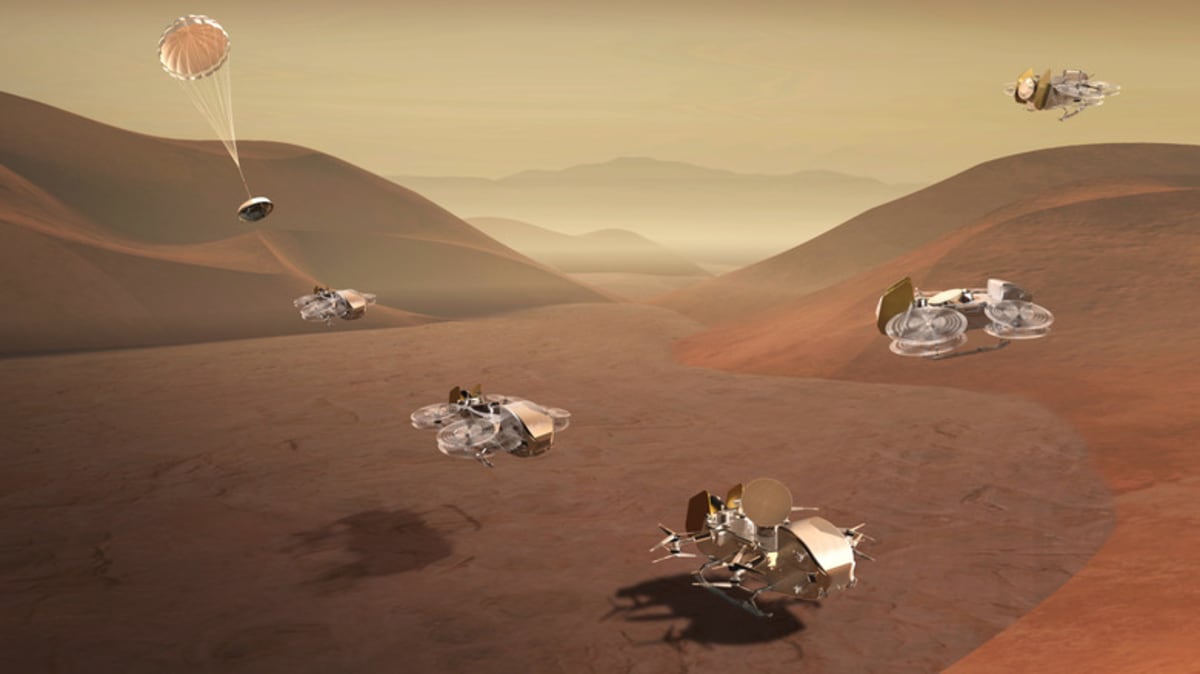
NASA has begun building Dragonfly, a car-sized flying robot that will explore Titan, Saturn's largest moon. The mission launches in 2028 and arrives in 2034, ready to soar over alien dunes, rivers, and lakes in search of life's building blocks.
Titan isn't just any moon. It's the only moon in our solar system with a thick atmosphere and weather patterns like Earth's, complete with rain, rivers, and a full water cycle.
But this is no ordinary rain. Because Titan's air is four times denser than Earth's and gravity is seven times lighter, raindrops fall in slow motion. Scientists think centuries might pass between storms.
Beneath Titan's icy surface lies a saltwater ocean. Combined with organic compounds in the atmosphere, these conditions mirror what Earth looked like before life began. That makes Titan our best laboratory for understanding how life starts.
Dragonfly will analyze chemical samples looking for signs of water-based or hydrocarbon-based life. It will also take atmospheric readings and measure seismic activity as it flies across the moon's surface.
The thick atmosphere that makes flying easy also blocks sunlight, so solar panels won't work. Instead, Dragonfly uses the same nuclear power source that drives Mars rovers: plutonium fuel rods that generate electricity through heat.
The Ripple Effect
This mission represents a breakthrough in space exploration. Previous attempts to study Titan struggled against its hazy atmosphere that blocked telescope views. In 2005, NASA's Huygens probe landed on Titan but died within a day.
Dragonfly will be the first vehicle to fly on another world for an extended mission, covering distances no rover could match. The technology could revolutionize how we explore other planets and moons with atmospheres.
The $3 billion mission brings together cutting-edge robotics, nuclear engineering, and planetary science. Johns Hopkins Applied Physics Laboratory is building the craft, which will launch aboard a SpaceX Falcon Heavy rocket.
By studying Titan's chemistry, scientists hope to understand not just whether life exists there, but how the basic ingredients of life come together anywhere in the universe. The answers could reshape our understanding of biology itself.
In six years, humanity's most advanced flying robot will touch down on an alien world where rain falls like feathers and oceans hide beneath ice.
More Images


Based on reporting by Google News - Science
This story was written by BrightWire based on verified news reports.
Spread the positivity!
Share this good news with someone who needs it