NASA's Psyche Spacecraft Captures Stunning Mars Images
A spacecraft on its way to a metal-rich asteroid just sent back jaw-dropping photos of Mars, revealing ancient craters in colors beyond what human eyes can see. The unexpected images showcase the power of grabbing scientific opportunities during deep space travel.
NASA's Psyche spacecraft wasn't supposed to photograph Mars, but the mission team seized an incredible opportunity and captured something beautiful.
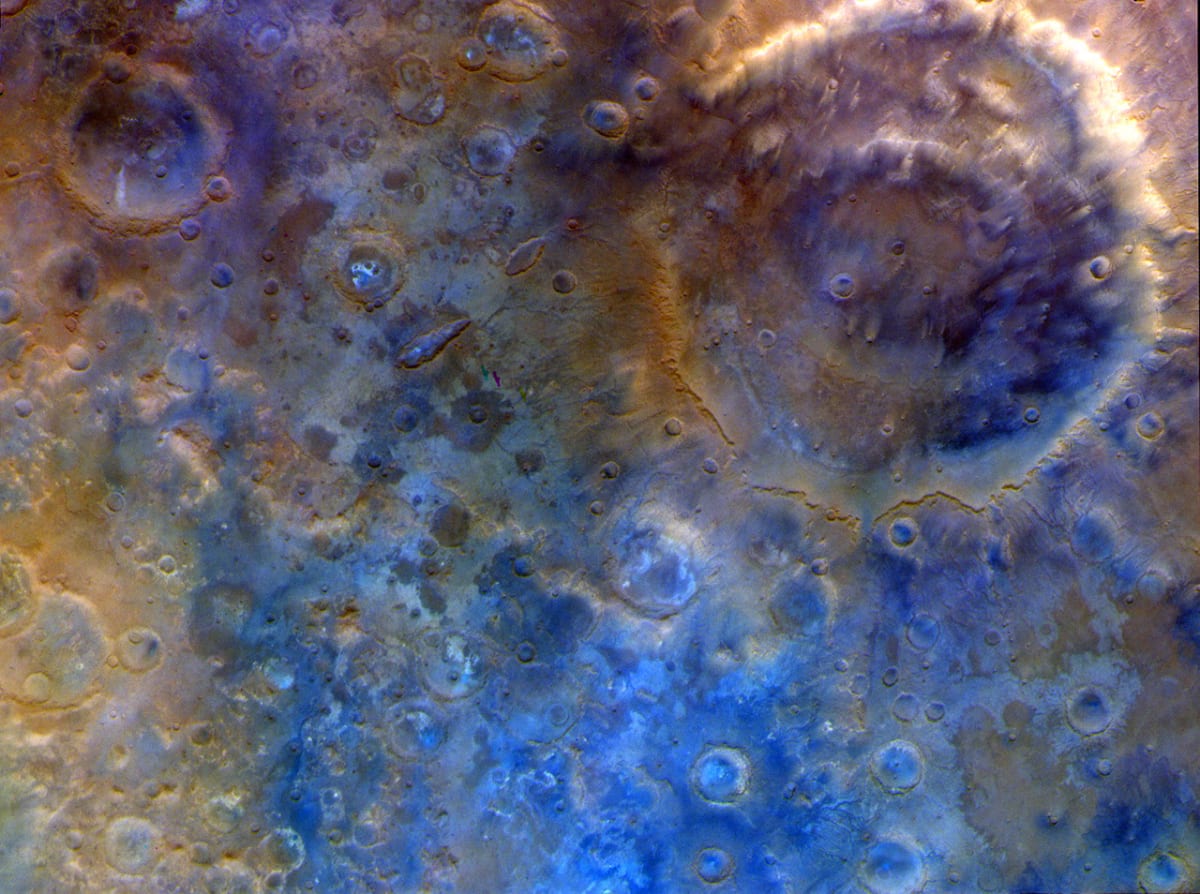
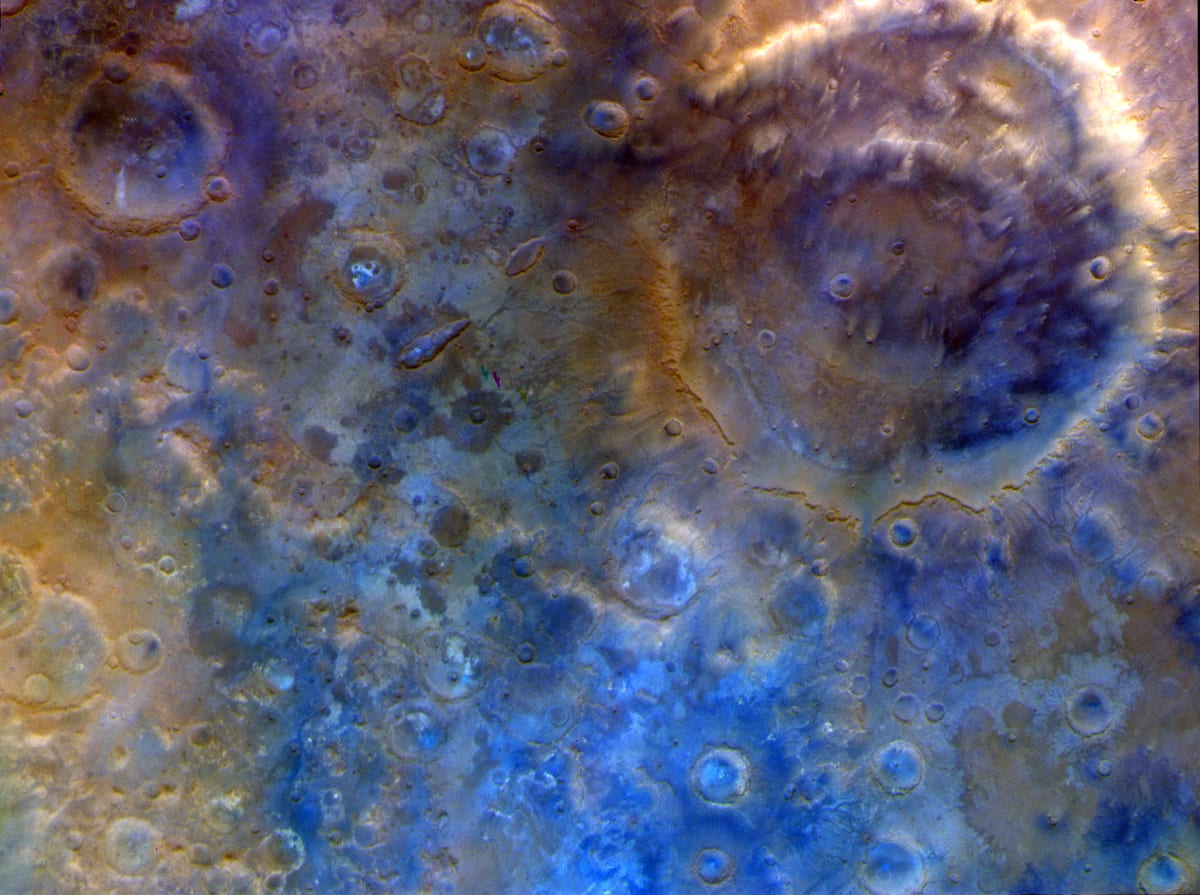
While traveling to its main destination (a metal-rich asteroid also named Psyche), the spacecraft flew past Mars in May 2026 and turned its cameras toward the Red Planet. The result is a stunning enhanced-color image of Huygens Crater, a massive 290-mile-wide double-ringed impact site in Mars' ancient southern highlands.
The photo reveals a dramatic landscape painted in unexpected colors. Shades of blue, orange, and tan mark different types of dust, sand, and bedrock scattered across terrain that's been collecting craters for billions of years.
Psyche's multispectral imager captured the image on May 15, 2026, just after its closest approach to Mars. The spacecraft used special filters to create an enhanced-color view that highlights details invisible to the naked eye, revealing the compositional diversity of this ancient Martian landscape.
The timing was perfect. Psyche needed to use Mars' gravity to help slingshot itself toward its ultimate target: a unique metal asteroid between Mars and Jupiter that scientists believe might be the exposed core of an early planet.
Why This Inspires
This Mars flyby shows how space missions can deliver unexpected bonuses. The Psyche team could have simply focused on their asteroid destination, but instead they made the most of their Martian encounter.
The practice also helps test the spacecraft's instruments before it reaches the asteroid in 2029. Scientists get valuable data about Mars while ensuring their cameras work perfectly for the main mission ahead.
Every pixel in this image covers an area about 2,200 feet across, meaning this single photo captures an enormous swath of Martian history. The heavily cratered terrain tells stories of billions of years of asteroid impacts that shaped the planet's surface.
These kinds of creative opportunities remind us that exploration doesn't follow a straight line. Sometimes the journey offers its own rewards, and scientists ready to adapt can multiply their discoveries.
The Psyche mission continues its journey toward an asteroid unlike any humanity has visited, carrying instruments that just proved they're ready for the challenge ahead.
More Images
Based on reporting by NASA
This story was written by BrightWire based on verified news reports.
Spread the positivity!
Share this good news with someone who needs it