New Alzheimer's Drug Design Fights 3 Disease Causes at Once
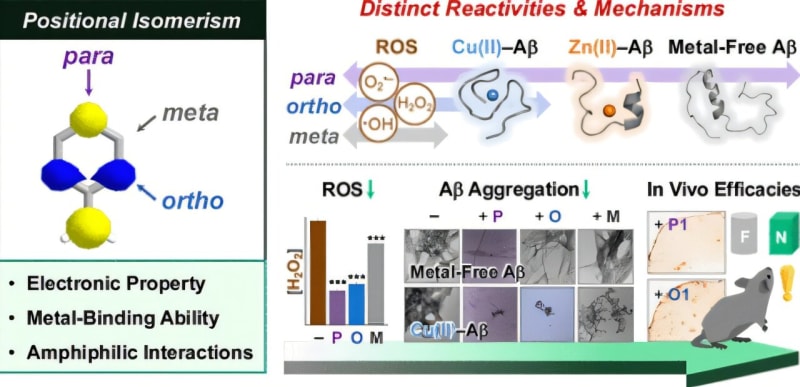
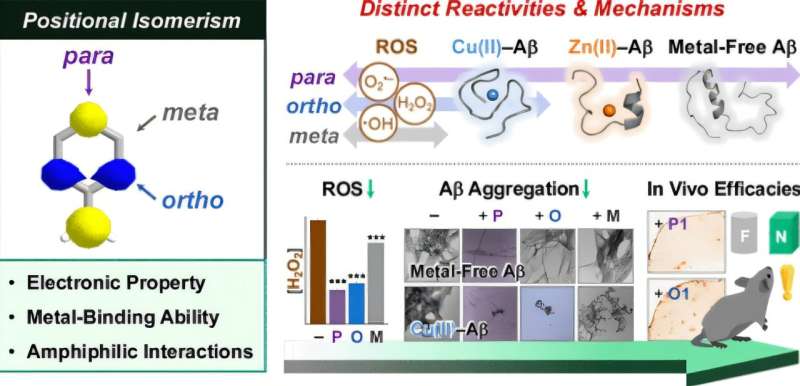
Scientists discovered they can target multiple Alzheimer's causes simultaneously just by rearranging how molecules connect, without changing their chemical makeup. In mice, one compound reduced brain plaques, lowered oxidative stress, and improved memory.
Scientists may have found a smarter way to fight Alzheimer's disease by attacking multiple causes at once instead of just one at a time.
Researchers at KAIST in South Korea discovered something remarkable: simply changing where chemical groups attach on a molecule, without changing the molecule itself, can create a drug that targets three different Alzheimer's problems simultaneously. Think of it like rearranging furniture in a room. Same pieces, different layout, completely different effect.
Professor Mi Hee Lim and her team focused on what scientists call positional isomers. These are molecules made of the exact same chemical ingredients, just connected in different spots. The tiny changes in positioning led to big differences in how the molecules fought disease.
The team compared three nearly identical molecules that differed only in where their functional groups attached. Each arrangement showed different strengths: some fought reactive oxygen species better, others interacted more effectively with amyloid beta proteins (the sticky plaques that clog Alzheimer's brains), and still others worked best on metal-bound protein complexes.
This matters because Alzheimer's isn't caused by just one problem. Amyloid proteins clump together, metal ions like copper and iron make those clumps more toxic, and reactive oxygen species damage brain cells. These factors work together to accelerate memory loss, which is why targeting just one has rarely worked well.
The researchers tested their best compound on mice genetically modified to develop Alzheimer's symptoms. The results were promising across multiple measures. The compound reduced oxidative stress specifically in the hippocampus, the brain's memory center. It also decreased the number of amyloid plaques building up in brain tissue.
Most importantly, the treated mice showed significant improvements in memory tests and overall cognitive function compared to untreated mice.
The Ripple Effect
This discovery could reshape how scientists design drugs for complex diseases beyond Alzheimer's. Parkinson's, diabetes, and cancer all involve multiple interacting problems that single-target drugs struggle to address. The positional isomer strategy offers a new toolkit for creating more effective treatments without starting from scratch with entirely new molecules.
The approach is also more efficient than traditional drug development. Instead of synthesizing completely different compounds and testing each one, researchers can systematically rearrange existing molecules to find the most effective configuration. That could mean faster progress and lower costs for bringing new therapies to patients.
The findings appeared in the Journal of the American Chemical Society, a peer-reviewed publication, adding credibility to the approach. While human trials remain years away, the research demonstrates that fighting Alzheimer's from multiple angles simultaneously is possible with elegant molecular engineering.
A simple rearrangement might be the key to unlocking better treatments for millions facing this devastating disease.
More Images
Based on reporting by Phys.org
This story was written by BrightWire based on verified news reports.
Spread the positivity!
Share this good news with someone who needs it