New Tech Could Help Next Space Telescope Find Alien Life
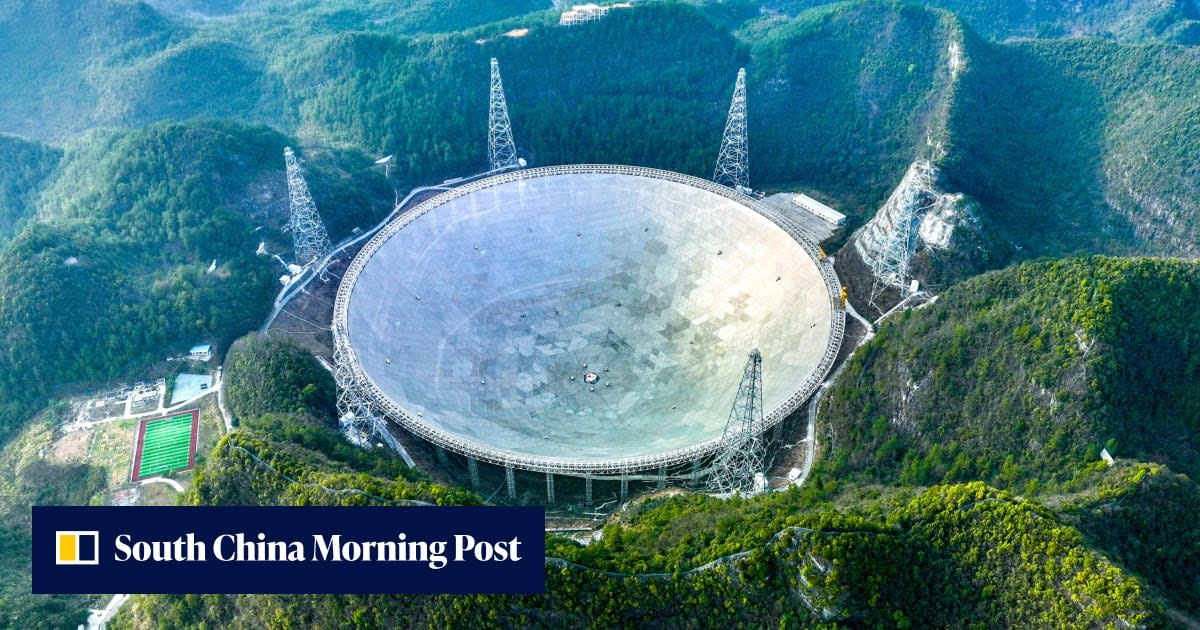
Scientists have solved the technical challenges that could make the 2040s Habitable Worlds Observatory twelve times more powerful than James Webb at detecting signs of life on distant planets. Two breakthrough technologies finally make it possible to spot critical molecules like carbon dioxide in alien atmospheres.
📺 Watch the full story above
The next great space telescope could be getting a major upgrade that makes finding life on other planets far more likely.
Researchers at the University of Texas at Austin have made the case for equipping the Habitable Worlds Observatory with a high-resolution spectrograph that's twelve times more powerful than the James Webb Space Telescope. The HWO, planned for launch in the 2040s, is still in its early design phase, giving engineers plenty of time to incorporate this game-changing technology.
The improvement comes down to resolution. James Webb operates at a resolution of 3,600, which scientists consider low to moderate. At that level, critical molecules like carbon dioxide become blurred and hard to detect. The proposed upgrade would boost resolution to 45,000, making weak molecular signatures crystal clear.
This matters because carbon dioxide is one of the key signs scientists look for when searching for habitable worlds. Higher resolution also helps filter out the overwhelming light from host stars, letting astronomers focus on the faint signals coming from planets themselves. As a bonus, the technology could even help scientists track weather patterns on planets light years away by measuring precise shifts in spectral lines.
So why haven't we done this before? The technology was simply too big, too heavy, and too noisy. Weight drives mission costs sky-high, and older high-resolution sensors produced so much electrical interference that much of their data was unusable.
Two recent inventions have changed everything. Silicon immersion gratings force light to bend inside high-refractive materials rather than bouncing off mirrors. This dramatically shrinks the size and weight of the spectrograph while eliminating moving parts that can break.
The second breakthrough involves avalanche photodiode arrays, new detectors with almost zero electrical noise. These sensors are so sensitive they can detect interference smaller than a single photon, making it much easier to separate planet light from starlight.
Both technologies have proven themselves in ground-based telescopes like the IGRINS instrument at Gemini South. The research team suggests flying a test mission in space before committing to the flagship telescope, ensuring everything works in the harsh environment beyond Earth's atmosphere.
Why This Inspires
We're still twenty years away from launching the Habitable Worlds Observatory, but scientists are already solving the hardest problems to make sure it succeeds. Each technical breakthrough brings us closer to answering humanity's oldest question: are we alone? These researchers aren't waiting for perfect conditions. They're building the tools we'll need to find life among the stars, one innovation at a time.
The question of whether life exists beyond Earth could finally have an answer in our lifetimes.
Based on reporting by Google: James Webb telescope
This story was written by BrightWire based on verified news reports.
Spread the positivity!
Share this good news with someone who needs it