Ocean's Oxygen Engine Runs on Microscopic Iron, Study Finds
Scientists discovered that phytoplankton, the tiny algae producing much of Earth's oxygen, rely on trace amounts of iron to photosynthesize. Without this microscopic nutrient, the ocean's entire food chain suffers.
The ocean produces more oxygen than all the world's forests combined, and scientists just figured out the tiny ingredient that makes it possible.
Researchers from Rutgers University spent 37 days between 2023 and 2024 sailing the South Atlantic and Antarctic Ocean, studying phytoplankton. These microscopic algae float near the surface and transform sunlight into energy while releasing oxygen into the atmosphere.
The team discovered that iron, needed only in trace amounts, acts as the critical gear keeping this oxygen engine running. When iron levels drop, phytoplankton waste up to 25% of their energy. They capture sunlight but can't convert it into useful chemical energy, releasing it as wasted fluorescence instead.
Lead researcher Heshani Pupulewatte and her team used customized fluorometers to measure this energy waste in real time. The results revealed how sensitive these tiny organisms are to iron scarcity.
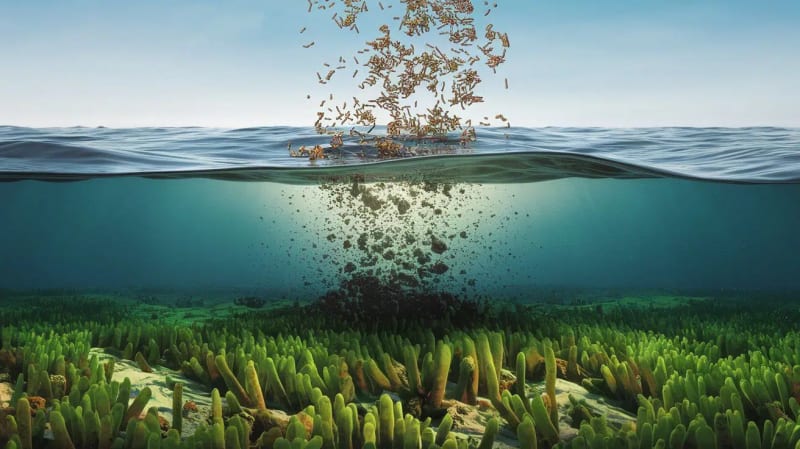
Iron reaches the ocean mainly through desert dust and glacier meltwater. Vast ocean regions naturally have low iron levels, but climate change threatens to make the problem worse by altering ocean circulation patterns.
The Ripple Effect
The consequences extend far beyond just oxygen production. Phytoplankton form the foundation of the ocean's food web, feeding krill that sustain penguins, seals, and whales throughout the Southern Ocean.
Less iron means less phytoplankton, which means less food for krill, which ultimately means fewer of the majestic creatures that depend on them. The invisible becomes visible as it moves up the food chain.
Researcher Paul Falkowski notes that iron already limits phytoplankton's ability to produce oxygen in vast ocean regions. Climate change could reduce iron supply in some areas, quietly decreasing ocean productivity without immediate alarm bells.
This doesn't mean humanity will run out of oxygen tomorrow. The atmosphere contains enough to sustain life for thousands of years even if all photosynthesis stopped today.
But the discovery highlights nature's delicate balance. The ocean's health depends on micronutrients we can barely measure, affecting systems we've barely begun to understand.
The research reveals how global health and ocean health connect through invisible threads. A microscopic element supporting microscopic organisms ultimately sustains the planet's largest animals and keeps our atmosphere breathable.
Understanding these fragile connections helps scientists monitor ocean health and predict how climate shifts might affect marine ecosystems before problems cascade through the food web.
More Images
Based on reporting by Google: scientific discovery
This story was written by BrightWire based on verified news reports.
Spread the positivity!
Share this good news with someone who needs it