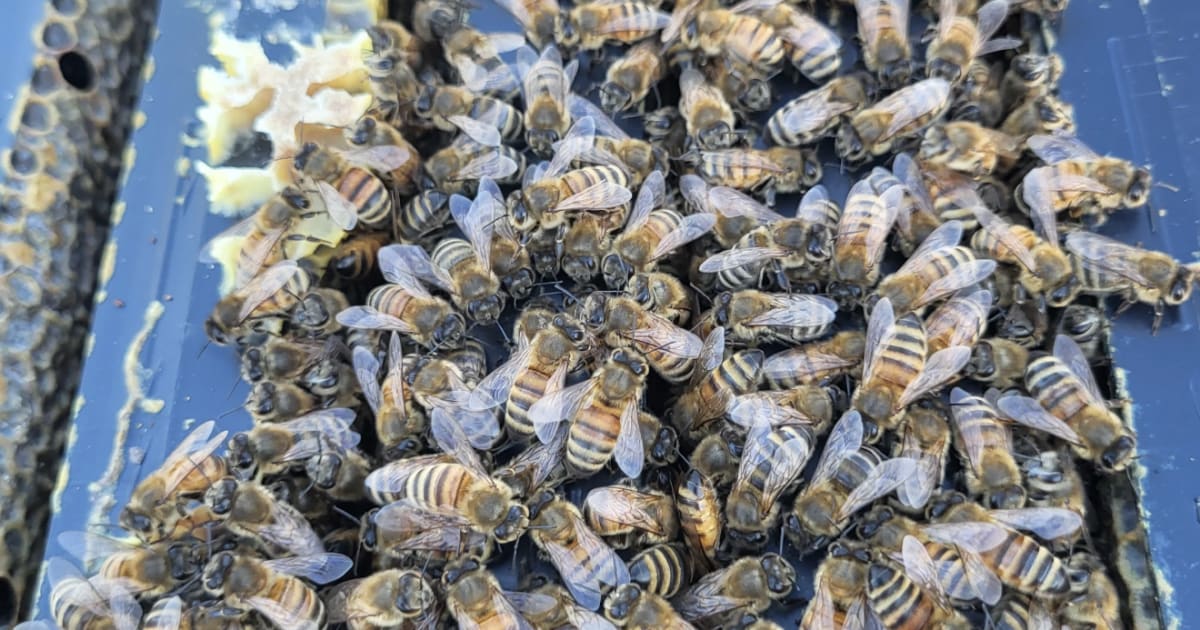
Ohio Scientists Breed Mite-Fighting Bees to Save Crops
Researchers at Central State University are creating honeybees that can fight back against deadly mites threatening Ohio's $124 billion agriculture industry. The new mite-resistant bees could protect the pollinators responsible for one in every three spoonfuls of food we eat.
Scientists in Ohio are giving honeybees a powerful new weapon in their fight for survival: the ability to bite back.
Researchers at Central State University's Bee Research Lab are breeding honeybees with special genetics that help them attack and remove varroa destructor mites, tiny parasites that have devastated bee populations across the state. These invasive mites killed 30 to 50% of Ohio's bee colonies last year alone.
The mites have grown resistant to pesticides, making them nearly unstoppable as they spread from hive to hive. Greene County beekeepers started noticing a sharp decline in bee sightings in 2024, and the problem has only gotten worse since then.
Dr. Hongmei Li-Byarlay, who leads the research team, is working with master beekeepers and colleagues at Purdue University to select bees with high mite-biting behavior. They use careful breeding techniques to create queen bees that pass these defensive traits to entire colonies.
The stakes couldn't be higher for Ohio's agriculture. Bees pollinate apples, strawberries, blueberries, watermelon, pumpkins, and squash across the state. Ohio's bees alone produce nearly one million pounds of honey annually while supporting crops worth billions.
The Ripple Effect
The research reaches beyond just saving bees. When honeybee populations thrive, entire ecosystems benefit, from wild plant populations to backyard gardens.
Everyday Ohioans can help too. Li-Byarlay recommends buying bees from local sources instead of ordering online, since shipped bees often carry unknown viruses and pathogens from other states. She also suggests mowing lawns less frequently so dandelions and clover can provide food for hungry pollinators.
Planting native species like black-eyed cornflowers and linden trees gives bees the nectar and pollen they need to flourish. Even small changes in home gardens can make a measurable difference for struggling colonies.
The research team will share their findings and beekeeping tips at the Ohio State Fair. Local beekeeping associations and Central State's programming offer additional resources for anyone wanting to support these essential pollinators.
Thanks to innovative breeding programs and community action, Ohio's bees are getting a fighting chance against their tiny attackers.
More Images

Based on reporting by Google News - Researchers Find
This story was written by BrightWire based on verified news reports.
Spread the positivity!
Share this good news with someone who needs it