One Asteroid May Have Given Mercury All Its Water Ice
Scientists discovered that a single massive asteroid impact could have delivered and spread Mercury's polar water ice in just 176 Earth days. New simulations show how the closest planet to the sun ended up with vast frozen water deposits despite scorching 800-degree temperatures.
The closest planet to the sun is hiding billions of gallons of ice, and scientists just figured out how it got there in record time.
New computer simulations reveal that one colossal asteroid impact may have delivered all of Mercury's polar water ice and spread it across the planet in a single Mercurian day. That's just 176 Earth days, far faster than scientists previously thought possible.
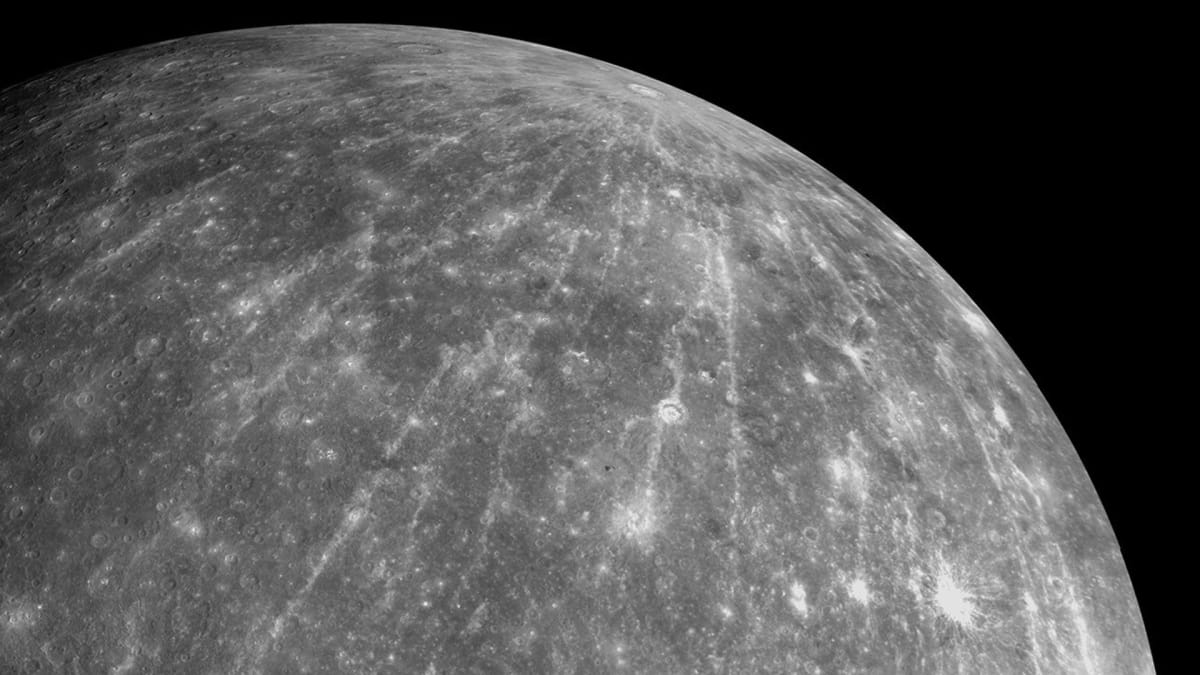
Mercury seems like the worst place in the solar system for water to survive. The sun appears nearly three times larger there than from Earth, and daytime temperatures soar above 800 degrees Fahrenheit.
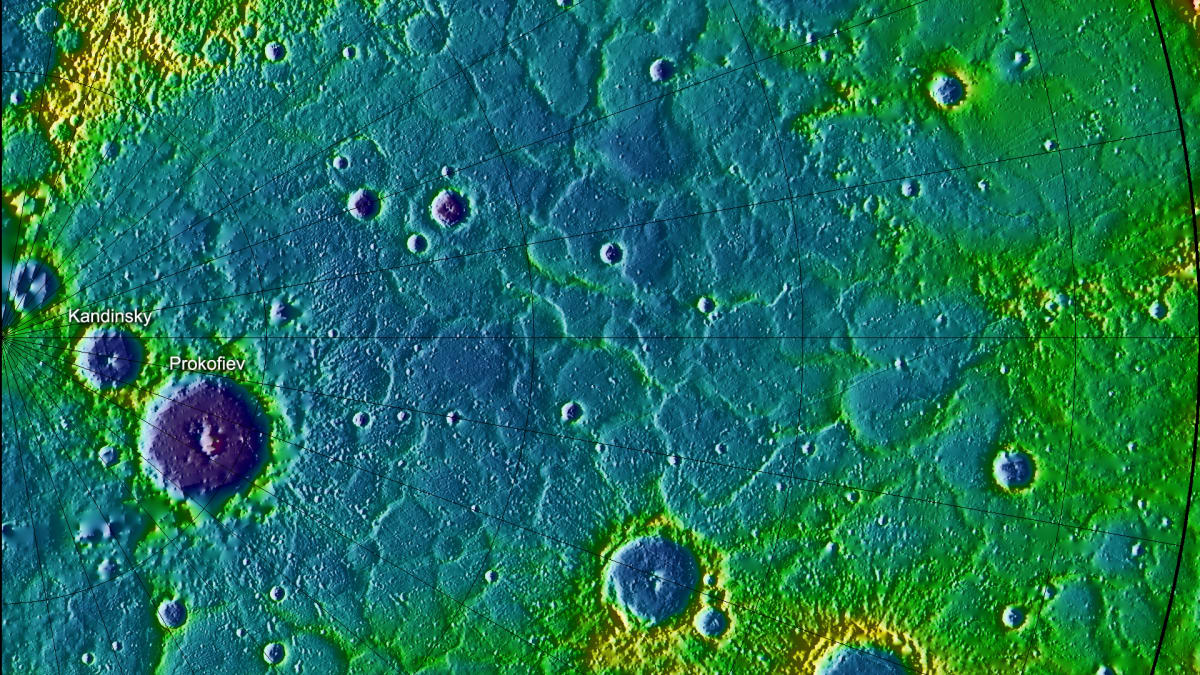
Yet telescopes in the 1990s spotted something remarkable. Deep craters near Mercury's poles, permanently hidden from sunlight, contain vast pockets of frozen water. NASA's MESSENGER spacecraft later confirmed these ice deposits were real.
Scientists have long wondered how this ice formed. The leading theory pointed to a recent impact from a water-rich asteroid, possibly the same collision that created Hokusai crater, a prominent 60-mile-wide scar in Mercury's northern hemisphere.
Researcher Parvathy Prem and her team at Johns Hopkins Applied Physics Laboratory tested this idea with detailed simulations. They recreated an impact matching Hokusai's scale: a 10-mile-wide asteroid slamming into Mercury at 67,000 miles per hour.
The results surprised everyone. Within just over an hour after impact, water vapor from the asteroid completely surrounded the planet like a temporary atmosphere.
Why This Inspires
The dense cloud of water vapor acted as its own shield against the sun's intense radiation. Instead of breaking down immediately, the water molecules survived long enough to migrate into permanently shadowed polar craters where they froze solid.
This discovery suggests Mercury's ice arrived rapidly in one dramatic event rather than accumulating slowly over billions of years. The rapid delivery also explains why the ice appears so pure, with minimal contamination from other materials.
Cold craters like Kandinsky and Prokofiev at Mercury's north pole can be miles deep and may never receive any sunlight. These natural freezers have preserved their icy cargo for potentially millions of years.
The $1.8 billion BepiColombo mission will soon test this theory. The joint European-Japanese spacecraft is scheduled to enter Mercury's orbit in November after overcoming thruster problems that delayed its arrival.
BepiColombo's two probes will study Mercury from different orbits, providing unprecedented detail about the polar ice deposits and potentially confirming whether one massive impact truly delivered all that frozen water.
Understanding how water survived on Mercury helps scientists learn how precious water molecules travel and persist throughout our solar system, even in the most extreme environments.
More Images

Based on reporting by Space.com
This story was written by BrightWire based on verified news reports.
Spread the positivity!
Share this good news with someone who needs it