Palm-Sized Blue Octopus Discovered in Deep Galápagos Sea
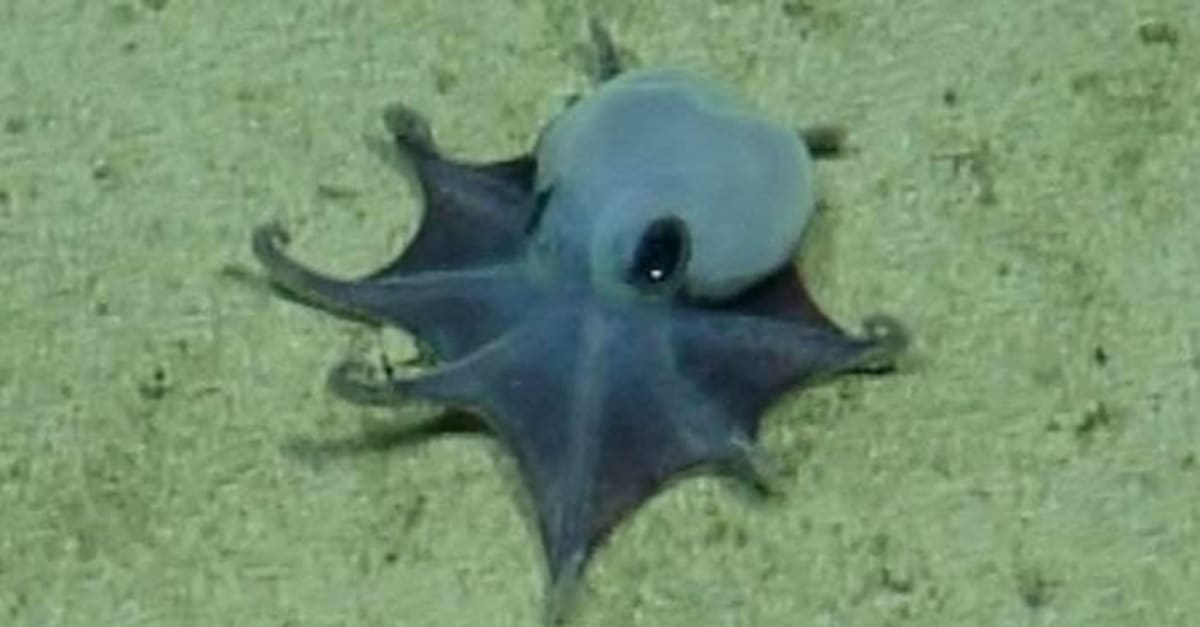
Scientists have discovered and named a tiny blue octopus that lives nearly 6,000 feet below the ocean's surface near the Galápagos Islands. The vibrant creature is so small it fits in your hand, and researchers used cutting-edge 3D imaging to study it without harming this rare specimen.
A thumb-sized blue octopus living in the deep waters off the Galápagos Islands just became science's newest officially named species.
The tiny cephalopod, now called Microeledone galapagensis, was first spotted in 2015 during a deep-sea expedition near Darwin Island. Marine biologists piloting a remotely operated underwater vehicle nearly a mile beneath the surface caught sight of the vibrant blue creature on their cameras.
"Right away, I knew it was something really special," said Janet Voight, lead researcher from Chicago's Field Museum. "I'd never seen anything like it."
The team managed to collect one specimen and film two others before bringing their prize to the surface. But here's where it got tricky: determining if an animal represents a new species requires examining all its body parts, and this was the only one ever collected.
Rather than dissect and destroy such a rare find, researchers turned to technology. They used X-ray computed tomography to create thousands of micro-scans, building a complete 3D model of the octopus inside and out.
The virtual dissection revealed everything scientists needed. The octopus has squat tentacles with few suckers, smooth skin nearly devoid of pigment on its back, and distinctive internal organs that set it apart from any known species.
The Ripple Effect
This discovery highlights how much mystery still surrounds our ocean depths. Every deep-sea expedition reveals creatures we never knew existed, reminding us why protecting these ecosystems matters before we fully understand them.
The technology used here also changes the game for marine biology. Scientists can now study incredibly rare specimens without destroying them, preserving these treasures for future research while still unlocking their secrets today.
"These are little octopuses that live in the deep sea, and hardly anybody on Earth has ever gotten to see them," Voight said. She pointed out that if you pieced all Earth's land together, it still wouldn't cover the Pacific Ocean alone.
The blue octopus joins thousands of species discovered in recent years, each one expanding our understanding of life's incredible diversity. For every creature we find, countless others remain hidden in the vast darkness of the deep sea, waiting for their moment in the light.
Sometimes the most amazing discoveries come in the smallest packages.
More Images




Based on reporting by Wired
This story was written by BrightWire based on verified news reports.
Spread the positivity!
Share this good news with someone who needs it