Patient Camera Finally Captures Giant Squid After 7 Years
After a dramatic 1997 expedition failed to film giant squid using whale-mounted cameras, scientists discovered something better: patience works. A simple baited camera quietly waiting in deep water succeeded where high-tech pursuit had failed.
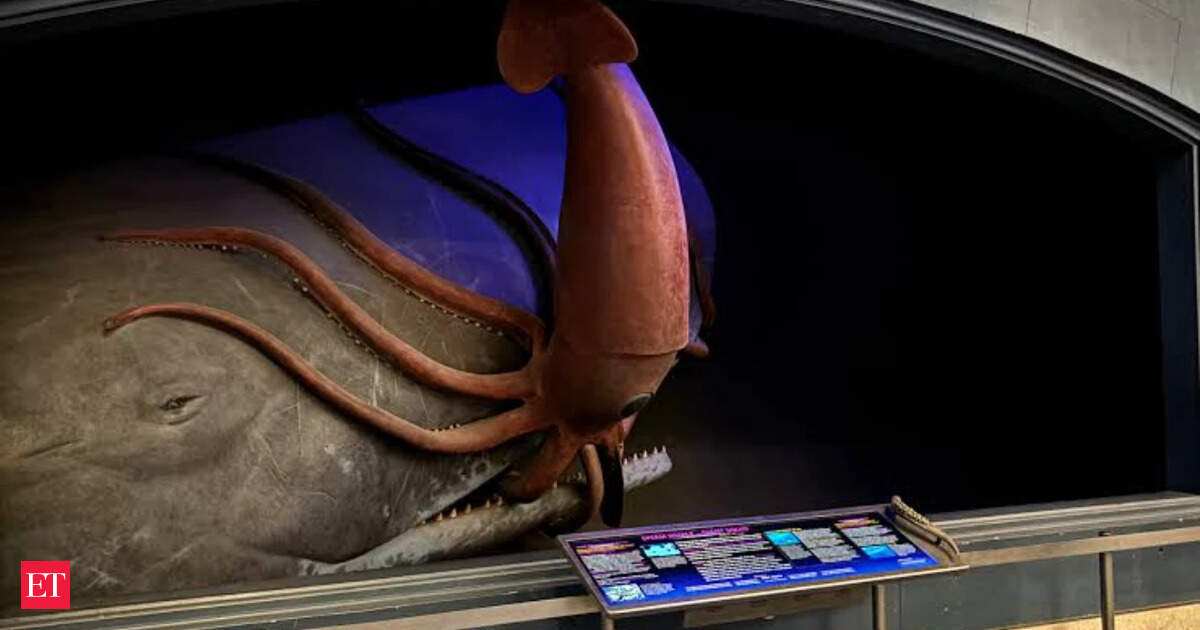
For decades, scientists knew giant squid existed because sperm whales surfaced with mysterious circular scars across their bodies, proof of battles fought in darkness thousands of feet below.
In 1997, researcher Clyde Roper tried something bold off New Zealand's coast. His team strapped a high-tech camera called Crittercam onto a sperm whale, hoping the natural predator would lead them straight to its enormous prey in the deep Kaikoura Canyon.
The suction cup failed almost immediately. The camera detached before capturing anything, while other robotic vehicles surveyed empty water. No giant squid appeared despite all the expensive technology and careful planning.
But the failure taught researchers something crucial about studying animals in extreme environments. Knowing where something lives is completely different from actually finding it, especially when that somewhere is a pitch-black ocean trench where pressure crushes most equipment.
Sperm whales remained the best clue scientists had. The circular scars on their skin matched the size and pattern of giant squid suckers perfectly. Somewhere in the deep, these titans were meeting, but the ocean kept their encounters hidden.
Seven years later, Japanese researchers Tsunemi Kubodera and Kyoichi Mori tried a different approach near the Ogasawara Islands, about 1,000 kilometers south of Tokyo. Instead of chasing whales through darkness, they lowered bait on a line and attached a simple camera that snapped photos automatically.
Then they waited.
The Bright Side
The patience paid off in 2004 when the camera captured images of a living giant squid attacking the bait in its natural deep-sea home. The photographs were grainy and simple compared to what the 1997 high-tech equipment promised, but they were real.
Scientists finally had proof of a giant squid alive and hunting, not just tentacles and beaks washed ashore or scars on whale skin. The creature that had inspired sea monster legends for centuries was no longer just a ghost story told through physical evidence.
The success came from changing the entire strategy. Instead of trying to follow fast-moving predators through an environment that destroys human technology, the researchers let the ocean come to them. The camera sat quietly in the darkness, waiting for curiosity or hunger to bring the squid close enough.
The 1997 failure turned out to be just as important as the 2004 success. Those early expeditions showed what would not work and helped scientists understand they needed to think more like the ocean itself: patient, persistent, and willing to wait years for a single perfect moment.
Now we know giant squid not through mythology or scattered remains, but as living animals navigating the deepest parts of our ocean.
More Images



Based on reporting by Google News - Researchers Find
This story was written by BrightWire based on verified news reports.
Spread the positivity!
Share this good news with someone who needs it