People Pay $59 to Make Their Phones Work Less
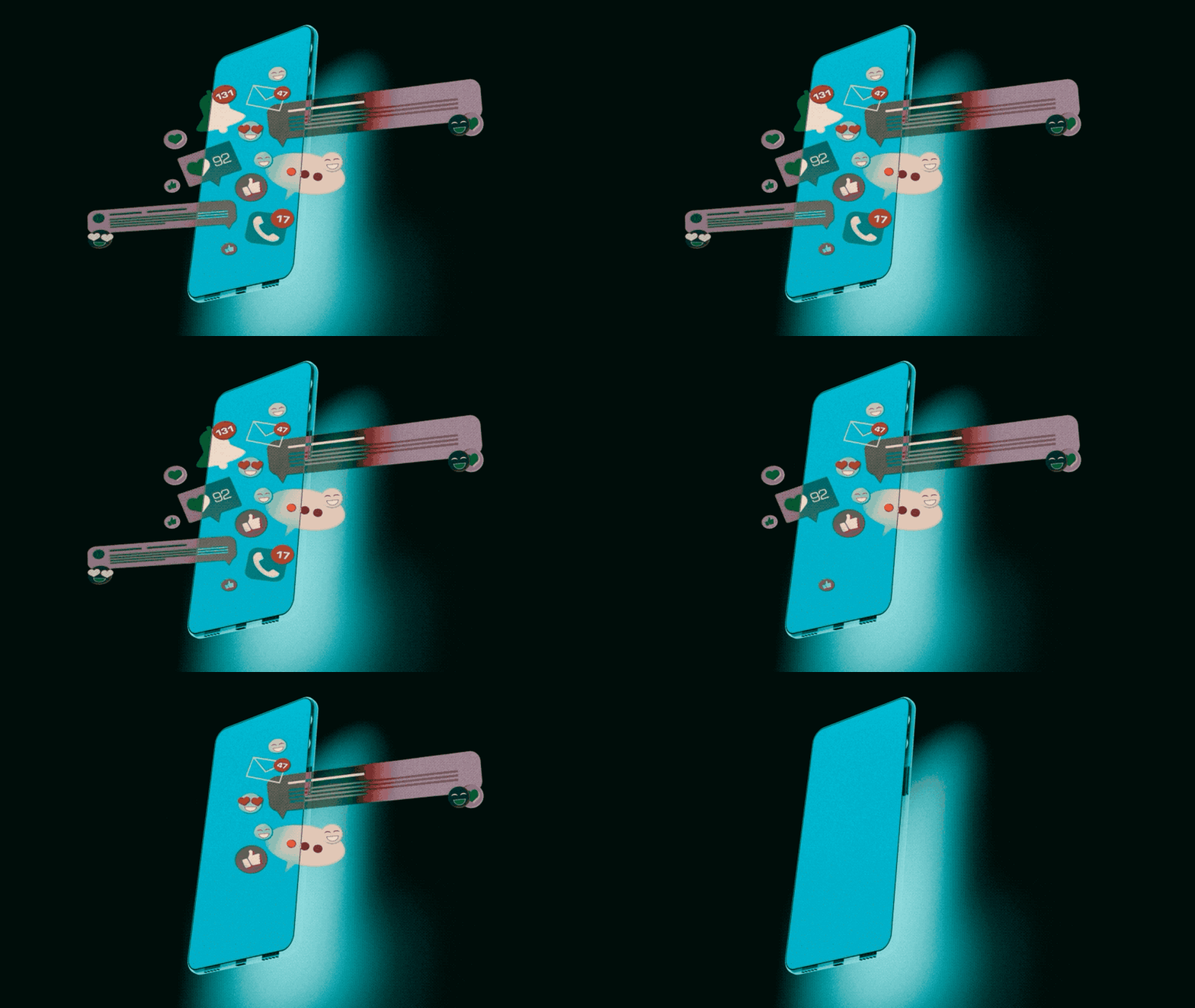
A basement-made device that blocks your apps is selling thousands of units. The tech world's newest status symbol is doing less, not more.
Two Wisconsin graduates are selling a gray 3D-printed square that makes your phone harder to use, and people can't get enough of it.
TJ Driver and Zach Nasgowitz created the Brick in late 2023. Tap your phone against it, and your chosen apps lock until you tap again. The catch? You stick it to your fridge or desk, forcing yourself to physically walk over every time you want to scroll Instagram. By adding just seconds of effort, most users realize they didn't actually want to open the app at all.
Within months, they sold 2,000 units at $59 each, all printed in their basement. By January, Business Insider called "Bricking" the new Dry January, and The New York Times predicted stripped-down phones would become a status symbol.
This should be a quirky niche product. Instead, it's becoming an entire category. Bloom offers a $39 stainless steel card that does the same thing. Norma sells a luxury version for $70, marketed like a high-end watch rather than a gadget. When a product barely three years old already has budget and premium tiers, something bigger is happening.
For decades, tech companies competed on one goal: removing friction between wanting something and getting it. Amazon invented one-click buying. Uber eliminated calling for a cab. Netflix auto-played the next episode before you could decide to stop watching. Every update, every redesign pushed the same direction: faster, easier, more automatic.
Now people are paying to go backward. The Light Phone III costs $699 and has no browser or social media. It sells anyway. ReMarkable makes an e-paper tablet that can't show notifications and hit $300 million in revenue by 2022. Punkt sells 50,000 minimalist phones yearly at up to $299.
The product isn't the technology. The product is the limit itself.
Why This Inspires
This movement isn't about rejecting technology. It's about reclaiming choice. Driver describes the Brick's purpose simply: that extra moment of effort lets you decide whether you really want to open an app or stay present. For 20 years, Silicon Valley built entire empires on removing exactly those moments of decision.
What started as individual frustration is becoming collective action. Some people buy these devices as self-control tools. Others see them as focus aids, trading fewer options for better attention. And some buy them as public commitments, visible proof they're choosing differently.
The real story isn't that people want less technology. It's that they want their attention back, and they're willing to pay for the privilege of having to try harder. In a world that spent decades making everything effortless, effort itself has become the luxury good.
Thousands of people are voting with their wallets for products that make life slightly more difficult, and that might be the most hopeful sign yet that we're learning to use our tools instead of being used by them.
Based on reporting by Fast Company - Innovation
This story was written by BrightWire based on verified news reports.
Spread the positivity!
Share this good news with someone who needs it