
Physicist Who Found Higgs Boson Explains Time's Mysteries
A scientist who helped discover one of the universe's most fundamental particles is making the mind-bending science of time accessible to everyone. His new book reveals how modern physics is unlocking secrets ancient civilizations could only dream about.
The physicist who helped discover the Higgs boson in 2012 just made one of humanity's oldest questions finally understandable: What is time, really?
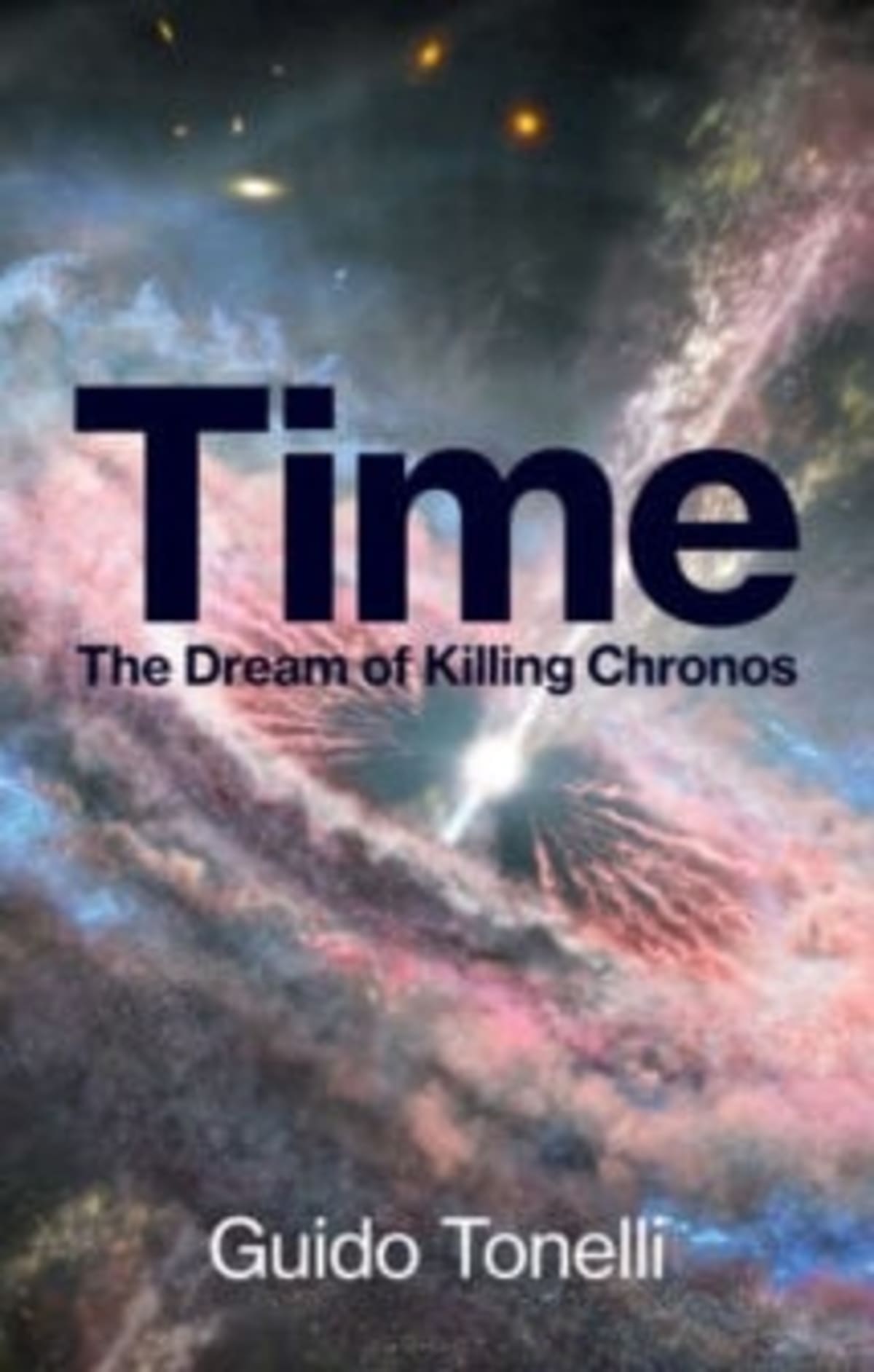
Guido Tonelli, a particle physicist at the University of Pisa in Italy, spent decades probing the universe's deepest secrets. Now he's written a book called "Time: The Dream of Killing Chronos" that brings his groundbreaking work to everyday readers.
Ancient Greeks imagined time as a giant three-headed snake circling the cosmos, eternal and unstoppable. For thousands of years, humans wondered if we could ever master time, reverse it, or escape it. Tonelli says modern science has actually found the answer, and it's wilder than mythology.
"There are places in which time stops," Tonelli told Gizmodo. At the center of black holes, spacetime warps so dramatically that time becomes meaningless. Scientists have discovered regions where Chronos, the ancient god of time, no longer rules.
The journey to this discovery started with Albert Einstein. In the early 20th century, Einstein revealed that time isn't the universal, unchanging clock Isaac Newton thought it was. Time actually bends and stretches depending on how fast you're moving.
If you could run at the speed of light, your experience of time would differ completely from someone standing still. Space and time aren't separate things but interconnected parts of a single fabric.
Einstein's second revelation was even more revolutionary. Mass and energy can actually warp the shape of spacetime itself. Scientists have tested this idea thousands of times with incredible precision, and it holds true every single time.
Why This Inspires
What makes Tonelli's work so hopeful is how it democratizes wonder. The deepest mysteries of existence aren't locked away in ivory towers anymore. A scientist who won the Special Breakthrough Prize in Fundamental Physics is taking the time to share these discoveries in plain language.
His book reminds us that humanity has come astonishingly far. We've moved from mythological snake gods to actually measuring how time behaves in different corners of the universe. We've built tools precise enough to detect particles that give other particles mass, and clocks accurate enough to measure how time flows differently just a few feet apart.
The microscopic world of atoms and electrons operates under completely different time rules than our daily lives. When you spill coffee, you can't un-spill it, but at the quantum level, certain processes can actually reverse. Time's arrow can point both directions for the tiniest particles.
These aren't just abstract ideas for physicists to debate. Understanding time helps us grasp our place in the cosmos and appreciate how far human knowledge has traveled. Every smartphone, GPS system, and modern technology relies on Einstein's insights about time.
We may never kill Chronos, but we've done something perhaps more remarkable: we've learned his language.
More Images



Based on reporting by Google News - Science
This story was written by BrightWire based on verified news reports.
Spread the positivity!
Share this good news with someone who needs it