Pumas Return to Patagonia, But Penguins Hold Strong
After decades away, pumas are back in southern Argentina and hunting thousands of penguins annually. New research brings surprisingly hopeful news about what this means for both species.
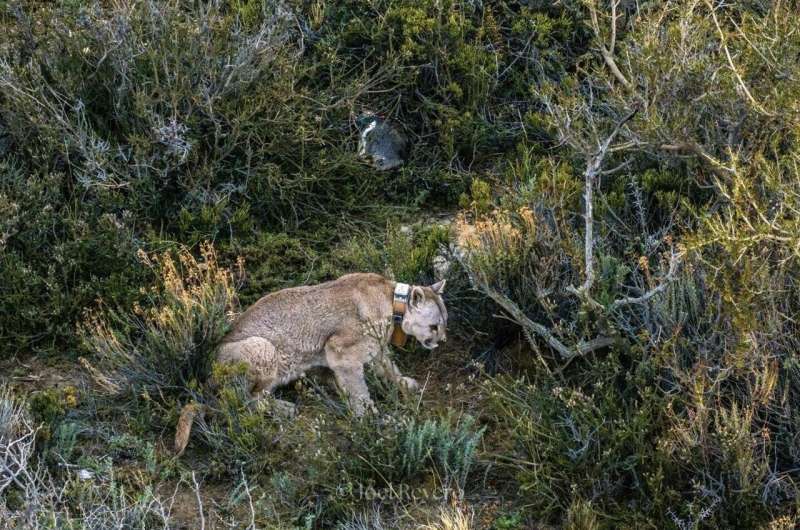
When cattle ranching ended in southern Argentina in 1990, something remarkable happened: pumas began returning to lands they'd roamed for thousands of years.
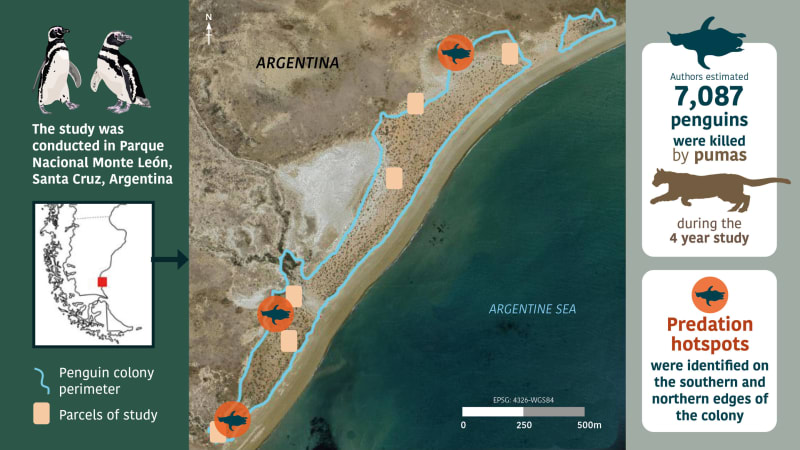
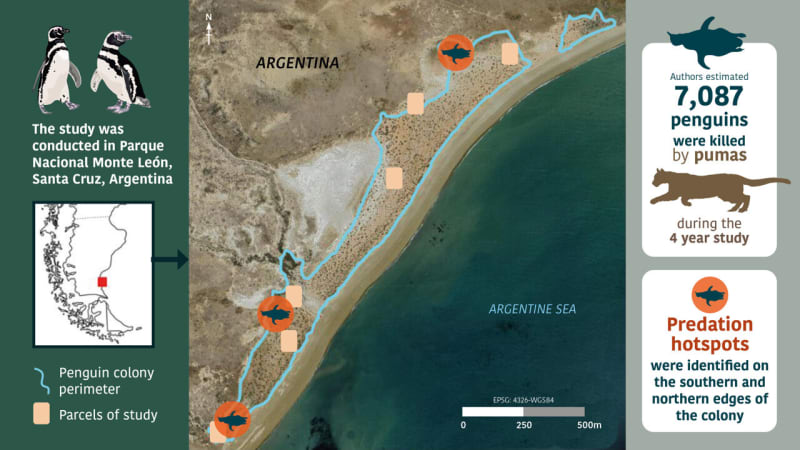
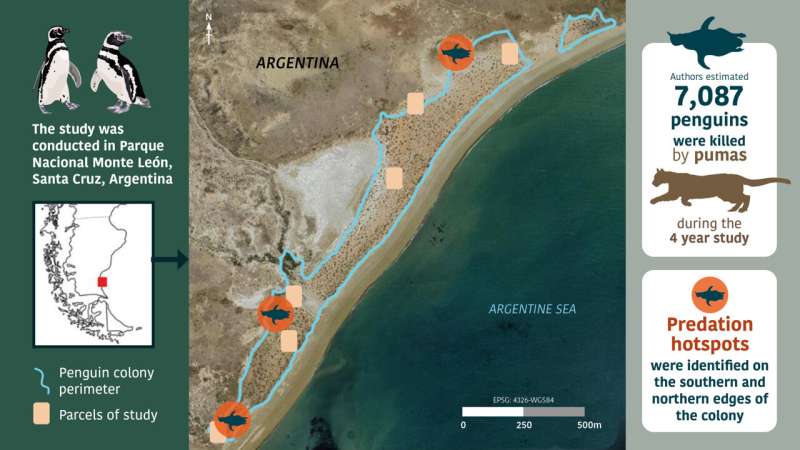
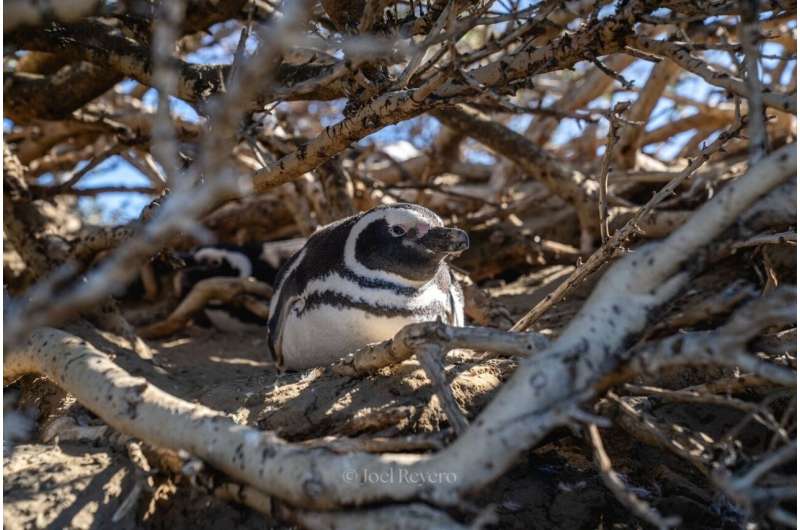
Their comeback created an unexpected wildlife encounter at Monte León National Park. Magellanic penguins, who'd moved to the mainland in the pumas' absence, suddenly found themselves face to face with predators they'd never encountered before.
The numbers looked alarming at first. Between 2007 and 2010, researchers counted over 7,000 penguin deaths caused by pumas, many left uneaten. That's nearly 8% of the adult population in just four years.
Lead researcher Melisa Lera from Oxford University's Wildlife Conservation Research Unit noticed something unusual. "The penguins were left uneaten, meaning pumas were killing more than they needed for food," she explains. Scientists call this "surplus killing," similar to how house cats hunt birds they don't actually eat.
But here's where the story takes a turn. When the team modeled the colony's future using their data, they discovered the penguins aren't heading toward extinction. The colony can withstand puma predation under normal conditions.
What matters most for penguin survival isn't pumas at all. It's breeding success and whether young penguins survive to adulthood. Only when scientists combined extremely low breeding rates with poor juvenile survival did their models predict serious trouble.
The Bright Side
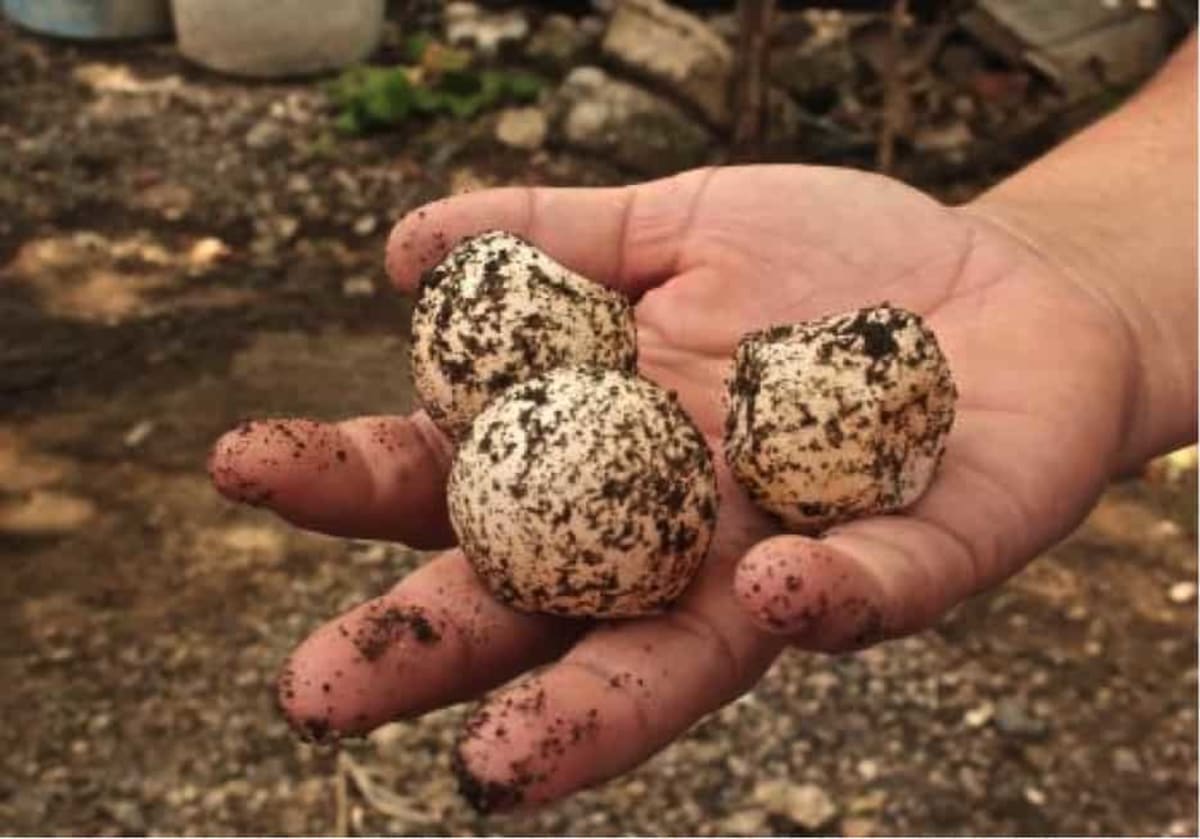
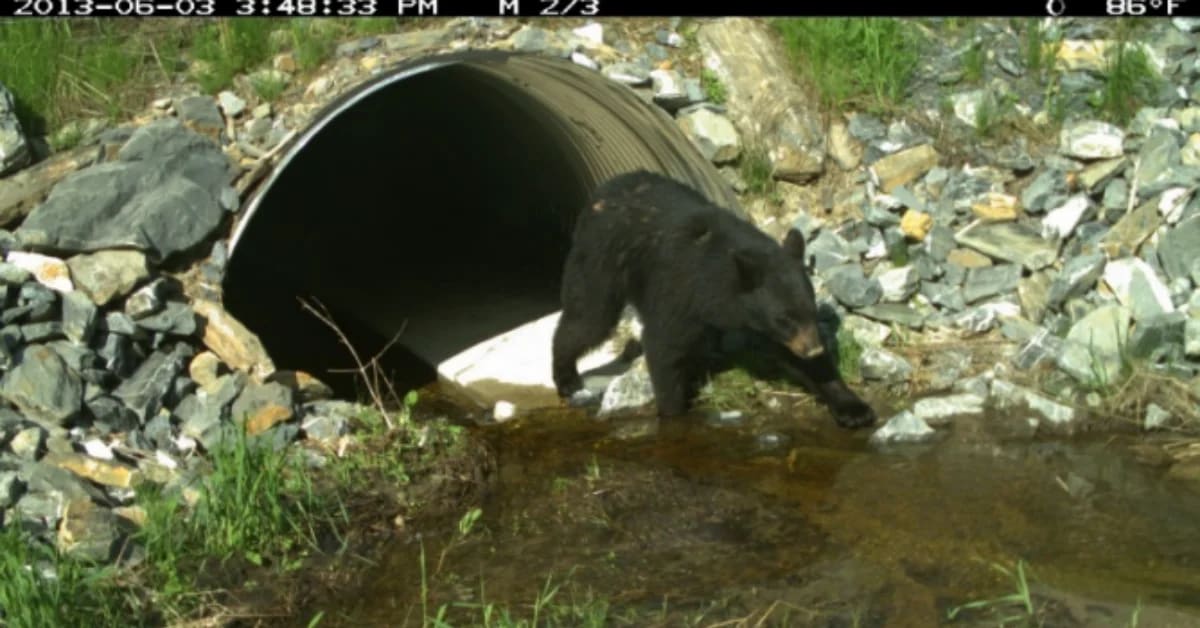
This research solves a conservation puzzle that's becoming more common worldwide. As top predators recover from near extinction, they're meeting prey in new ways. Coyotes are colonizing coastal islands in North America. Wild hogs threaten sea turtle eggs along Georgia's coast.
Understanding these new relationships helps conservationists protect both species. Dr. Jorgelina Marino, study co-author, emphasizes that "understanding how these dietary shifts affect both predators and prey is essential to inform conservation."
The real threats facing the penguins come from climate change affecting ocean temperatures, food availability, and breeding conditions. Park rangers continue monitoring both populations, watching for early warning signs.
After 30 years apart, pumas and penguins are learning to share the Patagonian coast again, proving that nature's resilience often exceeds our expectations.
More Images
Based on reporting by Phys.org
This story was written by BrightWire based on verified news reports.
Spread the positivity!
Share this good news with someone who needs it