Radio Waves Reveal Star's Dramatic Final Years Before Death
Astronomers captured radio signals from an exploding star for the first time, revealing what happened in its final decade of life. The discovery gives scientists a powerful new tool to study how massive stars die across the universe.
Scientists just caught a dying star's final message, and it's rewriting what we know about stellar death.
For the first time ever, astronomers detected radio waves from a rare type of exploding star, creating what researchers call a "time machine" into the dramatic last years before a supernova. The breakthrough reveals that some stars experience incredibly violent final moments that were previously hidden from view.
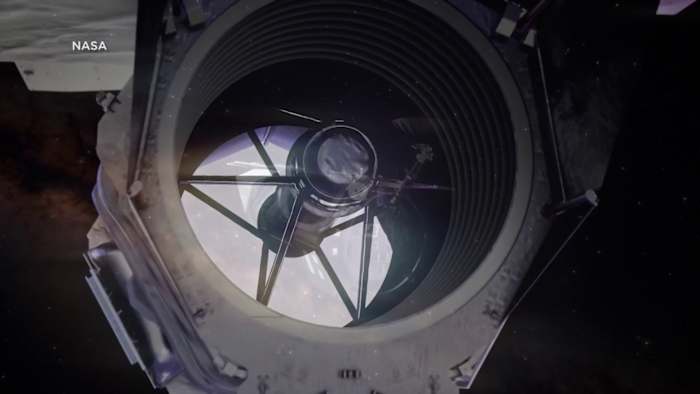
The team from the University of Virginia tracked radio emissions from a Type Ibn supernova for 18 months using the Very Large Array radio telescope in New Mexico. These faint signals carried evidence that the star violently shed enormous amounts of material just years before it exploded.
Raphael Baer-Way, a Ph.D. student who led the study, explained how the discovery works. When a star releases massive amounts of gas before dying, that material acts like a mirror in space, reflecting radio waves when the supernova's shockwave hits it.
"We were able to use radio observations to 'view' the final decade of the star's life before the explosion," Baer-Way said. The signals showed the star was losing mass intensely during its final five years, behavior so extreme it almost certainly means the star had a companion.
The observations suggest the doomed star was part of a binary system, with two stars orbiting each other. Gravitational interactions with its companion likely triggered the extreme mass loss that made the star's final years so turbulent.
Why This Inspires
This discovery opens an entirely new way to study stellar death across the universe. Until now, scientists relied mainly on visible light, which can only capture part of the story. Radio observations reveal details that were simply invisible before.
The implications reach far beyond one exploding star. By examining more supernovae with radio telescopes, scientists can now determine how common these dramatic death throes really are and what they teach us about how stars evolve throughout their lives.
Professor Maryam Modjaz, an expert on massive star death at UVA, called the work groundbreaking. "Raphael's paper has opened a new window to the Universe for studying these rare, but crucial supernovae," she said, noting that researchers must now point radio telescopes at exploding stars much earlier than previously thought to capture their fleeting signals.
The team's next step involves studying a larger sample of supernovae to understand just how many stars experience these violent final chapters. Each new observation brings scientists closer to understanding the full life cycle of the massive stars that forge the elements essential for planets and life itself.
We're learning that the universe's most powerful endings are even more spectacular than we imagined.
Based on reporting by Science Daily
This story was written by BrightWire based on verified news reports.
Spread the positivity!
Share this good news with someone who needs it