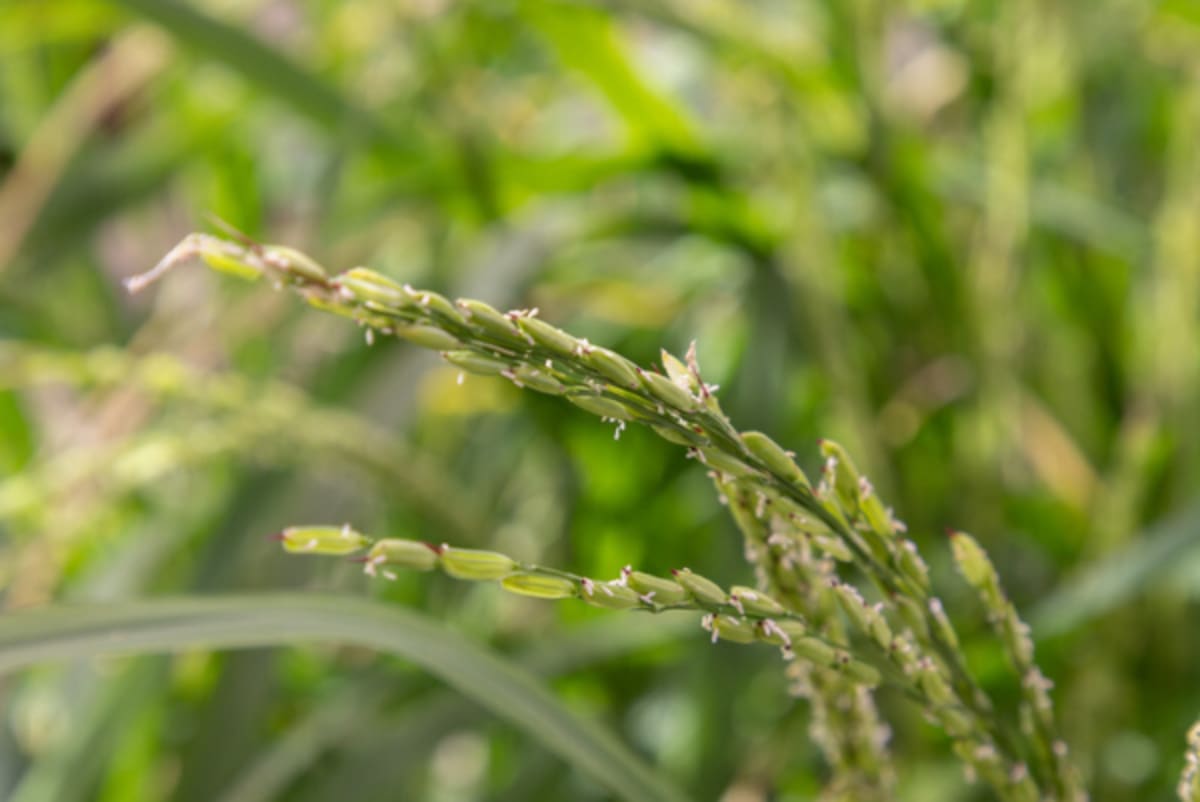
Rice Plants Trap and Kill Pests in Self-Defense Discovery
Scientists at the University of Arkansas discovered rice plants can trap and kill armyworm caterpillars using their flowers like natural pest traps. This accidental finding could help farmers fight crop-destroying insects without toxic chemicals.
A researcher studying rice stress tolerance stumbled upon something extraordinary: rice plants were killing their attackers all on their own.
Devi Balakrishnan, a doctoral researcher at the University of Arkansas, noticed something odd during her experiments. The fall armyworm caterpillars she was using weren't feeding on the rice plants. They were dead, trapped inside the flower structures.
"I was doing another experiment and started noticing these caterpillars were inside the spikelet, and they were dead," Balakrishnan said. What began as a puzzling observation became one of the lab's most significant discoveries.
The research team found that rice uses a clever two-part defense system during flowering. The plants release sweet floral scents that lure hungry caterpillars toward the flowers, promising a nutritious meal. But it's a trap.
Once the young caterpillars crawl inside the rice spikelets (the structures where grains develop), tiny hair-like features called trichomes snag them. The spikelet slowly closes around the trapped insects, and roughly 50% of week-old caterpillars die inside, unable to escape or feed.
"Rice is a very defensive plant, which we don't typically say about rice," said Rupesh Kariyat, the associate professor guiding the research. "We think fall armyworms get enticed, because the floral scent basically tells the caterpillar there is better food here."
The discovery comes at a critical time. Fall armyworms are developing resistance to common insecticides across multiple farming regions, leaving growers with fewer options to protect their crops.
The Ripple Effect
This natural defense mechanism could reshape how farmers manage pests worldwide. The research team is now exploring whether they can develop natural sprays that enhance the rice plant's floral scents during flowering, essentially turning up the volume on this built-in pest control system.
Different rice varieties might have stronger trapping abilities than others. Plant breeders could use this knowledge to develop new rice strains with enhanced natural defenses, reducing farmers' dependence on chemical pesticides.
The implications extend beyond just rice fields. Understanding how plants protect their most vulnerable reproductive structures could inform crop breeding programs across many food crops, helping feed growing populations while reducing environmental impacts from synthetic pesticides.
The team plans to test whether this mechanism works across different rice varieties and other caterpillar species. Larger caterpillars with stronger jaws might escape the trap, but targeting young larvae could still significantly reduce pest damage.
Sometimes the best discoveries happen when you're looking for something else entirely.
Based on reporting by Google News - Scientists Discover
This story was written by BrightWire based on verified news reports.
Spread the positivity!
Share this good news with someone who needs it