Scientists Bring 3.2-Billion-Year-Old Enzyme Back to Life
NASA-funded researchers have resurrected an ancient enzyme from Earth's earliest lifeforms, proving we can detect signs of life billions of years old. The discovery gives us a reliable tool to search for ancient life on Mars and other worlds.
Scientists just brought a 3.2-billion-year-old enzyme back to life, and it still works exactly like it did when Earth was young.
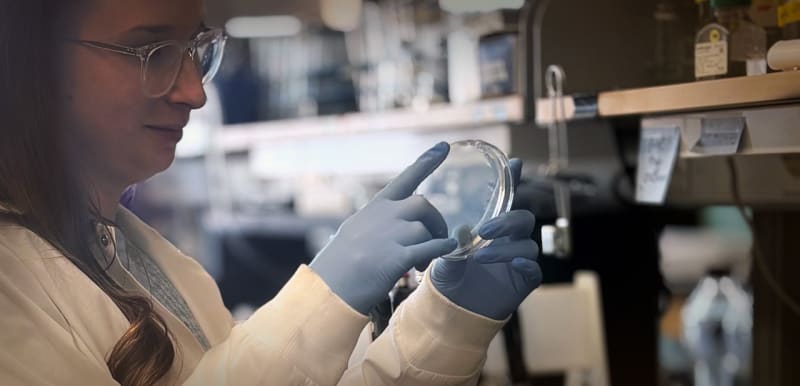
Researchers at the University of Wisconsin-Madison, supported by NASA, recreated an ancient version of nitrogenase, an enzyme that converts atmospheric nitrogen into forms all living things need to survive. Every protein in your body, every strand of DNA, relies on nitrogen that was originally processed by organisms containing this remarkable enzyme.
The team reverse-engineered modern nitrogenase like archaeologists peeling away layers of history. They stripped away billions of years of evolutionary changes to reveal what the enzyme looked like when only single-celled microorganisms existed on Earth.
Then they did something extraordinary: they inserted these ancient enzymes into living microbes to see how they behaved.
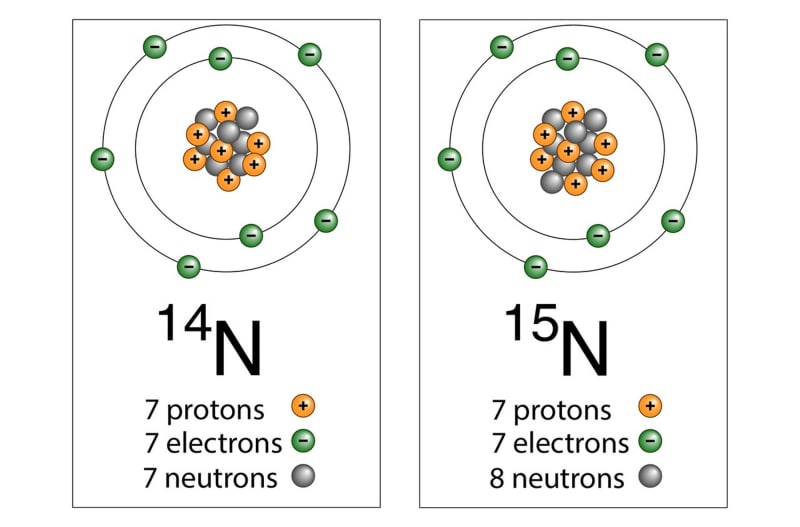
Despite being structurally different from modern versions, the ancient enzymes performed the exact same chemistry. More importantly, they left behind the same chemical signature in nitrogen isotopes that scientists have been using to study ancient life in rocks.
"Early life on Earth operated under conditions so different from today that it may have appeared almost alien," said Betül Kaçar, who leads the research team. The validation matters because it confirms that isotopic signatures scientists find in Earth's oldest rocks truly reflect ancient life, not just chemical reactions.
The Ripple Effect
This breakthrough does more than help us understand Earth's past. It gives scientists searching for life on Mars, Europa, and other worlds a proven biosignature to look for.
When future robotic missions or human explorers analyze rocks on other planets, they can now confidently use nitrogen isotope signatures as evidence of past life. The technique works even after billions of years of geological churning, compression, and weathering.
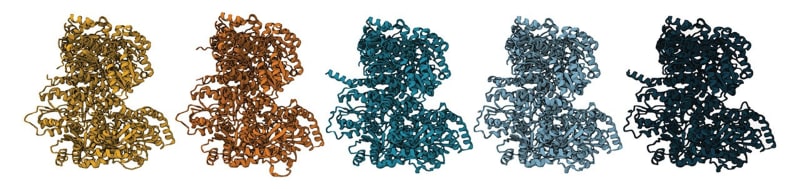
The research team created a collection of synthetic genes representing two billion years of nitrogenase evolution. Lead author Holly Rucker, a doctoral candidate, explained that despite dramatic differences in DNA sequences and structure across time, "these ancient enzymes still do the same chemistry as their modern descendants."
Every organism on Earth depends on diazotrophs, the bacteria and microorganisms that fix atmospheric nitrogen. They live everywhere: in soil, plant roots, lichens, fungi, even the guts of termites and shipworms. This diverse group shares one thing: the nitrogenase enzyme that makes life as we know it possible.
By proving this biosignature remains constant across eons, scientists have handed future explorers a reliable fingerprint for detecting life beyond Earth.
More Images

Based on reporting by NASA
This story was written by BrightWire based on verified news reports.
Spread the positivity!
Share this good news with someone who needs it