Scientists Build Lab-Grown 'Circuit Board' Mimics Human Brain
Researchers created BioConNet, a programmable system that grows human brain-like neural circuits in a lab dish, opening new paths to understand and treat dementia and ALS. They're sharing the blueprints free with the world.
Scientists just figured out how to build a living version of your brain's wiring in a lab, and they're giving away the instructions for free.
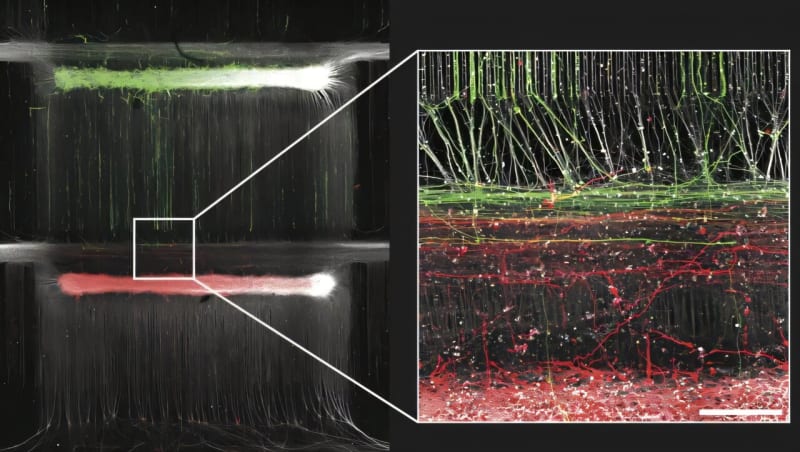
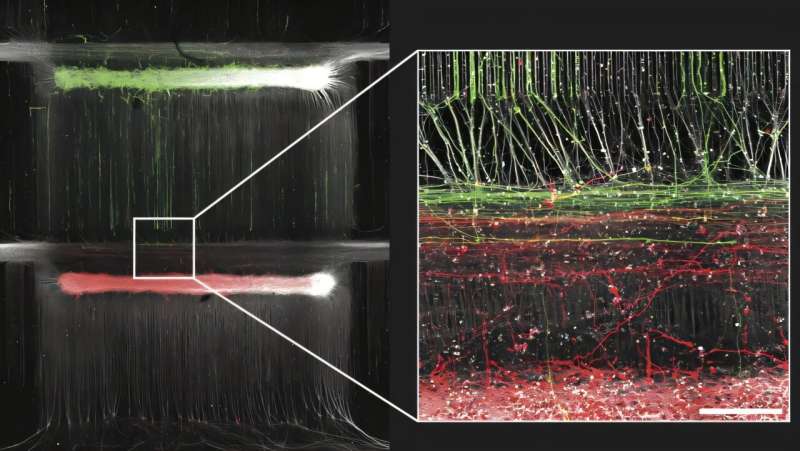
Researchers at King's College London developed BioConNet, a bioengineered circuit board that grows real human neurons into brain-like networks. Unlike previous attempts, this system lets scientists design any circuit they want while maintaining complete control over how individual brain cells connect.
The breakthrough came from combining 3D printing with stem cell techniques. The team printed tiny molds that cast biocompatible polymers into funnel shapes, guiding developing neurons exactly where they wanted them to go. Microgrooves in the material anchor the cells in place as they grow and connect.
The trick was finding the sweet spot for timing. First author Pacharaporn Suklai discovered that removing the molds at precisely the right moment keeps neurons stable as a single circuit. Remove them too early or too late, and the cells scatter into useless clusters.
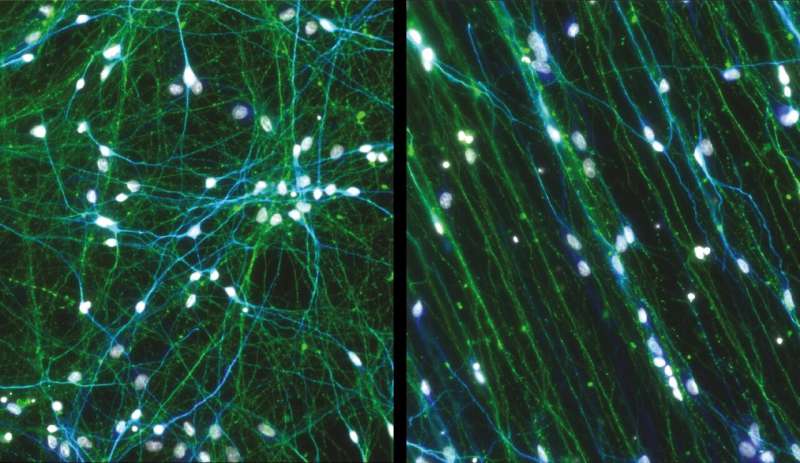
The team didn't just grow neurons in isolation. Real human brains contain ten times more support cells called glia than actual neurons, so they added those too. The glial cells act like scaffolding, holding everything together and changing how the neural networks fire electrically, making them behave more like genuine brain tissue.
The circuits mimic the human cerebral cortex, the brain region that makes up over 80% of our brain mass. Getting the size, shape, and cell numbers right was essential to recreating conditions found in actual human brains.
Why This Inspires
This technology hands researchers a powerful new tool to understand brain diseases. Dr. Andrea Serio, who leads the project at the UK Dementia Research Institute, explains his team can now create circuits tailored to study specific conditions like Frontotemporal Dementia and ALS. They can watch how disease genes damage neural connections and test potential treatments before trying them in people.
What makes this even more remarkable is the team's commitment to open science. They published the complete blueprint on GitHub and in PLOS Biology, meaning any researcher anywhere can build their own neural circuit board. No patents, no paywalls, no barriers to progress.
The system is already genetically programmable, letting scientists insert disease-related genes and observe their effects on how circuits process information. Since circuits govern how brains work, understanding these impacts could unlock new therapeutic targets for conditions that currently have no cure.
BioConNet represents a leap beyond existing methods like brain organoids or commercial systems because it offers unprecedented control over wiring complexity while scaling up to large circuit sizes. It's the difference between letting neurons randomly self-organize and actually designing how they connect.
This London lab just opened a new chapter in brain research, and they invited the whole world to write it with them.
More Images


Based on reporting by Phys.org
This story was written by BrightWire based on verified news reports.
Spread the positivity!
Share this good news with someone who needs it