Scientists Complete Largest Ever 3D Map of the Universe
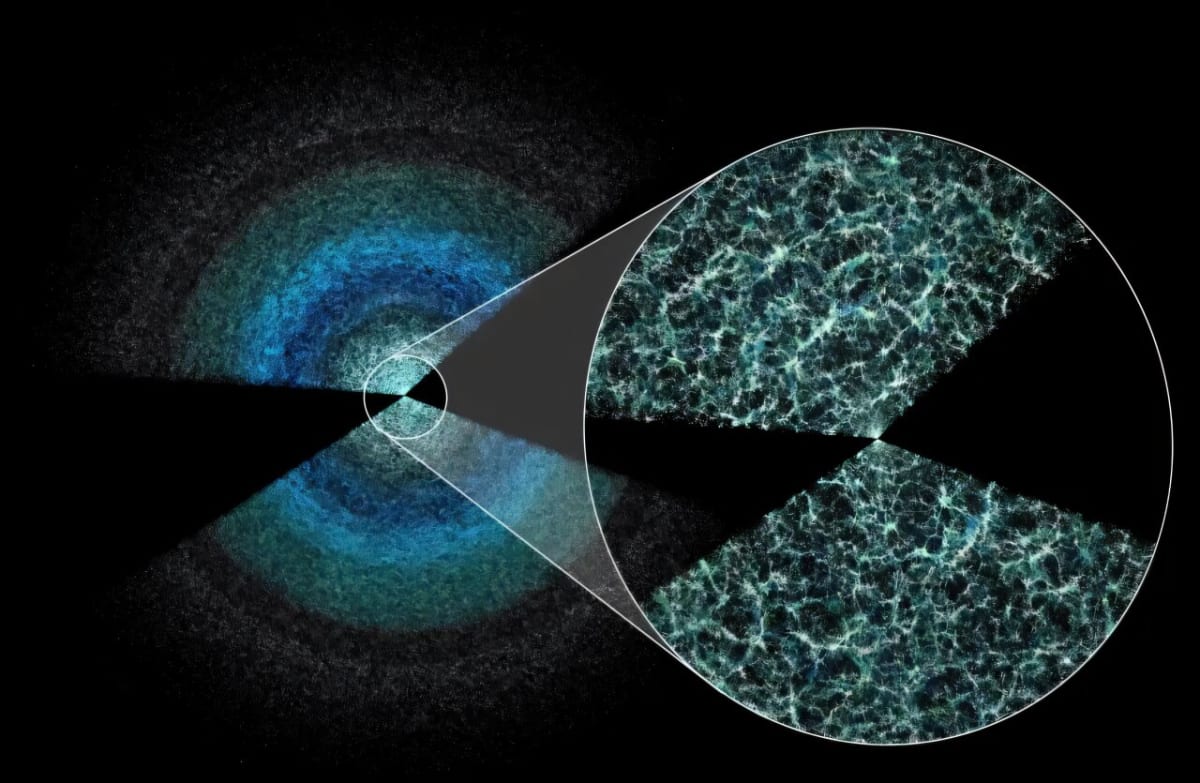
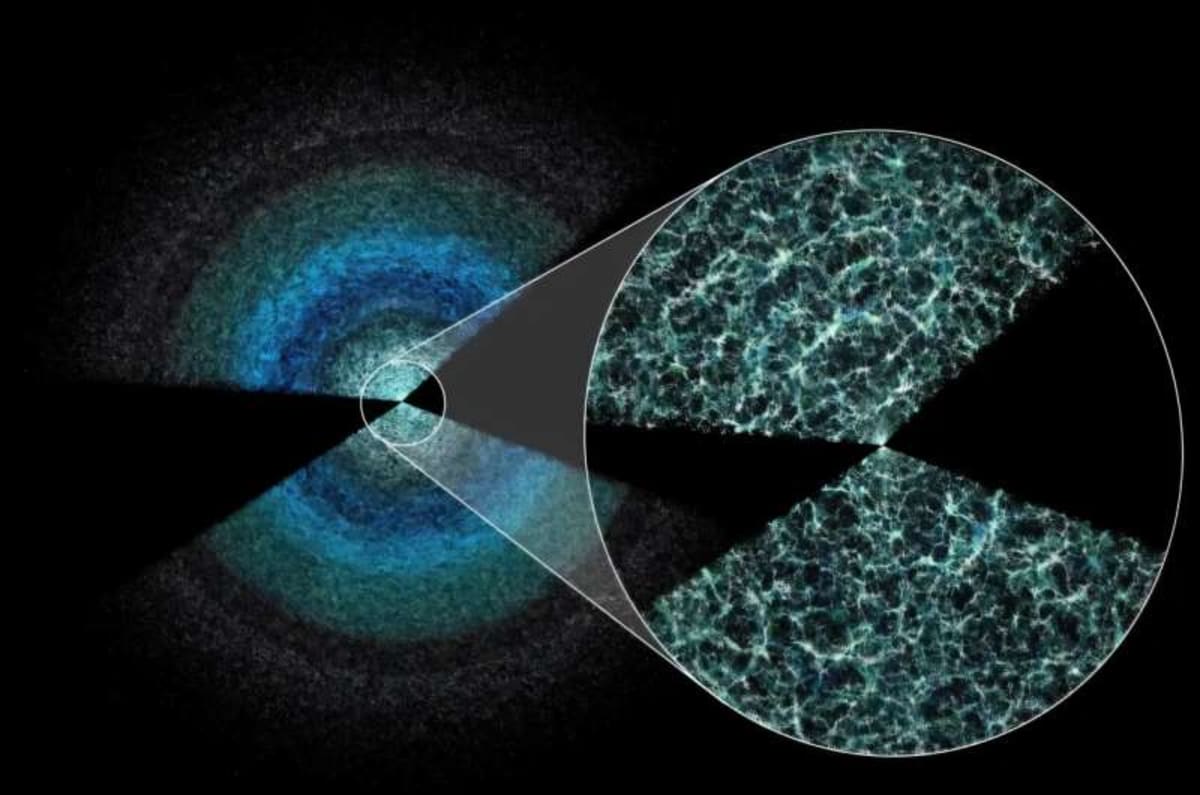
An international team has finished mapping 47 million galaxies and quasars across 11 billion years of cosmic history, delivering answers about the mysterious force shaping our universe's fate. The breakthrough could revolutionize our understanding of dark energy and how the cosmos evolves.
Scientists just completed the most detailed picture of our universe ever created, and what they're finding could change everything we thought we knew about how reality works.
The Dark Energy Spectroscopic Instrument (DESI) finished its five-year mission ahead of schedule, capturing light from 47 million galaxies and quasars. That's six times more cosmic objects than all previous surveys combined.
Researchers from over 70 institutions worldwide, including teams from the University of Portsmouth, Durham University, and Berkeley Lab, collaborated on this massive project. Using 5,000 fiber-optic sensors mounted at Kitt Peak National Observatory in Arizona, they traced cosmic history stretching back 11 billion years.
The real prize isn't just the map itself. Scientists are hunting for clues about dark energy, the invisible force making up 70% of our universe and causing it to expand faster and faster.
For decades, researchers assumed dark energy was constant and unchanging. But early data from DESI suggested something surprising: dark energy might be evolving over time, growing stronger or weaker as the universe ages.
If confirmed with the complete dataset, this discovery would flip cosmology on its head. The ultimate fate of our universe depends on the balance between matter and dark energy, so understanding how that relationship changes could tell us whether the cosmos will expand forever or eventually collapse.
Why This Inspires
Dr. Seshadri Nadathur, who co-chaired the galaxy clustering team, captured the excitement perfectly: "It is hard to overstate how important this DESI map of galaxies will be for cosmology." Beyond dark energy, the data will help scientists weigh neutrinos, the lightest known particles in existence, and unlock other cosmic mysteries we haven't even considered yet.
The project exceeded every expectation. DESI was supposed to observe 34 million objects but captured 47 million galaxies and quasars, plus 20 million stars as a bonus.
The team isn't stopping either. Through 2028, they'll push into more challenging regions of the sky, expanding their map by another 20% and observing fainter, more distant galaxies that reveal even older cosmic history.
More than 900 researchers, including 300 PhD students, contributed to this achievement. The first results analyzing all five years of data are expected in 2027, with additional discoveries landing later this year.
Dr. Michael Levi, DESI's director, summed up the team's feelings: "We're going to celebrate completion of the original survey and then get started on the work of churning through the data, because we're all curious about what new surprises are waiting for us."
The universe just got a little less mysterious, and a lot more amazing.
More Images

Based on reporting by Google News - Science
This story was written by BrightWire based on verified news reports.
Spread the positivity!
Share this good news with someone who needs it