Scientists Create Material That Heats or Cools Like Penguins
Inspired by how penguins regulate their body temperature, researchers have invented a two-sided material that can switch between heating and cooling modes automatically. The breakthrough could eliminate the frustration of buildings that waste energy staying too warm in winter or too cool in summer.
You know that moment when you bundle up for freezing weather, then walk into an overheated office and immediately regret every layer? Penguins never deal with that problem, and now we might not have to either.
Scientists from three Chinese research institutions have created a revolutionary two-sided material that automatically switches between heating and cooling modes, just like penguin feathers do. Even better, it blocks or transmits wireless signals depending on temperature.
The innovation centers on a special film named after Janus, the two-faced Roman god. One side acts like a solar heater, soaking up 94.5% of sunlight and reaching temperatures up to 87°C in outdoor tests. The other side does the complete opposite, reflecting over 90% of sunlight while radiating heat away, keeping surfaces up to 12°C cooler than the surrounding air.
The magic happens thanks to vanadium dioxide, a material with a split personality. At room temperature, it behaves like an insulator and lets microwave signals pass through freely. Heat it to 68°C, and it transforms into a conductor, blocking those same signals.
In lab tests, the material cut Bluetooth connections when heated and restored them when cooled. The shift was dramatic: microwave transmission dropped from 83.6% to just 0.06% after heating.
The researchers embedded the vanadium dioxide into microscopic fiber structures within a flexible polymer. These tiny fibers create pathways that change the material's electrical behavior as temperature shifts, making the wireless blocking happen automatically without any switches or sensors.
The Ripple Effect
This breakthrough solves a problem that has frustrated engineers for years. Buildings and vehicles need materials that can both manage temperature and control electromagnetic signals for everything from WiFi to radar. Until now, those two requirements worked against each other.
Cooling materials reflect energy to stay cool, while electromagnetic shielding materials absorb it. Combining both functions meant compromising on one or the other. The penguin-inspired design finally breaks that tradeoff.
The material also repels water and ice, adding another practical benefit for real-world use. Imagine rooftops that automatically heat in winter to melt snow while blocking unwanted signals, then switch to cooling mode in summer while allowing communications through.
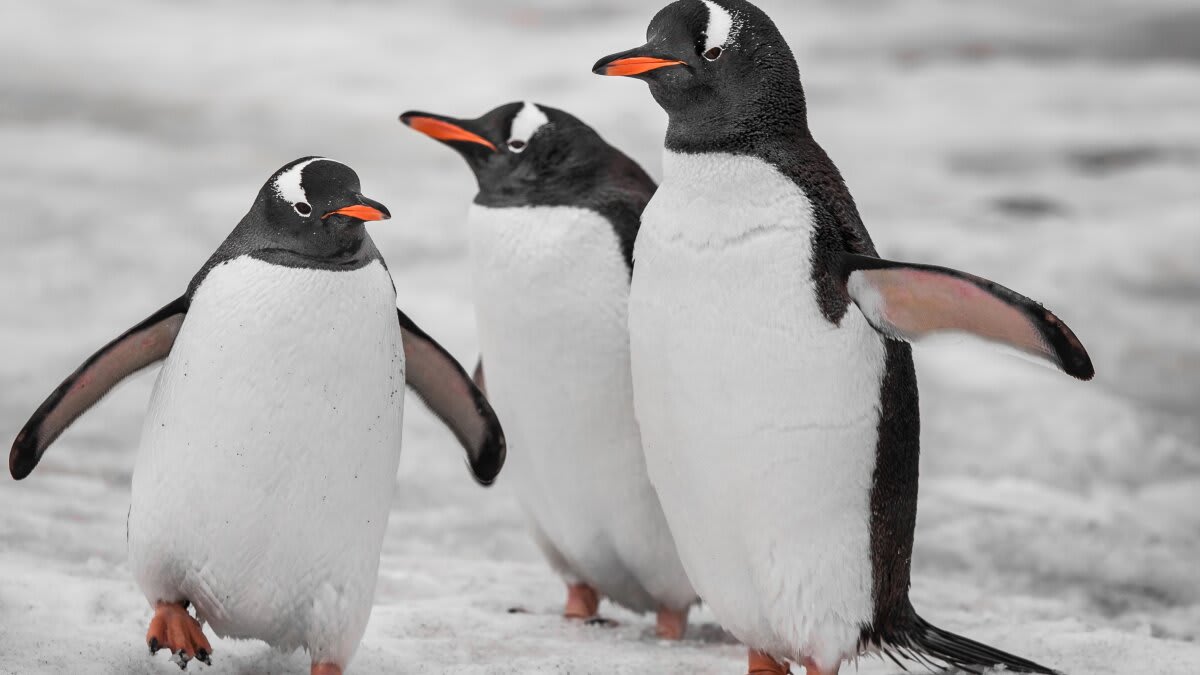
The research team drew inspiration from how penguins use layered feathers, directional insulation, and waterproofing to thrive in extreme Antarctic conditions. Those birds handle temperature swings from brutal cold to surprisingly warm without breaking a sweat, and now that same adaptability can be built into our buildings and technology.
Future buildings could finally stop wasting energy fighting the seasons, adapting instead like the tuxedoed masters of thermal management that inspired them.
More Images


Based on reporting by New Atlas
This story was written by BrightWire based on verified news reports.
Spread the positivity!
Share this good news with someone who needs it