
Scientists Create Motor Powered by Swirling Liquid Metal
Australian researchers built a tiny motor that spins using liquid metal flows instead of rigid parts, reaching 320 revolutions per minute. The breakthrough could revolutionize soft robotics and medical devices that need to bend, stretch, and move through tight spaces.
📺 Watch the full story above
Scientists at the University of New South Wales just built a motor that tosses out the rulebook on how spinning parts should work.
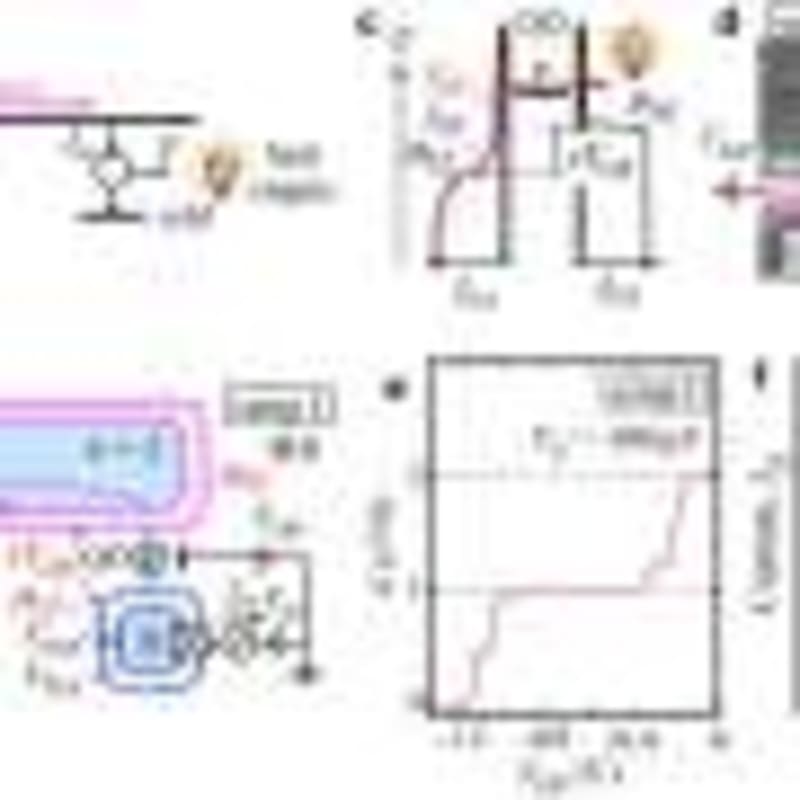
Instead of rigid coils, magnets, or gears, their tiny motor uses a droplet of liquid metal suspended in a salt solution. When exposed to an electric field, the metal swirls and carries a small copper paddle along for the ride, creating rotation without any traditional moving parts.
The motor hits 320 revolutions per minute, setting a new record for liquid metal actuators. Dr. Priyank Kumar, who supervised the project published in npj Flexible Electronics, calls it "a completely new way to create motion."
PhD student Richard Fuchs compared it to a miniature waterwheel. Just as flowing water pushes wheel blades, the swirling liquid metal pushes copper paddles to create spin.
The real magic lies in what this technology makes possible. Traditional motors with hard components struggle in applications that require flexibility, like robots that need to squeeze into confined spaces or medical devices that must navigate delicate tissues.
Professor Kourosh Kalantar-Zadeh from the University of Sydney painted a vivid picture of the future. "Imagine a tiny robot that can move through narrow, irregular spaces inside the human body, powered by motors that are soft and flexible rather than hard and fragile," he said.
The simplicity of the design is striking. Motors power countless devices we interact with daily, from phone vibrations to laptop cooling fans to camera focus adjustments. Yet engineers have relied on essentially the same rigid approach for generations.
Why This Inspires
This breakthrough reminds us that innovation often comes from questioning what seems impossible. The idea of a motor without solid moving parts sounds contradictory, yet here it is, spinning away in a lab.
The researchers aren't just thinking small either. Beyond soft robotics, they envision applications in flexible electronics, microfluidic devices, and biomedical implants anywhere compact, self-contained motion is needed in tight or sensitive environments.
Engineers could soon design machines that were previously only theoretical. Robots that bend around obstacles, medical tools that adapt to body contours, and electronics that flex with our movements all become more realistic with motors that can do the same.
The beauty lies in the accessibility of the concept. While the engineering is sophisticated, the core idea is wonderfully simple: let the fluid do the work. Sometimes the most revolutionary ideas are the ones that make us wonder why no one thought of them sooner.
More Images



Based on reporting by Phys.org - Technology
This story was written by BrightWire based on verified news reports.
Spread the positivity!
Share this good news with someone who needs it