Scientists Discover Our Cells Are a Biological Reunion
New research reveals that our complex cells didn't just form from one ancient merger, but from multiple waves of different species sharing genes over time. It's a reminder that cooperation, not competition alone, built the foundation of all complex life on Earth.
Every cell in your body tells a story of ancient teamwork that scientists are only now beginning to fully understand.
Researchers in Barcelona just made a discovery that rewrites how we think about the origin of complex life. Our cells aren't just the product of one dramatic merger billions of years ago. They're the result of multiple species coming together and sharing genetic material in waves over time.
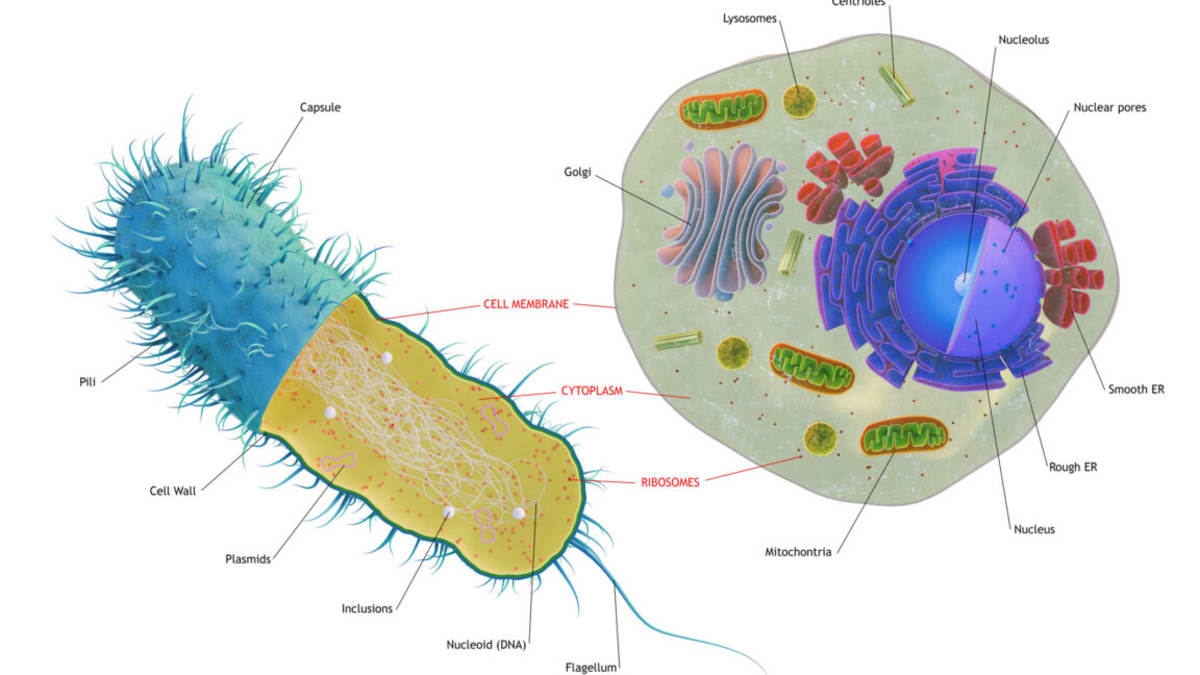
Scientists have long known that our complex cells, called eukaryotes, came from a fusion between two simple cell types: bacteria and archaea. The bacteria became our mitochondria, the tiny power plants inside every cell. But the new study shows that's only part of the story.
The research team created simplified versions of the genetic instruction manual shared by all complex life. They stripped away duplicates and overly repetitive genes to see what the very first complex cells looked like. What they found was surprising.
Our earliest complex ancestor already had an impressive toolkit. It lived in an oxygen-rich environment, ate other organisms or their remains for energy, and had elaborate internal structures. Protein highways crisscrossed the cell interior, with molecular motors hauling cargo back and forth. Special compartments digested proteins and handled cellular chemistry.
But the genes for all these features didn't come from just two parent species. The team found evidence of multiple bacterial lineages contributing different genes at different times. Horizontal gene transfer, where unrelated species swap genetic material, was happening constantly in ancient microbial communities.
It's like discovering your family tree isn't a simple branching diagram, but a network where distant relatives kept sharing useful traits with each other.
The findings paint a picture of early life as far more collaborative than competitive. Different species weren't just evolving in isolation. They were actively exchanging the genetic innovations that worked best.
The Bright Side
This discovery changes how we understand evolution itself. For decades, we imagined species as isolated branches on a tree, competing for survival. But at the cellular level, life succeeded through cooperation and sharing.
The implications stretch beyond just understanding our past. Modern scientists are already using horizontal gene transfer techniques in medicine and biotechnology. Knowing that this process shaped all complex life validates that we're working with nature's own proven strategies.
It also offers a powerful metaphor for our own time. The cells that make up every living thing on Earth succeeded not through isolation, but through combining the best innovations from diverse sources. Our bodies are literally built on a foundation of ancient cooperation.
The research reminds us that complexity and beauty often emerge when different entities work together, sharing their strengths to create something greater than any could achieve alone.
More Images



Based on reporting by Ars Technica Science
This story was written by BrightWire based on verified news reports.
Spread the positivity!
Share this good news with someone who needs it