Scientists Find Ice Clouds on Distant Jupiter-Like Planet
The James Webb Space Telescope just spotted unexpected water ice clouds on a distant gas giant, revealing that alien worlds are far more complex than we thought. This discovery brings us one step closer to understanding planets beyond our solar system.
Astronomers just found something they didn't expect on a planet 12 light-years away: thick patches of water ice clouds floating through the atmosphere of a Jupiter-like giant.
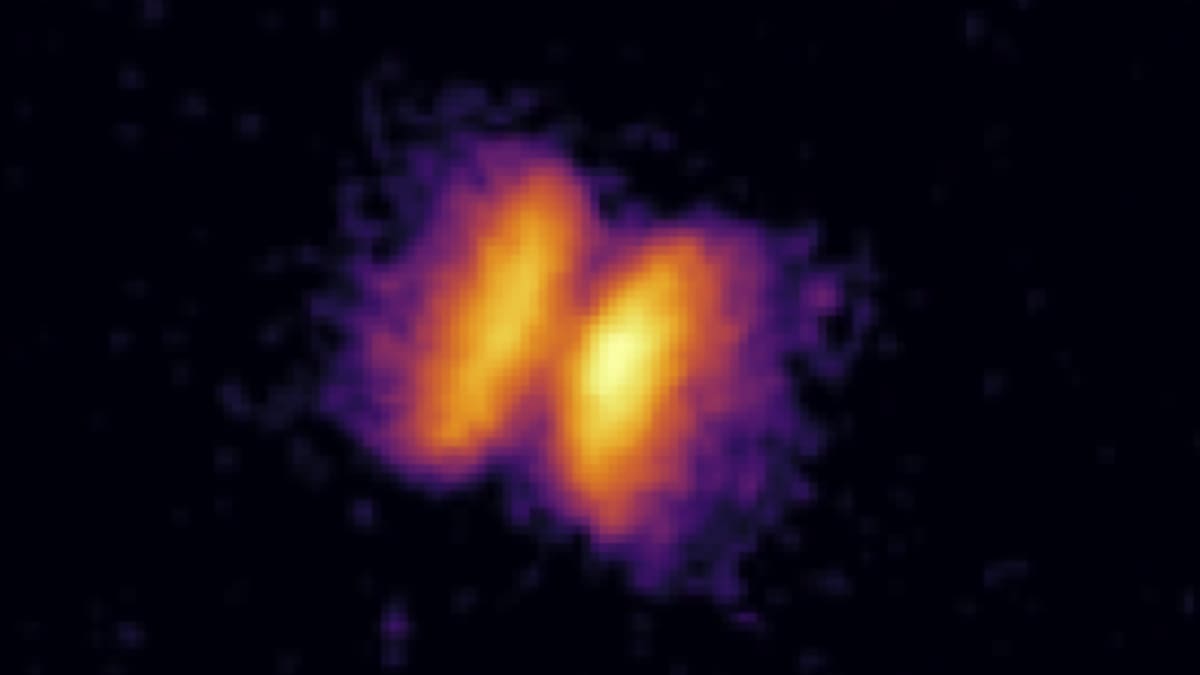
The discovery happened when Elisabeth Matthews and her team at the Max Planck Institute for Astronomy pointed the James Webb Space Telescope at Epsilon Indi Ab, a gas giant orbiting a star slightly smaller than our Sun. They were looking for ammonia in the planet's atmosphere, but found something more intriguing instead.
The planet should have been full of ammonia gas based on existing models. Instead, the team found far less than expected, hidden beneath thick, patchy water ice clouds similar to the cirrus clouds that drift high in Earth's sky.
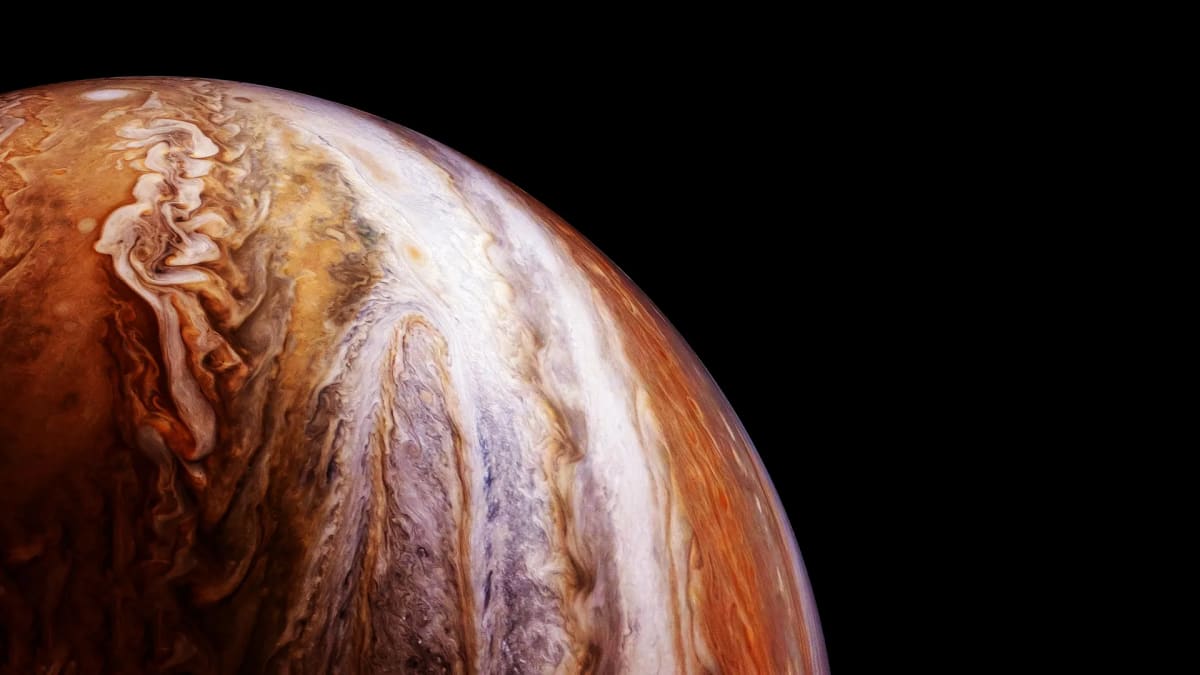
This planet is a fascinating oddball. It weighs about 7.6 times more than Jupiter but has roughly the same diameter, making it incredibly dense. It orbits four times farther from its star than Jupiter does from the Sun, keeping its surface temperature between minus 70 and plus 20 degrees Celsius.
What makes this discovery possible is a new way of looking at distant worlds. Instead of waiting for a planet to pass in front of its star, the team used a special tool called a coronagraph to block the star's bright light. This let them see the faint glow of the planet itself, opening the door to studying cooler, more Jupiter-like planets that don't conveniently cross in front of their stars.
The finding reveals something important: our computer models of alien atmospheres aren't complete yet. Most models don't include clouds because they're incredibly difficult to simulate, but clouds can hide crucial details about what's actually happening in these distant skies.
Why This Inspires
This discovery represents genuine progress in our understanding of worlds beyond our solar system. For the first time, we can study planets that actually resemble the gas giants in our own cosmic neighborhood, not just the scorching hot versions we've observed before.
The team's work also marks an important milestone on the path toward finding Earth-like planets. As Matthews explains, if aliens were looking back at us from several light-years away, the James Webb Space Telescope would finally let them study Jupiter in detail. Studying Earth in detail will require even more advanced telescopes, but we're building toward that future one discovery at a time.
The unexpected clouds remind us that the universe still has plenty of surprises waiting. Every new observation teaches us something we didn't know, and every puzzle we solve brings us closer to answering bigger questions about how planets form, evolve, and perhaps even harbor life.
The cosmos just got a little more interesting, and scientists couldn't be more excited about what they'll find next.
Based on reporting by Google: James Webb telescope
This story was written by BrightWire based on verified news reports.
Spread the positivity!
Share this good news with someone who needs it