Scientists Find New Clue to What Holds Matter Together
After 50 years of uncertainty, physicists have found strong evidence that the glue holding matter together works differently than we thought. The discovery could help explain why our universe exists at all. #
Scientists just solved a puzzle that's been stumping physicists since the 1970s, and it could explain one of the biggest mysteries in the universe.
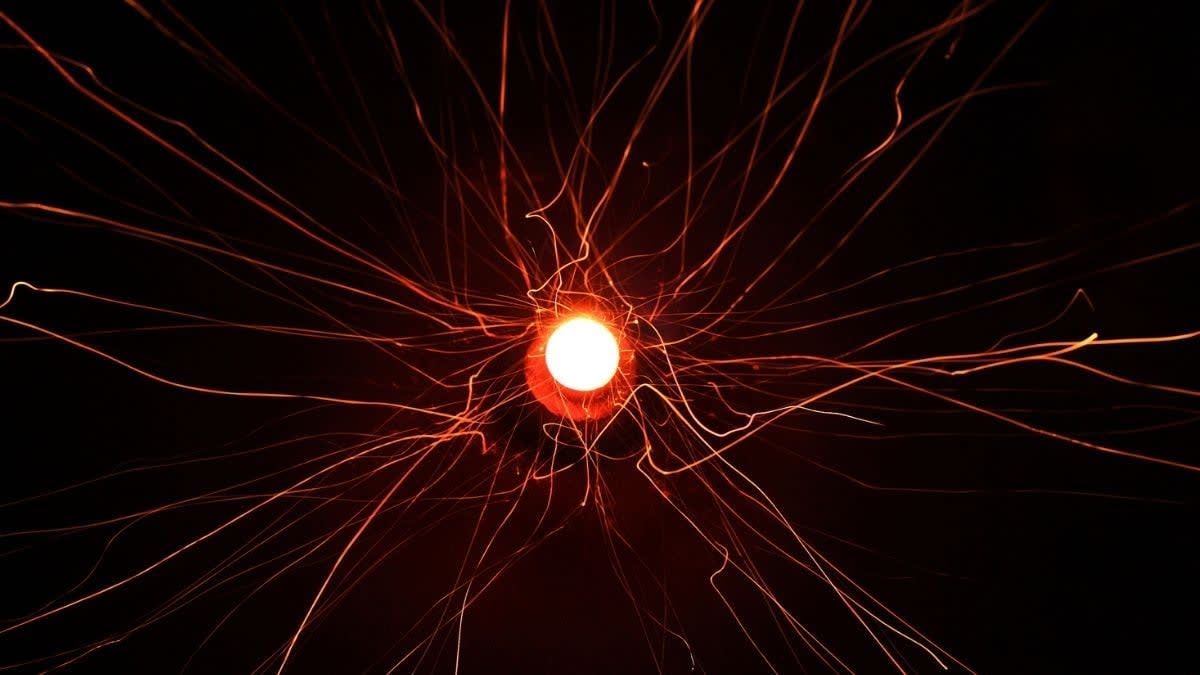
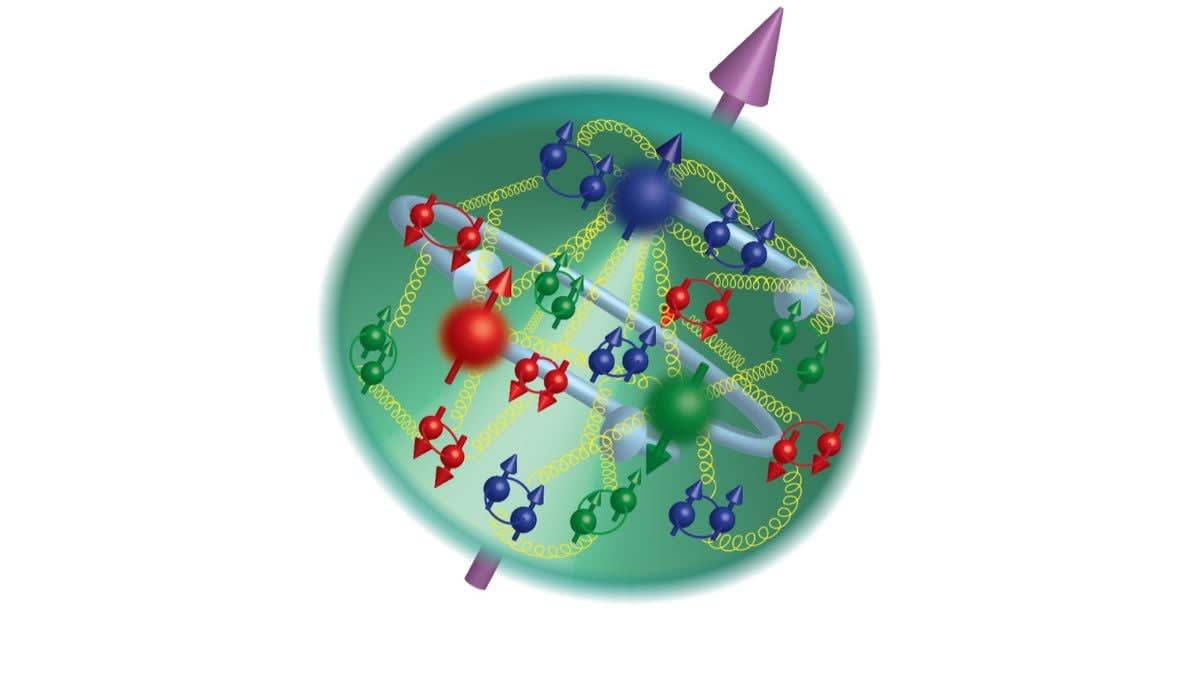
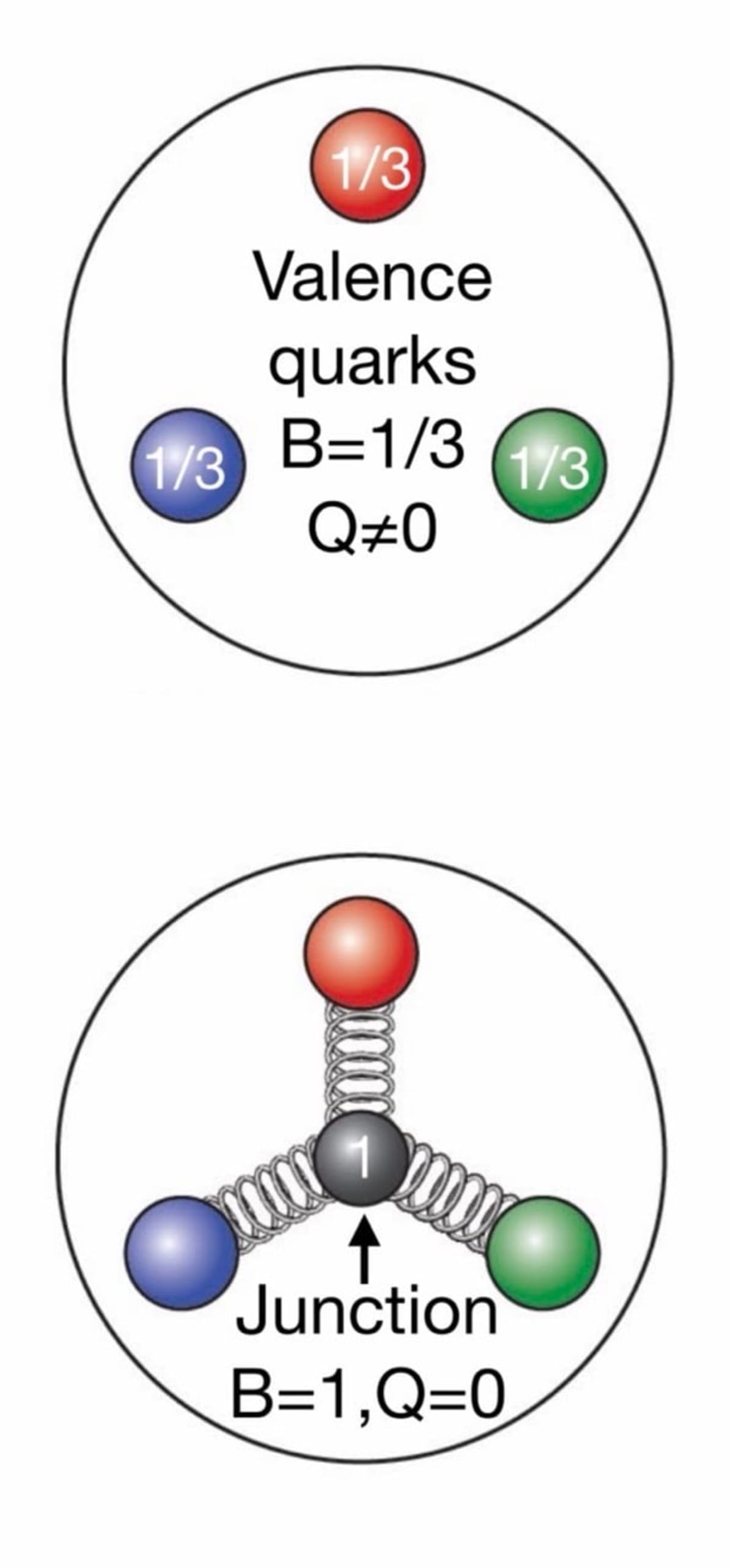
A massive research team called the STAR Collaboration has found the strongest evidence yet that the "glue" holding atoms together isn't quite what we assumed. Instead of being carried by particles called quarks, something called a baryon number appears to be carried by Y-shaped structures made of pure energy.
Think of it this way: protons are like the bedrock of matter. They never decay, they're incredibly stable, and they're what keeps everything from falling apart. Scientists have long debated what gives them this superpower.
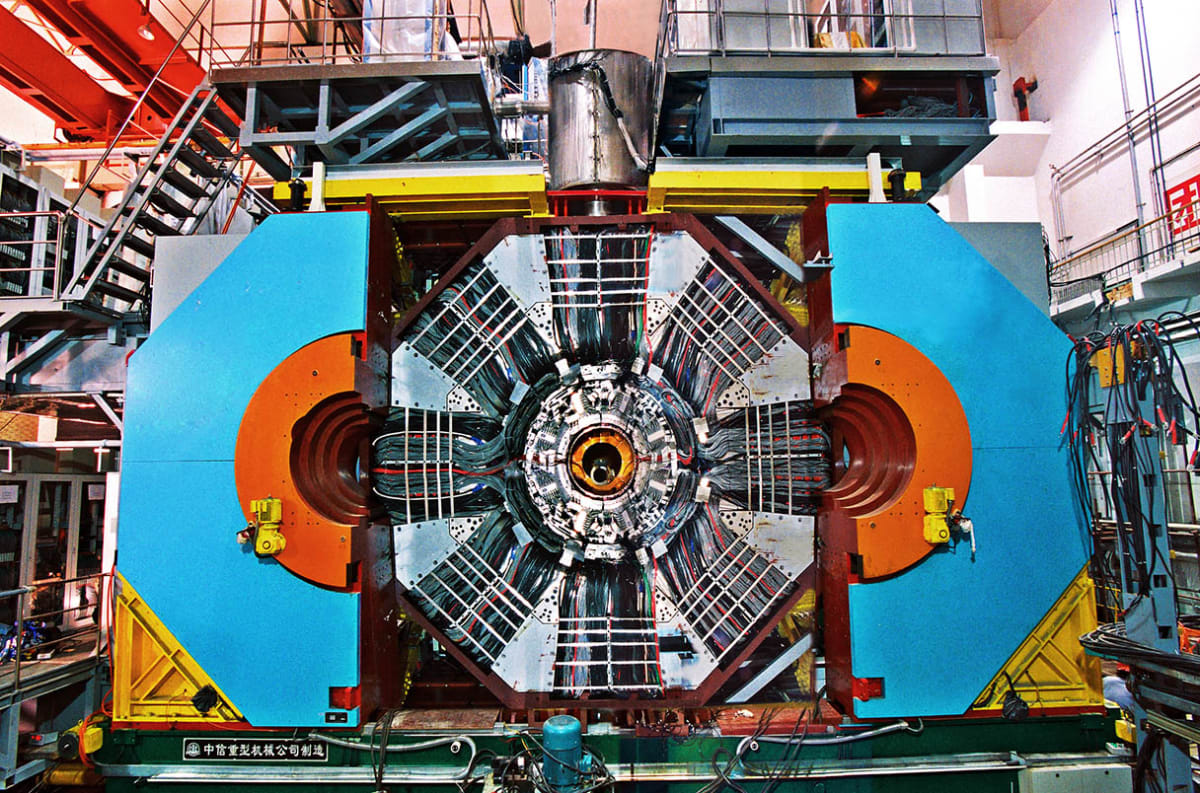
The conventional wisdom said that three "valence quarks" inside each proton carried the property that keeps matter stable. But researchers at the Relativistic Heavy Ion Collider in New York tested a competing idea: that invisible "baryon junctions" made of gluons (the universe's literal glue particles) actually do the heavy lifting.
To find out, the team smashed particles together at nearly the speed of light and watched what happened. They ran two different types of experiments, comparing how far different particles traveled through the superhot collision zones.
The results pointed clearly toward the baryon junction theory. The stable matter traveled farther than electrically charged particles, suggesting it wasn't being slowed down by electric charge the way quarks would be.
Why This Inspires
This isn't just abstract physics trivia. Understanding what truly holds matter together could help scientists solve one of the greatest cosmic mysteries: why matter exists at all.
The universe should have equal amounts of matter and antimatter, which would have destroyed each other and left nothing behind. But something tipped the scales, leaving just enough regular matter to create stars, planets, and us. This discovery brings researchers closer to understanding that imbalance.
Physicist Wenliang Li notes that figuring out whether quarks or gluon fields carry baryon numbers could reveal "how strong interaction between subatomic particles organizes stable matter" and explain the matter-antimatter puzzle.
The STAR team analyzed results from colliding ruthenium and zirconium atoms, plus experiments using photons and gold nuclei racing past each other at breakneck speeds. Both approaches supported the same conclusion, making the evidence especially compelling.
What seemed like an impossible-to-test theory from the 1970s is now backed by some of the strongest experimental evidence in modern physics.
After half a century of uncertainty, we're finally getting answers about the invisible architecture that makes our entire universe possible.
#
More Images
Based on reporting by Google News - Science
This story was written by BrightWire based on verified news reports.
Spread the positivity!
Share this good news with someone who needs it