Scientists Find Non-Invasive Way to Detect Coral Disease
Researchers discovered that microbes in seawater surrounding corals reveal disease better than testing coral tissue itself, opening the door to early warning systems that could save reefs. This breakthrough could protect ecosystems supporting one billion people worldwide.
Scientists just found a way to diagnose sick corals without touching them, and it could transform how we protect the ocean ecosystems that feed and support a billion people.
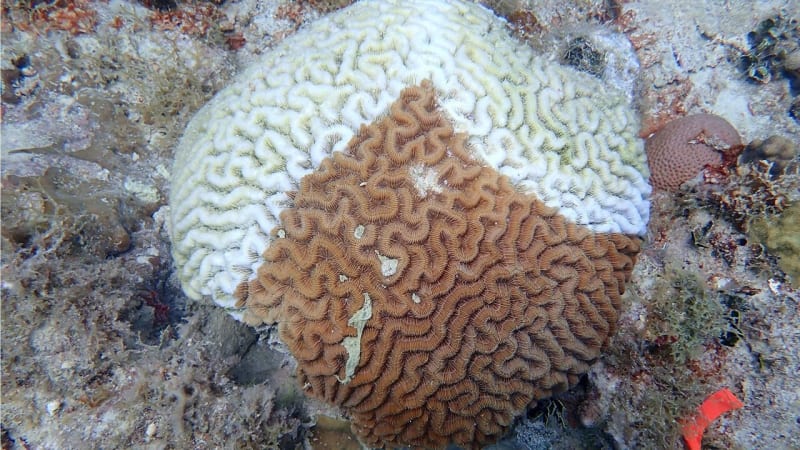
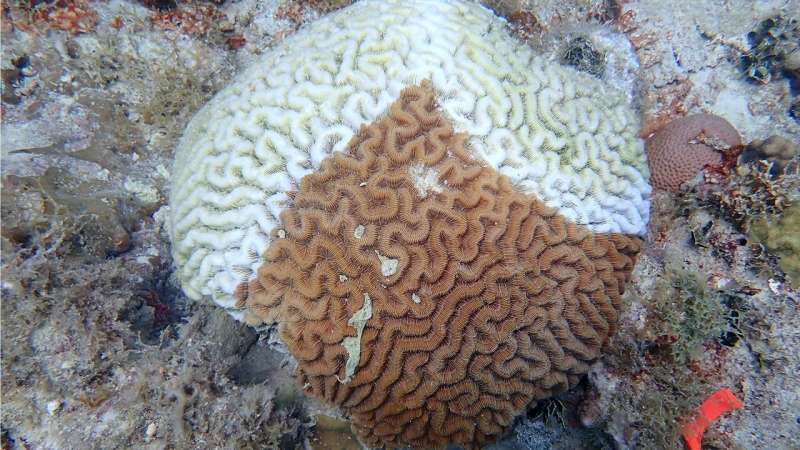
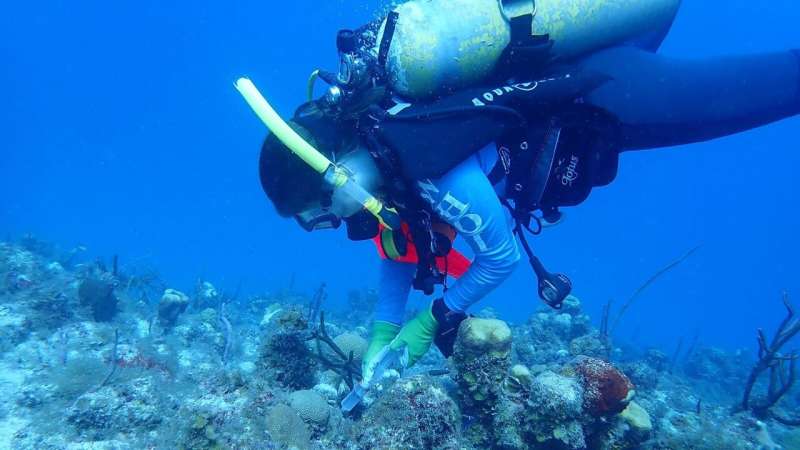
Researchers at Woods Hole Oceanographic Institution and the University of the Virgin Islands discovered that tiny organisms in seawater surrounding corals act like an early alarm system for disease. The breakthrough came after tracking the same brain coral colonies near St. John in the U.S. Virgin Islands for four years, watching what happened before, during, and after a devastating disease outbreak.
The finding surprised even the scientists. While microbes living inside coral tissue varied wildly even in healthy corals, the microbes in surrounding seawater stayed remarkably stable near healthy colonies but changed dramatically when disease struck.
"This study shows that the ocean water surrounding a coral can tell us a lot, including when that coral is sick," said Jeanne Bloomberg, the study's lead author and graduate student. The seawater microbes react to material released by diseased corals, creating a detectable signal that scientists can measure.
The timing couldn't be better. Stony coral tissue loss disease has devastated Caribbean reefs over the past decade, killing entire colonies within months. Right now, most coral disease gets diagnosed by divers making visual inspections after significant damage has already occurred.
The new method published in Cell Reports Sustainability could change that entirely. If paired with automated sampling and rapid genetic detection, scientists could create early warning systems that alert reef managers to disease before it causes irreversible damage.
The Ripple Effect
This discovery means more than just healthier corals. Coral reefs support more than 25 percent of all marine life despite covering less than one percent of the ocean floor. They protect coastlines from storms, provide protein for millions of people, and generate billions in tourism revenue.
For Caribbean reef managers who've watched disease wipe out coral colonies, earlier detection offers real hope. "Developing diagnostic tools for coral disease based on this work could help us respond faster and more strategically to protect what remains," said Marilyn Brandt, research professor at the University of the Virgin Islands.
The method is also non-invasive, meaning scientists can test for disease without damaging already stressed corals. Researchers simply collect water samples near colonies, then use genetic sequencing to identify which microbes are present.
As ocean temperatures rise and new coral diseases emerge, tools that forecast reef health rather than just document loss become critical for survival.
Understanding the invisible microbial world around corals may be the key to safeguarding these vital ecosystems for future generations.
More Images

Based on reporting by Phys.org
This story was written by BrightWire based on verified news reports.
Spread the positivity!
Share this good news with someone who needs it