Scientists Find Salt Clouds on Ancient Pink Planet
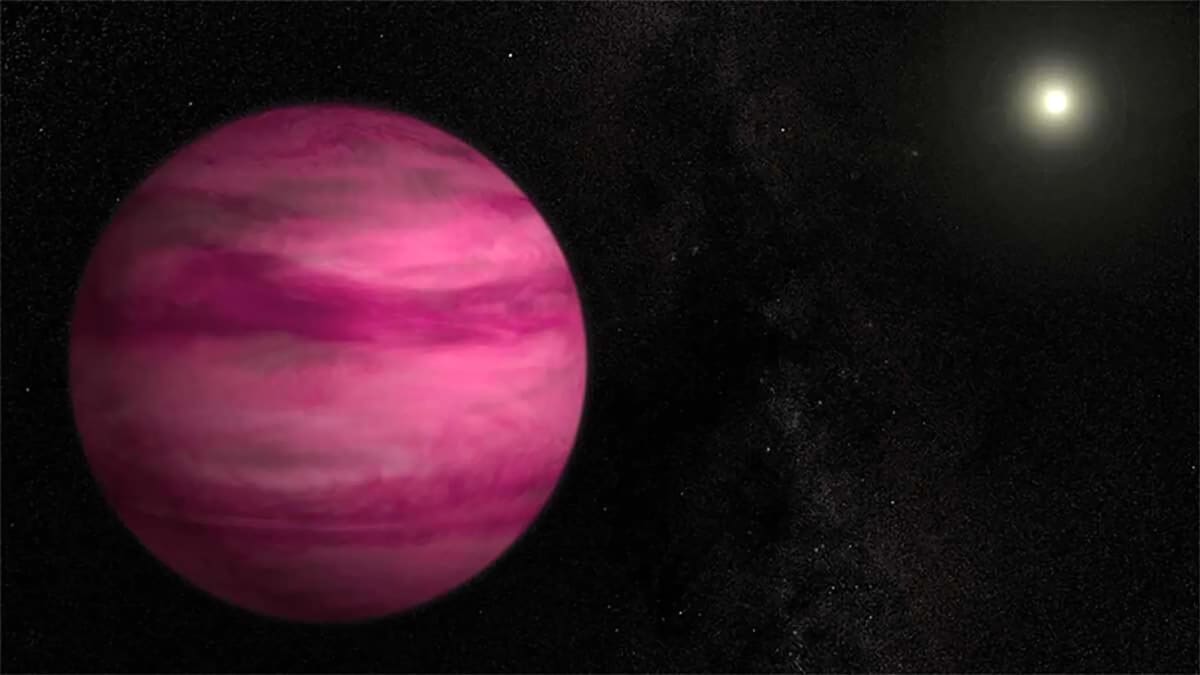
The James Webb Space Telescope just solved a 13-year mystery about a pink world 57 light-years away. For the first time ever, astronomers discovered salt clouds floating in the sky of an incredibly cold planet.
Scientists have finally figured out what makes the famous "Pink Planet" so unusual, and the answer is literally written in the clouds.
For over a decade, astronomers have puzzled over GJ 504 b, a mysterious pink world orbiting a sun-like star 57 light-years from Earth. Ground-based telescopes could barely see it because it's one of the coldest planetary companions ever directly imaged at just 550 degrees Fahrenheit. That's about as hot as your oven when baking bread, which is freezing by space standards.
Now the James Webb Space Telescope has cracked the case. In just two hours of observation time, the powerful instrument captured something previous telescopes spent entire nights trying to see: a clear picture of the planet's atmosphere.
What researchers found was extraordinary. The planet's sky is filled with clouds made of salt, marking the first time anyone has directly confirmed salt clouds exist on such a cold world. Scientists predicted this was possible over 15 years ago, but they'd never actually seen it until now.
"When we finally obtained its spectrum, it immediately looked interesting," said Aneesh Baburaj from Northwestern University, who led the study. "But once we started digging deeper into the data, we realized it was not like anything we have analyzed before."
The atmosphere also contains water vapor, methane, carbon dioxide, and ammonia. When scientists tried recreating these conditions in computer models, nothing made sense until they added the salt clouds. Suddenly everything clicked into place.
Why This Inspires
This discovery shows how new tools are helping us understand worlds we could barely see before. The Pink Planet is ancient, somewhere between 2.5 and 4 billion years old, and its unusual chemistry is teaching scientists about how planets age and cool over time.
The breakthrough also confirms that our theories about distant worlds can be proven with the right technology. What astronomers imagined 15 years ago turned out to be real, just waiting for a telescope powerful enough to see it.
Giant planets start their lives scorching hot and gradually cool over billions of years. GJ 504 b has had plenty of time to chill, and its salt clouds are a snapshot of what happens when worlds grow old and cold under distant stars.
Based on reporting by Google: James Webb telescope
This story was written by BrightWire based on verified news reports.
Spread the positivity!
Share this good news with someone who needs it