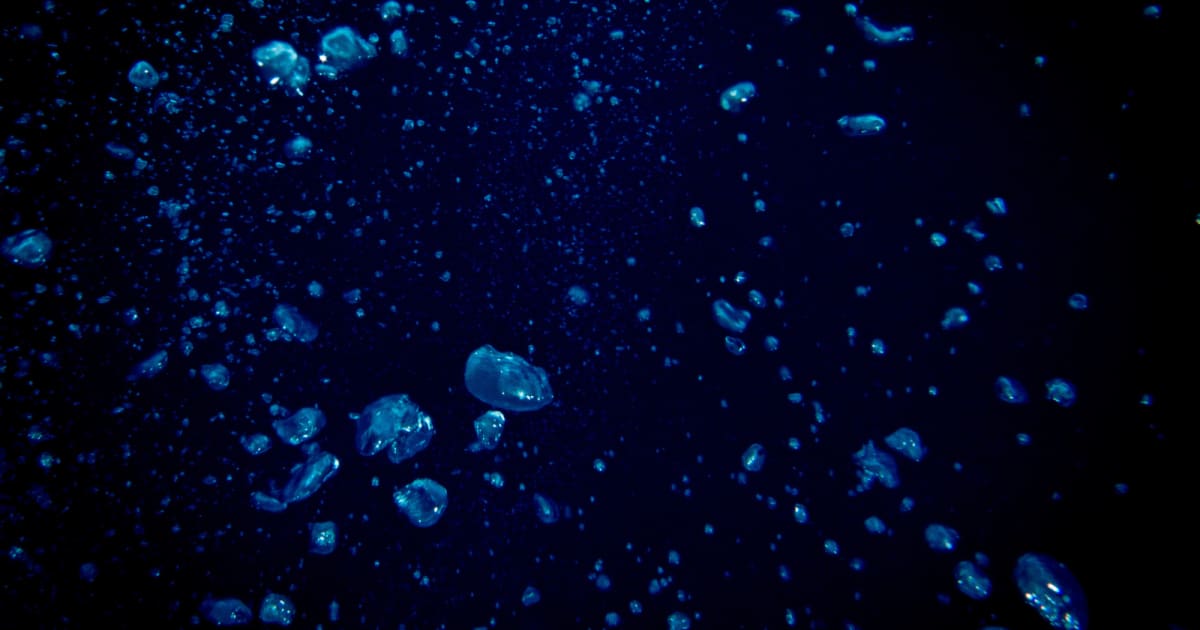
Scientists Map 0.001% of Deep Ocean—Exploration Accelerating
A groundbreaking study reveals we've visually explored an area of the deep ocean floor the size of Rhode Island—and scientists are racing to see more. New technology is making the planet's largest ecosystem more accessible than ever before.
Scientists have finally calculated how much of Earth's deep ocean floor humans have actually seen with their own eyes, and the number is staggering in its smallness: just 0.001 percent, an area roughly the size of Rhode Island.
But here's the exciting part. A May 2025 study in Science Advances by marine scientist Katy Croff Bell and her team at the Ocean Discovery League mapped every deep-sea dive since 1958, creating the first complete picture of what we know and what remains to discover.
The deep ocean covers two-thirds of our planet's surface and hosts the majority of all marine life. It drives global carbon cycling, produces oxygen, and regulates our climate in ways scientists are only beginning to understand.
Bell's team compiled records from 43,681 deep-sea dives conducted by 14 countries over 67 years. The total visual coverage from nearly seven decades of exploration fits within the borders of one of America's smallest states.
The Bright Side
This seemingly small number actually represents tremendous opportunity. Modern underwater cameras can now capture high-definition footage that earlier explorers could only dream about, and the cost of deep-sea exploration is dropping rapidly.
The study revealed that 30 percent of all deep-sea observations came from before 1980, when technology was far less capable. Today's equipment can gather exponentially more scientific information in a single dive than an entire expedition could decades ago.
Scientists now have better tools, clearer maps, and growing international cooperation to explore deeper. While past expeditions cost millions and focused on easier coastal dives, emerging technology is making long-range expeditions to genuinely unexplored regions increasingly feasible.
The deep seafloor remains less visually mapped than the surfaces of the Moon, Mars, and Venus. But unlike those distant worlds, our ocean is accessible, teeming with life, and critical to understanding our own planet's future.
Bell and her colleagues see their findings not as a discouraging gap, but as an invitation. The largest single ecosystem on Earth is waiting to reveal its secrets, and humanity finally has the tools to look.
The next chapter of ocean exploration is just beginning, and 99.999 percent of it remains unwritten.
More Images



Based on reporting by Google News - Science
This story was written by BrightWire based on verified news reports.
Spread the positivity!
Share this good news with someone who needs it