Scientists Map 45 Planets Most Likely to Harbor Life
Researchers have identified the 45 exoplanets with the best chance of hosting alien life, creating a roadmap for humanity's search beyond Earth. The study points astronomers toward smaller, cooler stars where rocky worlds in the habitable zone are easier to spot.
Scientists just created a cosmic treasure map for finding alien life, and it reveals which distant worlds deserve our attention first.
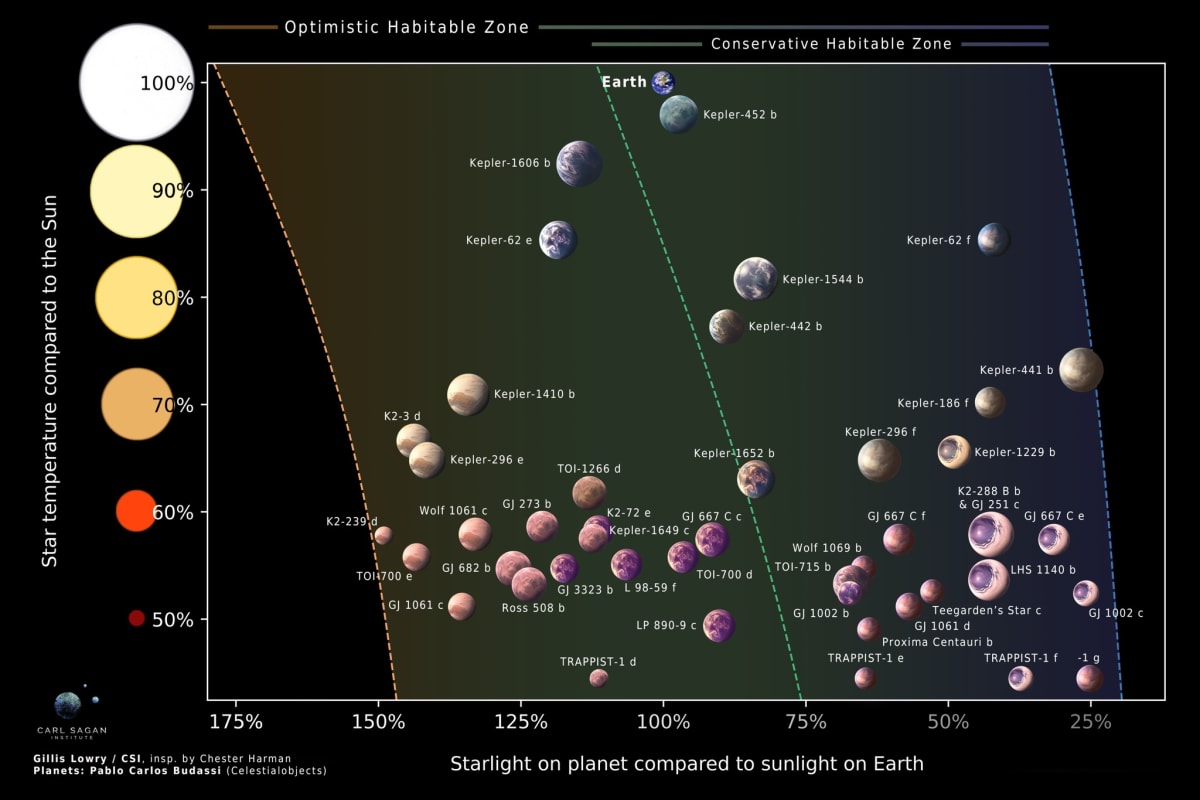
A new study published in the Monthly Notices of the Royal Astronomical Society pinpointed the 45 known exoplanets most likely to host living organisms. Led by Cornell University astrophysicist Lisa Kaltenegger, the research also identifies which star systems should top the list if humanity ever builds an interstellar spacecraft.
The timing couldn't be better. The study arrives alongside the upcoming film "Project Hail Mary," which imagines sending a ship to Tau Ceti to save Earth from an alien threat. While scientists have since ruled out life-supporting planets around Tau Ceti, the research reveals even better candidates.
Out of more than 6,000 discovered exoplanets, most are hostile "hot Jupiters," massive gas giants orbiting dangerously close to their stars. To find life, researchers need rocky planets sitting in the habitable zone, where liquid water can exist on the surface.
The study recommends focusing on smaller, cooler red dwarf stars. Planets around these stars are easier to detect using the transit method, which measures dimming as planets pass in front of their sun, or by observing the gravitational wobble planets create. "The closer the planet and the smaller the star, the more noticeable the wobble," Kaltenegger explains.
Three systems stand out as prime destinations. TRAPPIST-1, discovered in 1999, hosts seven rocky planets in its habitable zone and currently fascinates astronomers using the James Webb Space Telescope. TOI-715 features a super-Earth three times our planet's mass sitting comfortably in the life-friendly zone, though at 139 light-years away, it's a bit of a journey.
The real winner? Proxima Centauri sits just 4.25 light-years from Earth, practically next door in cosmic terms, and hosts an Earth-like planet in its habitable zone.
The Bright Side
The research team also identified 24 "planets on the edge" that sit just outside traditional habitable zones. These worlds might support life forms that don't rely on liquid water, expanding our definition of where life can thrive. By keeping their search criteria flexible while prioritizing the most promising candidates, scientists maximize their chances of making history.
For Kaltenegger, the hunt for extraterrestrial life requires balancing smart focus with creative thinking. "Creativity and imagination are just pillars of science," she says.
With powerful telescopes like James Webb already studying these targets, humanity has never been better equipped to answer one of our oldest questions: Are we alone?
More Images


Based on reporting by Space.com
This story was written by BrightWire based on verified news reports.
Spread the positivity!
Share this good news with someone who needs it