Scientists Map 68 Quadrillion Miles of Underground Fungi
Scientists have created the first global map of the vast fungal networks beneath our feet that quietly support most plant life on Earth and help fight climate change. These underground superhighways stretch an incredible 68 quadrillion miles and move 4 billion tons of carbon into soils every year.
Right beneath your feet, a hidden network almost a billion times longer than the distance from Earth to the Sun is quietly keeping our planet alive.
Scientists have mapped for the first time the enormous fungal networks that stretch through soil around the world, supporting plants and helping regulate Earth's climate. The research, published in Science, reveals these underground highways extend roughly 68 quadrillion miles and play a massive role in moving carbon out of the atmosphere.
The maps focus on arbuscular mycorrhizal fungi, which partner with about 70 percent of all plant species on Earth. Plants feed the fungi carbon from photosynthesis, while the fungi supply plants with crucial nutrients and water in return.
Dr. Justin Stewart from the Society for the Protection of Underground Networks led the research. "There could be up to 10 meters of mycorrhizal network in just a teaspoon of soil," he said.
To build the maps, researchers analyzed more than 16,000 soil samples from ecosystems worldwide, from deserts to forests to tundra. They used machine learning and robotic imaging of 300,000 living fungal threads to estimate network density in areas without direct measurements.
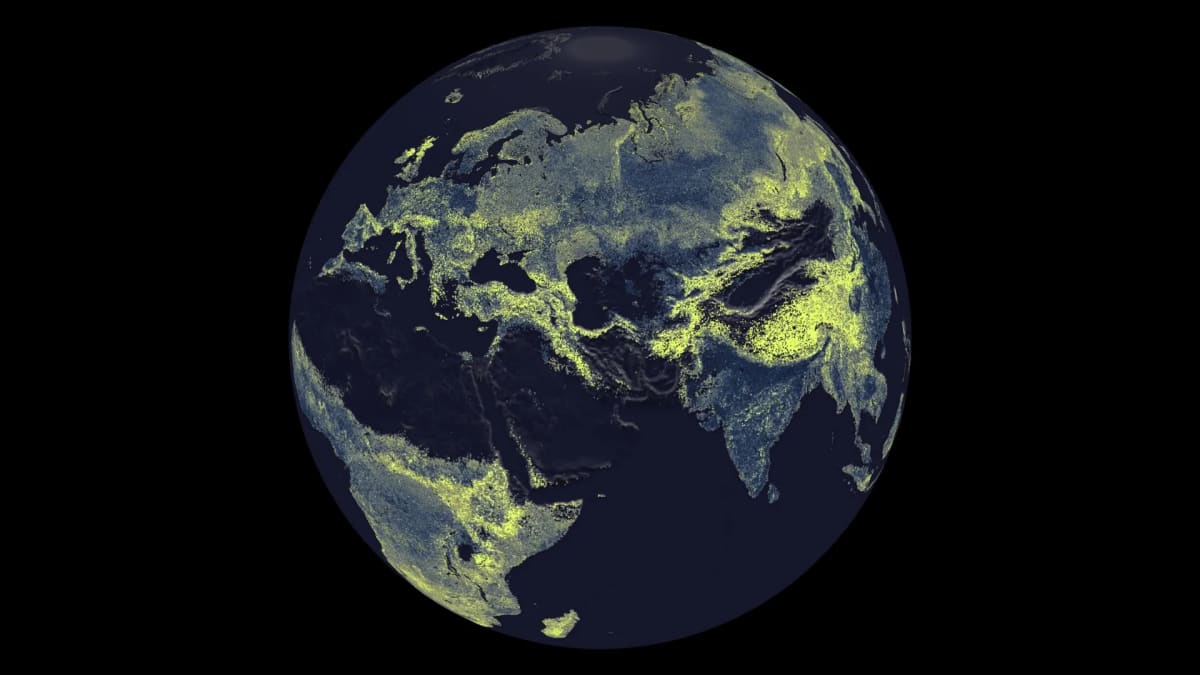
The findings show that grasslands contain about 40 percent of Earth's fungal infrastructure. The densest networks appear in South Sudan's flooded grasslands, Florida's Everglades, and the Tibetan plateau.
These networks move an estimated 4 billion tons of carbon dioxide into soils annually, equivalent to 11 percent of all human-related emissions. They also expand plant root systems by up to 100 times and provide over 80 percent of some plants' phosphorus needs.
The research revealed troubling news too. Large agricultural croplands show about 50 percent lower fungal network density on average, which could reduce soil's ability to store carbon and withstand environmental stress.
The Ripple Effect
The team created an interactive Mycorrhizal Infrastructure Map with data visualization designer Moritz Stefaner, offering detailed views of fungal networks for every square kilometer of land globally. The publicly available data gives governments and researchers new tools to monitor and protect these underground communities.
Dr. Corentin Bisot, a biophysicist who co-led the study, explained that new imaging and machine learning technologies are finally revealing what's been hidden underground. Scientists often describe these networks as Earth's circulatory system because they transport carbon, nutrients, and water throughout entire ecosystems.
The maps help identify where fungal networks are thriving and where they face threats, giving policymakers crucial information for protecting these invisible helpers that support life above ground.
Understanding and protecting these vast underground networks could become a powerful tool in fighting climate change while supporting healthier ecosystems worldwide.
Based on reporting by Science Daily
This story was written by BrightWire based on verified news reports.
Spread the positivity!
Share this good news with someone who needs it