Scientists Solve 116-Year Mystery of Siberian Sky Explosion
In 1908, a cosmic airburst flattened 800 square miles of Siberian forest with hundreds times the energy of Hiroshima, yet left no crater. Scientists now understand why, and it's helping protect Earth today.
For over a century, one of history's most powerful explosions puzzled scientists not because of what it destroyed, but because of what it didn't leave behind.
On June 30, 1908, an object from space detonated above central Siberia with the force of 10 to 15 megatons of TNT. The blast flattened an area larger than Greater London, toppling 80 million trees in a perfect radial pattern that pointed back to a single spot in the sky.
When Russian mineralogist Leonid Kulik finally reached the remote site in 1927, he expected to find a massive crater and meteorite fragments. Instead, he discovered scorched trees stripped bare and arranged like fallen dominoes, all pointing away from one marshy bog at the epicenter.
The absence of a crater sparked wild theories for decades. Some suggested alien spacecraft, others proposed antimatter or even a black hole passing through Earth.
The real answer turned out to be beautifully simple. The object never hit the ground at all.
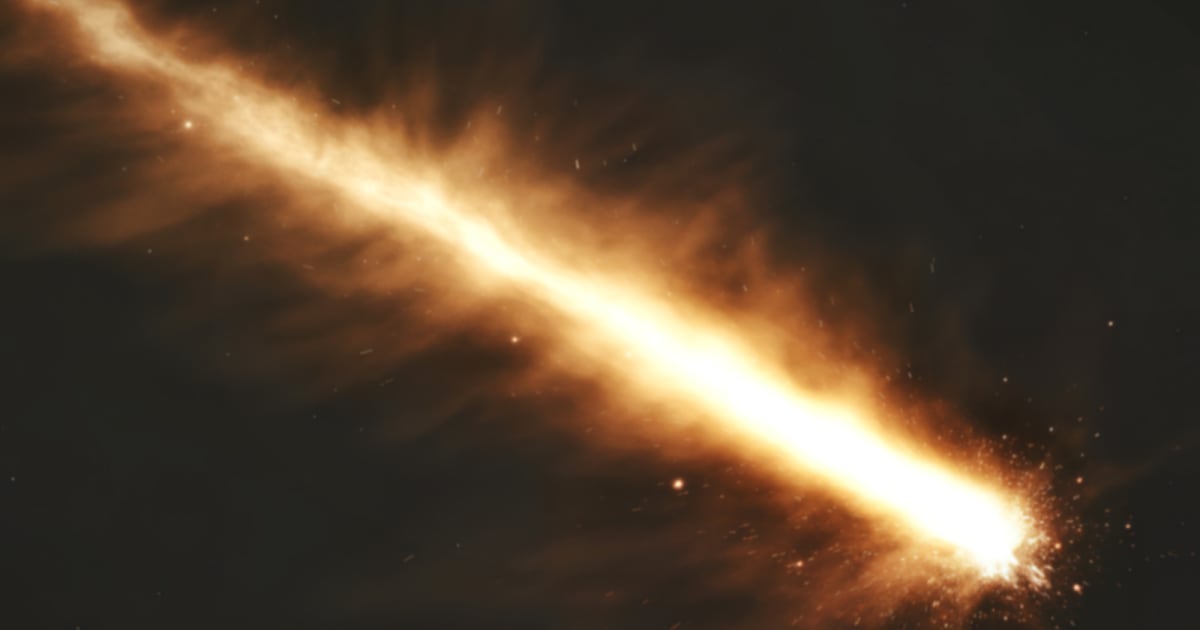
Traveling at tens of kilometers per second, the incoming asteroid or comet fragment couldn't withstand the crushing air pressure as it descended. It broke apart between 5 and 10 kilometers above the surface, releasing its massive energy in a single atmospheric explosion.
This phenomenon, called an airburst, created a downward shockwave so powerful it flattened everything below. The fallen trees weren't wreckage from an impact but the fingerprint of an explosion that happened entirely in the sky.
Why This Inspires
Understanding Tunguska changed how we think about protecting our planet. For years, scientists focused only on massive asteroids capable of leaving craters and causing global catastrophe.
The Tunguska event proved that smaller objects pose a real threat too. An airburst doesn't need to strike a city directly to cause devastating damage, and objects in this size range are far more common than the giant planet killers.
This knowledge became urgent on February 15, 2013, when a much smaller meteor exploded over Chelyabinsk, Russia, injuring over 1,500 people from broken glass and debris. That wake-up call accelerated efforts to track near-Earth objects and develop planetary defense systems.
Today, agencies worldwide monitor the skies for potential threats, using lessons from Tunguska to model how different sized objects behave in our atmosphere. What seemed like empty Siberian forest in 1908 became a natural laboratory that taught us how to watch the skies.
The mystery that captivated scientists for generations now helps protect millions of people. Sometimes the absence of evidence becomes the most important evidence of all.
More Images



Based on reporting by Google News - Science
This story was written by BrightWire based on verified news reports.
Spread the positivity!
Share this good news with someone who needs it