Scientists Solve Mystery of Golden Orb After 3-Year Search
A mysterious golden sphere found on the Alaskan seafloor in 2023 stumped scientists for nearly three years. Advanced DNA testing finally revealed it was part of a giant deep-sea anemone, showing how ocean exploration continues unlocking nature's secrets.
When scientists pulled a strange golden orb from the Alaskan seafloor in 2023, they had no idea they'd just started a mystery that would take nearly three years to solve.
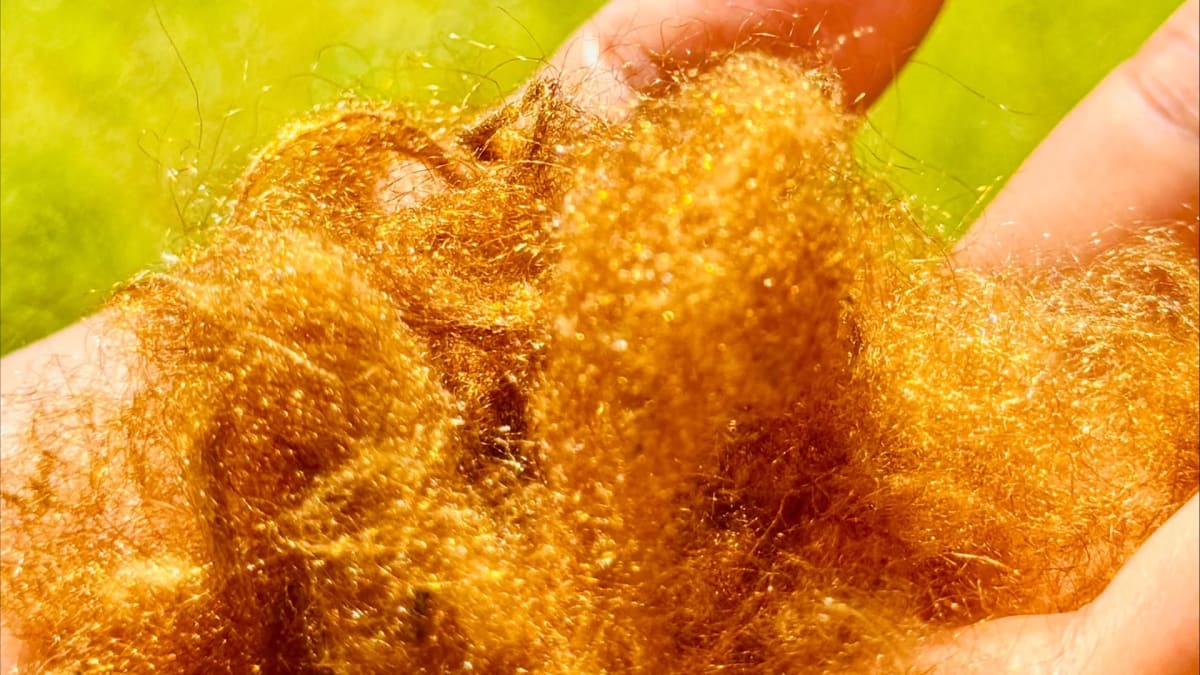
The National Oceanic and Atmospheric Administration (NOAA) finally revealed what the puzzling object was: the base remnant of a giant sea anemone. While scientists often encounter unknown objects during deep-sea dives, this four-inch mystery required focused effort from dozens of experts and cutting-edge genetic technology to crack.
The discovery happened on August 30, 2023, during an expedition in the Gulf of Alaska. Researchers exploring more than two miles below the ocean surface spotted a brass-colored sphere attached to a rock by a small hole at its base.
The team collected the orb and sent it to the Smithsonian National Museum of Natural History, expecting quick answers. Scientists initially guessed it might be an egg casing, a dead sea sponge, or an unknown coral type.
Instead, the golden orb became a special case. "We work on hundreds of different samples and I suspected that our routine processes would clarify the mystery," said Allen Collins, director of NOAA Fisheries' National Systematics Laboratory. The object defied easy classification because it lacked typical animal anatomy.
Testing revealed the orb was made of fibrous, layered material filled with cnidocytes, the explosive stinging cells found in jellyfish and sea anemones. The cells looked remarkably similar to another mysterious specimen found in 2021.
Early DNA testing came back inconclusive, likely contaminated by genetic material from microscopic organisms living on the orb. Scientists then turned to whole-genome sequencing, a more advanced technique that examines an organism's complete genetic code.
The breakthrough came when the genetic analysis revealed both the 2021 specimen and the golden orb were nearly identical to Relicanthus daphneae, a species of giant deep-sea anemone. The orb itself was dead tissue from where the anemone had attached to the seafloor, a part normally hidden beneath the living animal.
Why This Inspires: This mystery shows how much we still have to learn about our own planet. The deep ocean remains one of Earth's least explored frontiers, with countless species and phenomena waiting to be discovered.
The solution required collaboration between zoologists, geneticists, deep-sea experts, and bioinformatics specialists. Each brought unique skills to decode what the golden orb really was.
"So often in deep ocean exploration, we find these captivating mysteries," said William Mowitt, acting director of NOAA Ocean Exploration. Advanced techniques like DNA sequencing are helping scientists solve more of these puzzles than ever before.
The discovery reminds us that patience and teamwork can unlock even the most stubborn natural mysteries, turning a confusing golden sphere into a window on life in Earth's deepest places.
More Images


Based on reporting by Google News - Science
This story was written by BrightWire based on verified news reports.
Spread the positivity!
Share this good news with someone who needs it