Scientists Solve Mystery of 'Little Red Dots' in Space
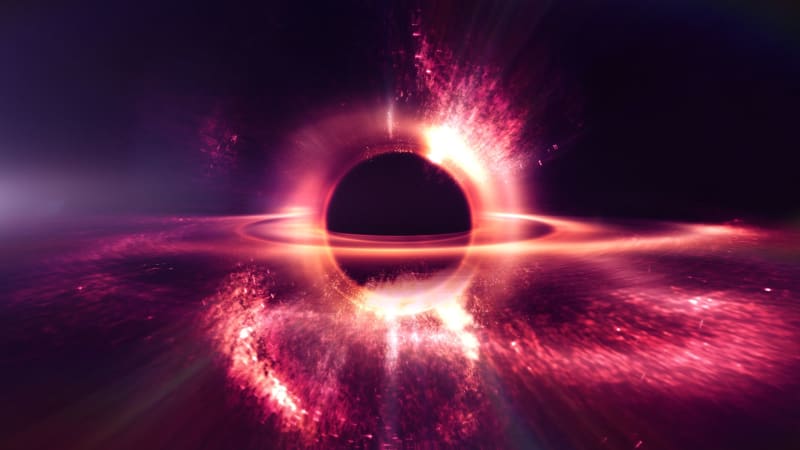
Mysterious cosmic objects spotted by the James Webb telescope finally have an explanation. They're baby black holes wrapped in protective gas clouds, solving a puzzle that stumped astronomers for two years.
Scientists just cracked one of the night sky's most baffling mysteries, and the answer is as beautiful as it is cosmic.
Since 2022, the James Webb Space Telescope has been spotting strange "little red dots" scattered across the early universe. These objects behaved like galaxies and black holes at the same time, but didn't quite match either description, leaving researchers scratching their heads.
Now a team of scientists has finally figured out what these dots actually are. They're baby supermassive black holes, each wrapped in a dense cocoon of gas and dust that masks their true identity.
The breakthrough came when researchers analyzed light from 30 of these mysterious dots using Webb's infrared instruments. The light patterns matched exactly what they'd expect from young black holes surrounded by thick gas clouds.
Those gaseous cocoons explain why these objects seemed so strange. The clouds trap X-rays and radio waves that black holes normally emit, blocking them from reaching our telescopes and making the black holes appear to be something else entirely.
The discovery solved another puzzle too. Scientists had calculated that these objects were impossibly massive for their age in the universe. With the new understanding, the team recalculated and found the dots are actually 100 times less massive than originally thought.
That means these cosmic butterflies fit perfectly with our current understanding of how the universe evolved. They're not breaking any laws of physics after all.
Why This Inspires
This discovery reminds us that patience and curiosity unlock nature's secrets. What looked like a challenge to everything we knew about space turned out to be young black holes going through a natural growth phase, hidden by protective clouds just like caterpillars in cocoons.
The finding opens exciting new questions about how supermassive black holes grow and evolve. Researchers now want to study more little red dots to understand how common this cocoon phase is and what role it plays in creating the massive black holes we see throughout the universe today.
Sometimes the universe's biggest mysteries have elegant answers waiting to be discovered.
More Images


Based on reporting by Live Science
This story was written by BrightWire based on verified news reports.
Spread the positivity! 🌟
Share this good news with someone who needs it


