Scientists Track 3,000-Light-Year Jet to First Black Hole Ever Seen
Astronomers traced a massive cosmic jet back to M87, the first black hole humanity ever photographed. The discovery helps solve the mystery of how black holes launch these powerful particle streams.
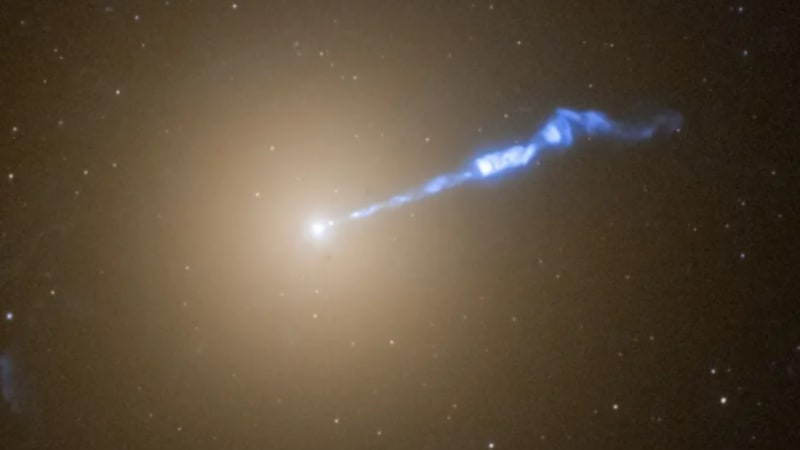
Scientists just connected the dots on one of the universe's most powerful phenomena, tracing a jet of superheated particles stretching 3,000 light-years back to its source at the heart of a supermassive black hole.
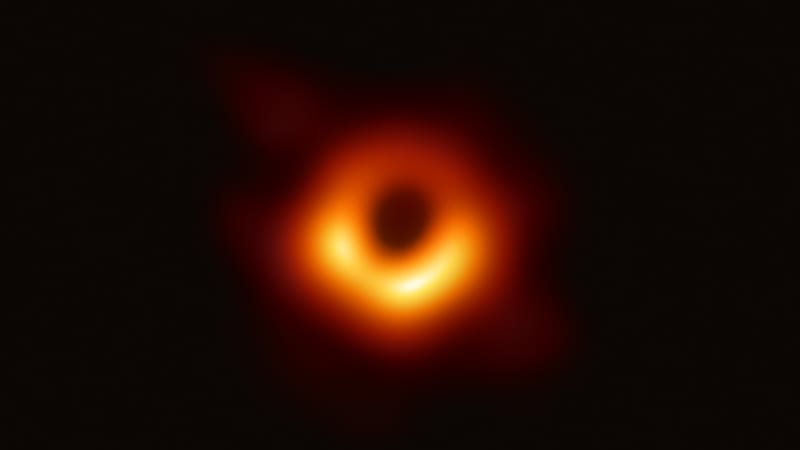
The breakthrough centers on M87*, the black hole that made history in 2019 as the first ever captured in a photograph. That iconic image showed a glowing golden ring of material surrounding the black hole's shadow, located 55 million light-years from Earth in the galaxy Messier 87.
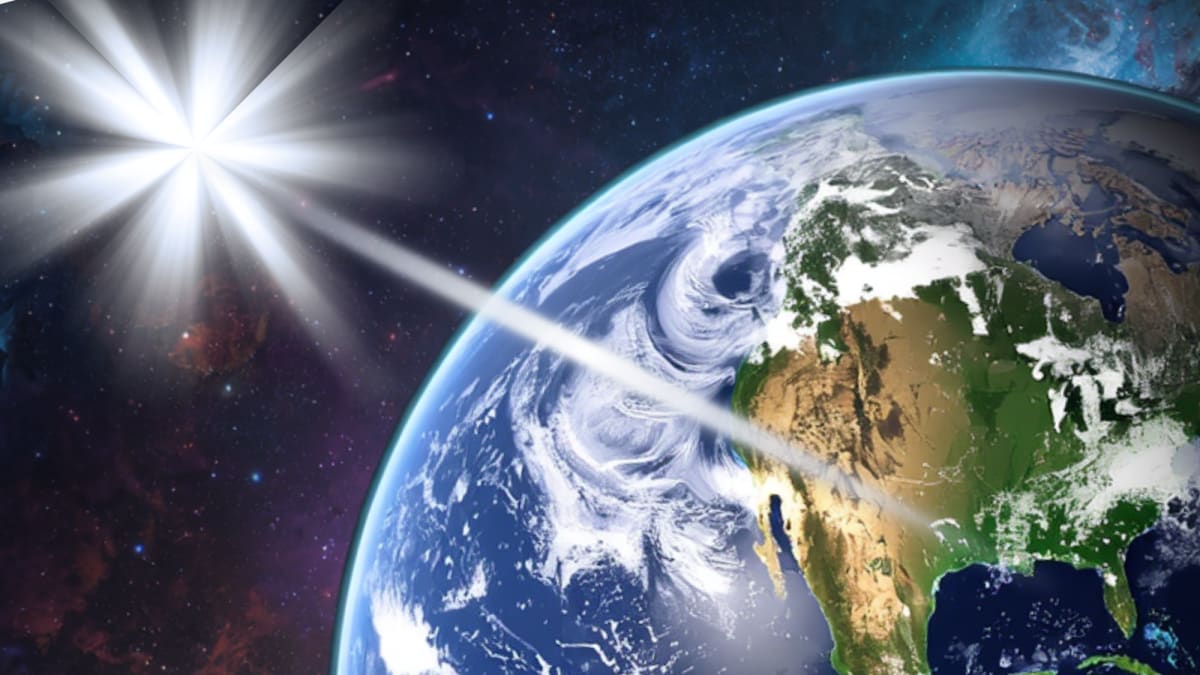
Now, using observations from 2021, researchers finally connected that glowing ring to the base of a massive jet erupting from the black hole. The jet shoots charged particles at nearly the speed of light, but scientists have long puzzled over exactly where these jets originate and what powers them.
The team used a technique called Very Long Baseline Interferometry, which reveals tiny details around supermassive black holes. They discovered that radio emissions missing from earlier observations showed up in 2021 data, likely coming from a compact region less than a tenth of a light-year from M87* itself.
M87 weighs as much as 6.5 billion suns, dwarfing our own galaxy's central black hole by more than a thousand times. Unlike the quieter black hole in the Milky Way, M87 actively devours surrounding material while launching these spectacular jets from its poles.
The Ripple Effect
Understanding how black holes generate these cosmic blowtorches matters far beyond one distant galaxy. These jets shape entire galactic environments, influencing star formation and the distribution of matter across millions of light-years. By pinpointing where jets originate, scientists move closer to understanding how the universe's most massive objects sculpt the cosmos around them.
The research team plans more observations to capture finer details of the jet's structure. Each new image brings humanity closer to understanding the mechanics of these cosmic engines that have puzzled astronomers for decades.
"This study represents an early step toward connecting theoretical ideas about jet launching with direct observations," said team leader Saurabh of the Max Planck Institute for Radio Astronomy. Identifying the jet's origin point adds a crucial piece to understanding how black holes operate at their cores.
The future of black hole imaging keeps getting brighter, with each observation revealing more about the universe's most extreme environments.
More Images

Based on reporting by Google News - Science
This story was written by BrightWire based on verified news reports.
Spread the positivity!
Share this good news with someone who needs it