Scientists Use Frog 'Spas' to Fight Deadly Fungus in ACT
A world-first project in Canberra is using tiny heated greenhouses and saltwater pools to help frogs fight off a deadly fungus that's wiped out 500 species worldwide. If it works, this simple solution could save amphibians across the globe.
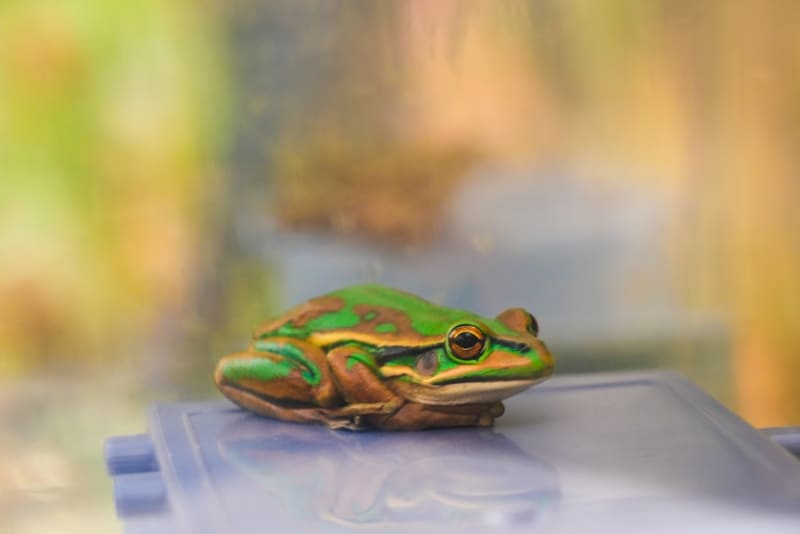
After nearly 50 years of absence, green and gold bell frogs are finally hopping back into the Australian Capital Territory thanks to an ingenious low-tech solution.
Scientists from the University of Canberra have released more than 400 of these mottled green and yellow frogs at 15 sites across the ACT. They're using miniature "saunas" made from plastic pyramids and man-made saltwater "spas" to help the frogs survive a deadly fungus that's decimated amphibian populations worldwide.
The chytrid fungus has wiped out or severely impacted more than 500 frog species globally by attacking their skin and affecting their ability to breathe. Australia's green and gold bell frogs, whose calls sound like revving motorbikes, have seen their numbers plummet 90 percent since the 1970s.
"The pathogen is basically impossible to eradicate," said Associate Professor Simon Clulow, who leads the project. "We've had to come up with solutions to allow frogs to co-exist with the pathogen."
The solution came from a simple observation: frogs can tolerate higher temperatures and saltier water better than the fungus can. The plastic pyramid saunas act like greenhouses, heating up bricks inside where frogs can nestle and literally bake the fungus off their skin.
The saltwater spas work even better. Frogs can wash away the pathogen in water that's more saline than natural ponds, and the salty environment also has fewer predators threatening eggs and tadpoles.
Before release, each frog received an immunization through controlled exposure to the pathogen, similar to how human vaccines work. This gives the first generation several years to produce lots of offspring, jumpstarting the population.
Dr. Jarrod Sopniewski, a researcher on the team, emphasized this marks the first time anyone has used saunas and spas to reintroduce a species to its former habitat. Similar greenhouses helped support one of the largest green and gold bell frog populations at Homebush in Sydney, but the Canberra project breaks new ground.
The Ripple Effect
What makes this approach truly exciting is its accessibility. The team designed everything to be low-tech, cheap, and easy to replicate anywhere in the world.
"It's been shown to work in the lab," Sopniewski said. "If it works here, it should pretty much work anywhere."
For Clulow, who's dedicated 20 years to studying these frogs, the moment carries deep significance. "To be at a point where we might actually be able to reintroduce some of these lost populations is quite incredible," he said.
Researchers will return in two months to count the Mawson Pond population and assess how well the frogs are thriving. If successful, this simple solution could be exported to threatened amphibian habitats across the planet.
After decades of watching frog populations crash, scientists now have a practical tool that could turn the tide for hundreds of species worldwide.
More Images



Based on reporting by ABC Australia
This story was written by BrightWire based on verified news reports.
Spread the positivity!
Share this good news with someone who needs it