Silent Mars Craft's Data Reveals Surprise Atmosphere Find
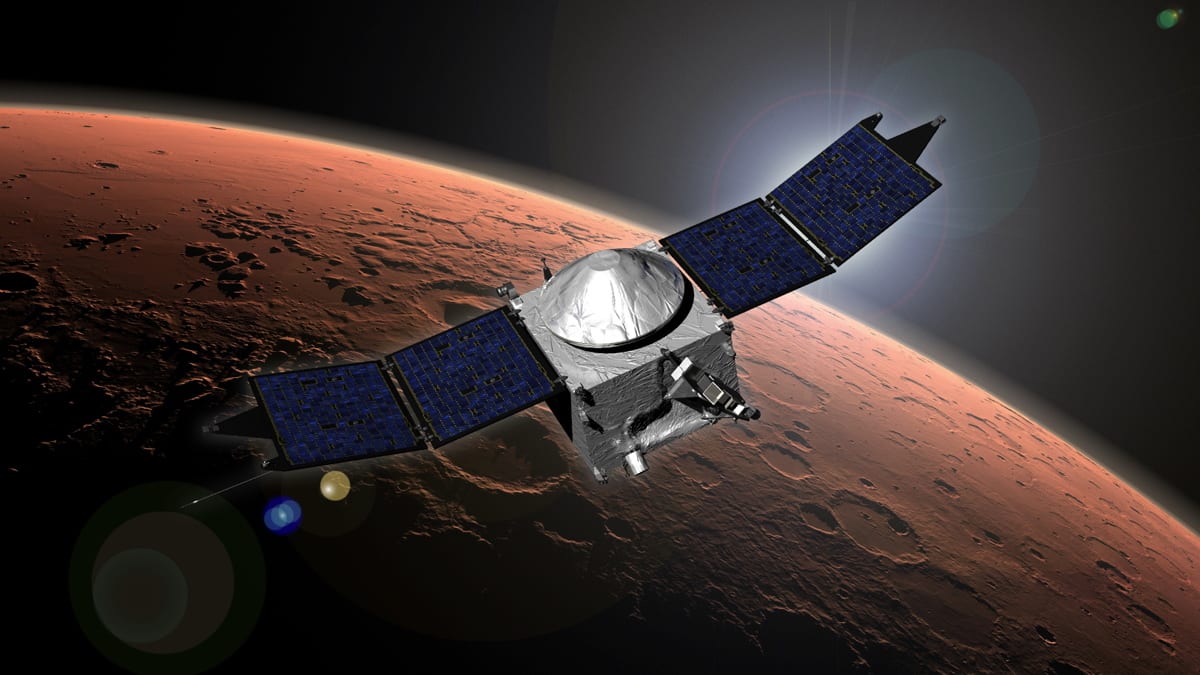
Scientists analyzing data from NASA's silent MAVEN spacecraft just discovered a rare space weather phenomenon in Mars' thin atmosphere that was thought to only exist around strongly magnetized planets like Earth. The finding could transform how we understand planets without protective magnetic shields.
Even as NASA works to reconnect with a silent Mars spacecraft, scientists studying its data just made a discovery that's rewriting what we know about how planets interact with space weather.
Researchers found the Zwan-Wolf effect happening in Mars' atmosphere for the first time ever. Until now, this phenomenon had only been spotted around planets with powerful magnetic fields like Earth, not in the thin air of a nearly defenseless world.
The discovery happened when scientist Christopher Fowler from West Virginia University noticed "very interesting wiggles" in data from NASA's MAVEN spacecraft. The readings came from December 2023, when a powerful solar storm slammed into Mars and temporarily amplified effects that are normally too weak to detect.
Here's why it matters: Mars lost most of its global magnetic field billions of years ago. Without that protective shield, the planet faces the solar wind directly, that constant stream of charged particles flowing from our sun.
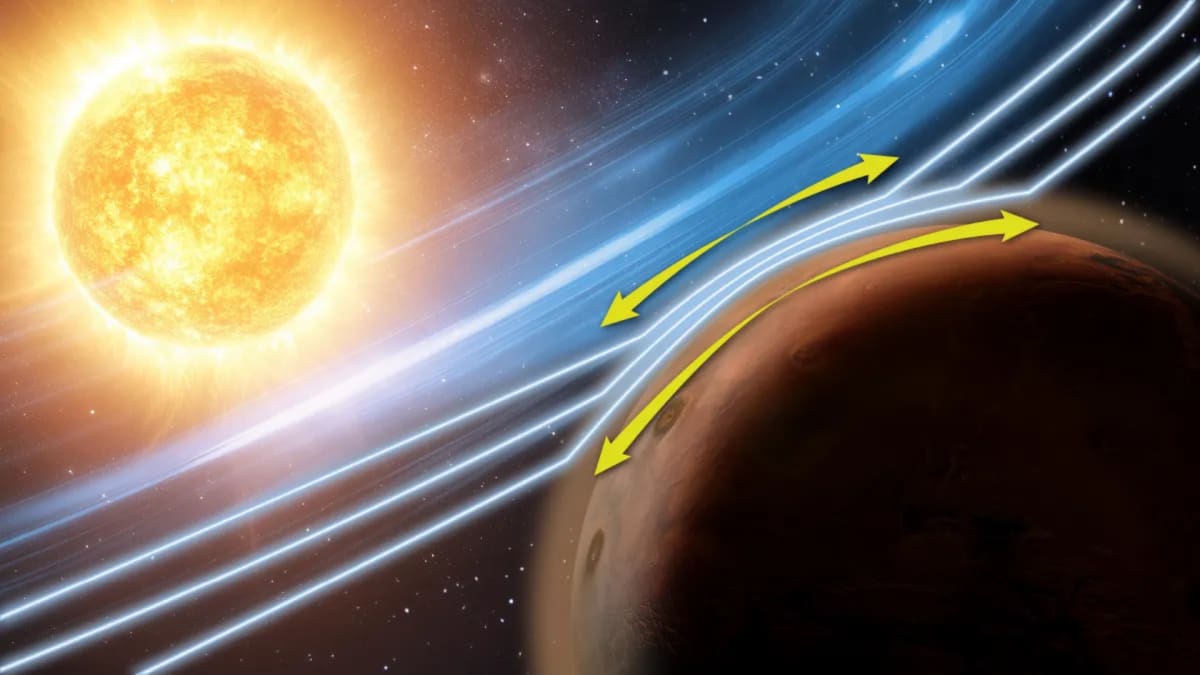
The Zwan-Wolf effect helps deflect those particles, acting like an invisible bumper that redirects space weather around a planet. On Earth, our strong magnetic field creates a vast protective bubble that does this job continuously.
During the solar storm, MAVEN recorded something unexpected about 12 hours after impact. Charged particles were being funneled and squeezed along temporary magnetic structures in Mars' upper atmosphere, behaving "like toothpaste coming out of a tube."
"No one expected that this effect could even occur in the atmosphere," Fowler said. "That's what makes this even more exciting."
Why This Inspires
This discovery opens doors we didn't even know existed. The finding suggests the phenomenon may actually happen all the time on Mars, just too subtly for instruments to normally catch it.
That means Mars isn't quite as defenseless as we thought. Even without a global magnetic field, the planet has its own way of interacting with space weather, creating temporary shields when solar storms strike.
The breakthrough could help scientists better understand other vulnerable worlds too, including Venus and Saturn's moon Titan. These places also lack strong magnetic protection, and now researchers have a new framework for studying how they survive in harsh space environments.
The timing adds poignancy to the discovery. MAVEN fell silent in December 2025 after disappearing behind Mars during a planned communications pause. NASA's attempts to reconnect haven't succeeded yet, though teams are still searching.
The spacecraft has been studying Mars since 2014, quietly collecting data that continues yielding surprises even now. Its observations are still teaching us that planets can be more resilient and adaptive than we imagined.
More Images

Based on reporting by Space.com
This story was written by BrightWire based on verified news reports.
Spread the positivity!
Share this good news with someone who needs it