Soil Bacteria Enzyme Breaks Down Plastic and Antibiotics
Scientists discovered a powerful enzyme in forest soil bacteria that can dismantle both plant-based plastic and penicillin-type antibiotics. The breakthrough suggests nature is adapting faster than expected to help solve our plastic pollution crisis.
Researchers at the University of Konstanz just found something remarkable hiding in ordinary forest soil: a bacterial enzyme that can eat plastic and destroy antibiotics at the same time.
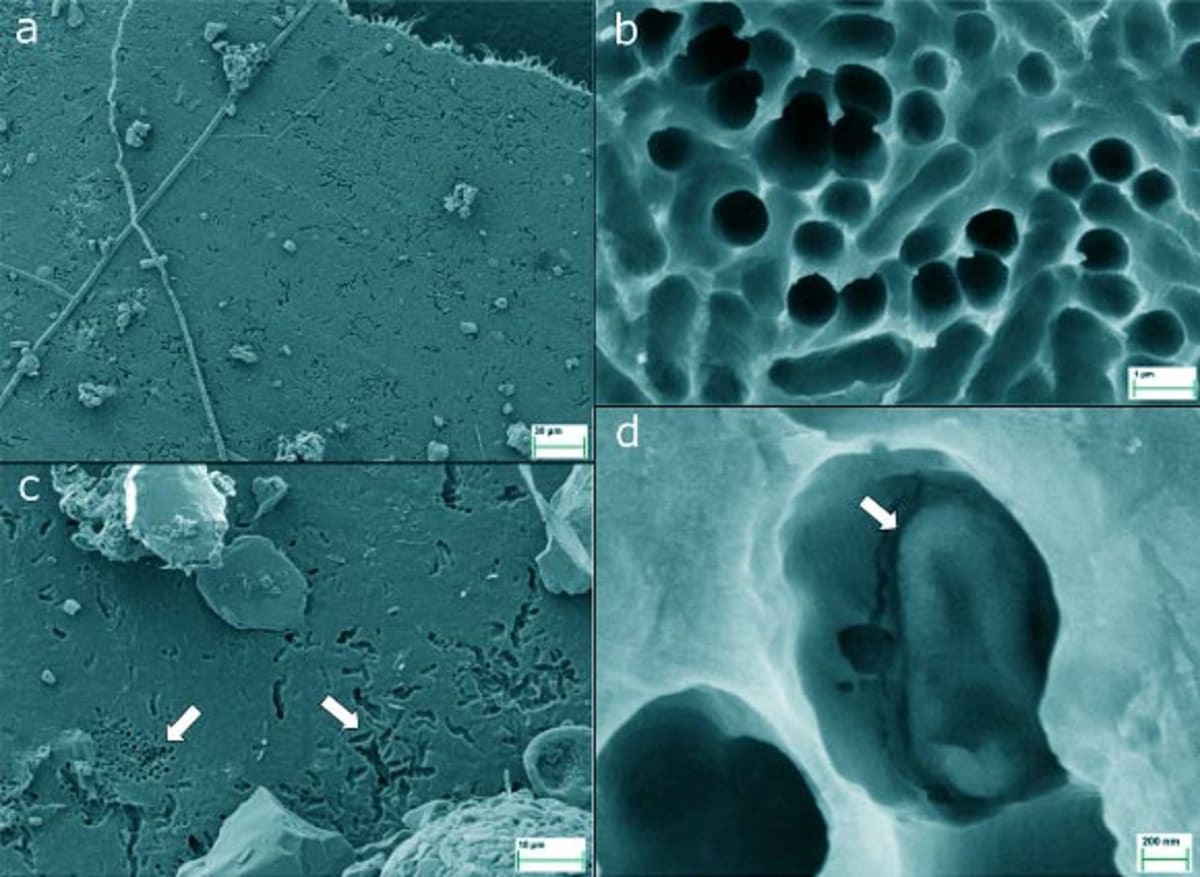
The team buried strips of biodegradable plastic called LCAP in the forest floor for over a year. When they dug them up, the plastic was riddled with tiny pits where hungry bacteria had been nibbling away at the material.
Dr. Harry Lerner and his colleagues sequenced the DNA of these plastic-eating microbes and found an enzyme they named LCPH1. The enzyme has an unusually wide active site that scientists nicknamed its "pac-man" shape because it can grab both plastic molecules and antibiotic drugs like penicillin and ampicillin.
The discovery happened almost by accident. The researchers were studying how bacteria break down new plant-based bioplastics made from long-chain molecules derived from plant oils. They chose to bury the plastic about ten centimeters deep in the forest's humus layer, where nature already breaks down cellulose and other plant materials.
What makes LCPH1 special is its dual ability. The enzyme not only dismantles the bioplastic into its basic components but also destroys penicillin-type antibiotics, stripping them of their bacteria-killing powers. This connection makes sense because the enzyme's structure resembles both plastic-eating esterases and beta-lactamases, the proteins bacteria use to resist antibiotics.
The Bright Side
The finding offers unexpected hope for tackling plastic pollution. Dr. David Schleheck, senior author of the study, points out that humans have only been dumping plastic into the environment in large quantities for 50 to 75 years. That's a blink of an eye in evolutionary terms.
Yet bacteria are already developing tools to break down these synthetic materials. The speed of this adaptation surprised even the scientists. "I find this encouraging, because it seems that bacteria can adapt to breaking down polyester plastics more quickly than we expected," Schleheck said.
The research suggests a path forward for addressing environmental plastic waste. If we focus on creating biodegradable plastics with chemical breaking points that bacteria can recognize and attack, nature might help us clean up the mess we've made.
The key is designing plastics with hydrolysable ester bonds, similar to the natural polyesters found in plants. These biochemical weak points give bacteria a foothold to start dismantling the material. LCAP and similar bioplastics already have these features built in.
The study was published this month in The ISME Journal and opens new questions about how microbes colonize plastic surfaces and what other capabilities they might be developing. Nature is working alongside us, adapting to our modern world faster than anyone imagined possible.
Based on reporting by Google News - Scientists Discover
This story was written by BrightWire based on verified news reports.
Spread the positivity!
Share this good news with someone who needs it