Solar Microgrids Now Beat Coal and Gas on Cost
Solar panels paired with batteries now generate cheaper electricity than coal or gas plants in countries worldwide. Ukraine, Ghana, and the Netherlands prove the technology works in vastly different settings.
Imagine keeping your lights on during wartime using nothing but sunshine stored in batteries. That's exactly what communities across Ukraine are doing right now, and new research shows this technology beats traditional power plants on cost in countries around the world.
Wood Mackenzie energy analysts studied solar-plus-storage systems in three very different countries: war-torn Ukraine, developing Ghana, and grid-congested Netherlands. The results surprised even experts. These clean energy systems already cost far less to operate than coal or gas plants.
The numbers tell a compelling story. Solar paired with battery storage currently costs around $50 per megawatt-hour or less to generate electricity. Coal and gas plants? They're stuck at $150 per megawatt-hour, three times higher.
Ukraine has become an unexpected proving ground for this technology. Despite facing a tenfold increase in Russian attacks on energy infrastructure this year, the country has kept power flowing. Entire industrial parks and residential neighborhoods have built their own solar plants with storage and disconnected from the vulnerable central grid entirely.
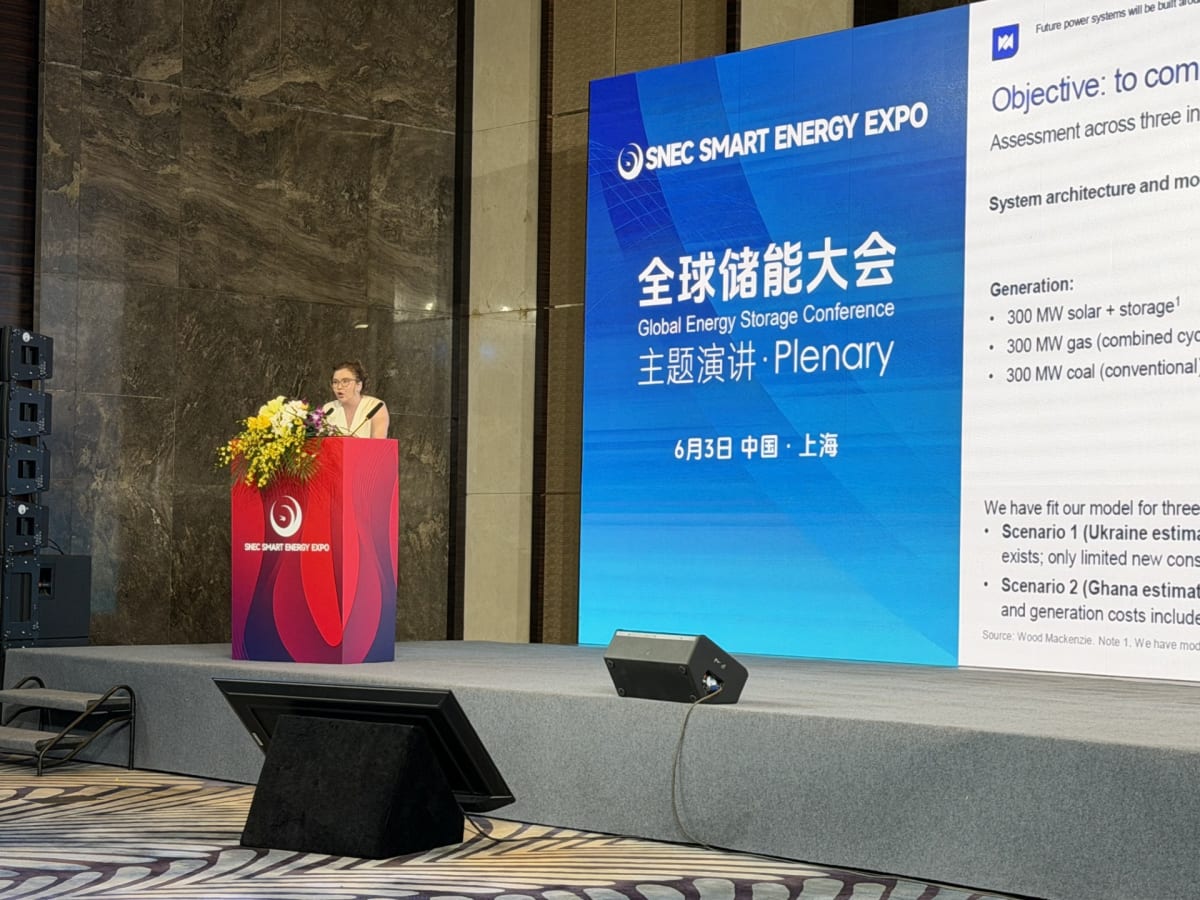
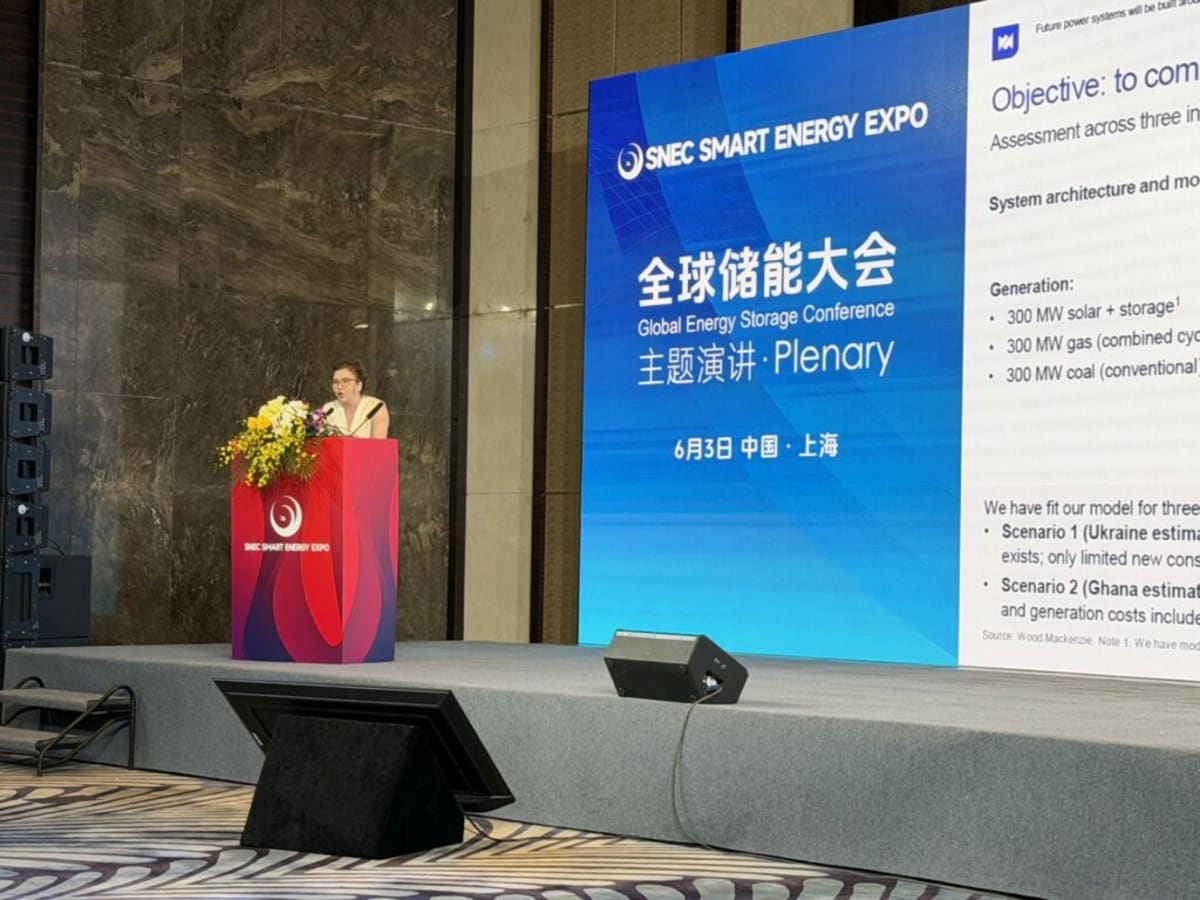
"Despite the full-scale war, Ukraine still installs at least 1 GW of solar every year," explained Yana Hryshko, Head of Global Solar Supply Chain at Wood Mackenzie. "Unofficially, no one really knows the total, because much of it is installed locally and completely off-grid."
The systems work by generating 300 megawatts of solar power and storing enough in batteries to dispatch 100 megawatts for either 4 or 12 hours. That means communities get reliable electricity day and night, rain or shine.
Ghana faces completely different challenges with virtually no existing grid infrastructure to build on. Yet the economics still favor solar-plus-storage over building new coal or gas plants. The Netherlands deals with an overcrowded grid packed with renewable energy, but placing solar and batteries close to where people need power solves that problem while cutting costs.
The Ripple Effect
The cost gap keeps growing wider. By 2060, solar with 4-hour storage will drop to just $32 per megawatt-hour, while fossil fuel costs remain stubbornly high. That means cleaner air, energy independence, and lower electricity bills for decades to come.
There's another hidden advantage that surprised researchers. Gas turbines for new power plants take 3 to 6 years to obtain and install. Solar panels and batteries? They can be deployed in a fraction of that time, bringing power to communities when they need it most.
In the Netherlands, building solar-plus-storage actually costs 40% less upfront than equivalent coal and gas plants when you account for connecting to the grid. Even in Ukraine, the upfront cost now matches or beats coal.
These systems prove especially valuable because they're modular and resilient. If one section fails, the rest keeps working. If demand grows, communities can add more panels and batteries without rebuilding everything.
Three different countries, three different energy challenges, one solution that works everywhere while cleaning the air and saving money.
More Images


Based on reporting by PV Magazine
This story was written by BrightWire based on verified news reports.
Spread the positivity!
Share this good news with someone who needs it