%2Ffile%2Fattachments%2Forphans%2FIMG_6257_752857.jpg)
South African Smart Device Cuts Peak Power Load by 20%
A South African company has created a smart geyser device that could save the national grid from peak-hour strain while cutting electricity costs. The technology is already rolling out across major cities.
Water heaters quietly devour 40% of South Africa's residential electricity, and one company just figured out how to make them smarter.
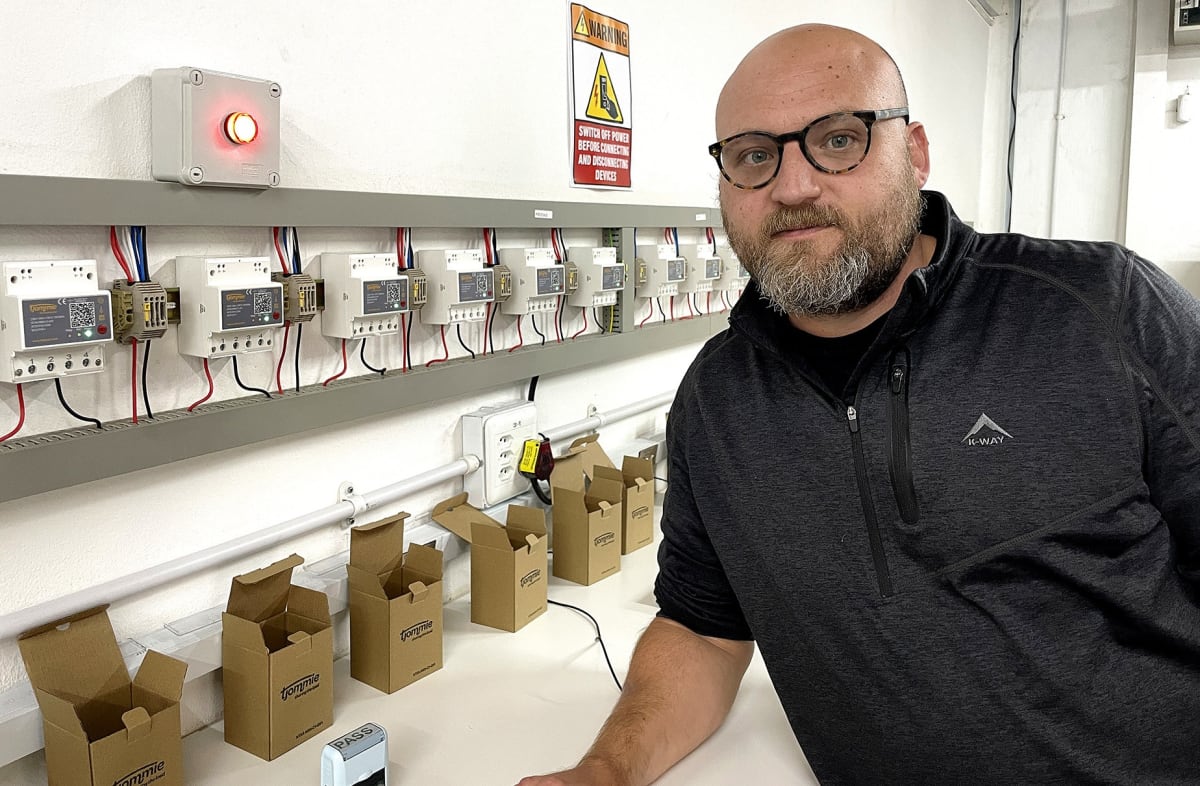
Neura, based in Nelson Mandela Bay, has developed Tjommie, a smart device that manages when home geysers heat water. The goal is simple: shift electricity use away from expensive peak hours when the national grid struggles most.
CEO Ignus du Toit explains that during morning and evening rush hours, geysers can account for 20% of total electricity demand. That's when Eskom, South Africa's power utility, fires up its most expensive generators, burning diesel and heavy fuel oil just to keep the lights on.
The device works by learning each household's unique hot water patterns. After electricians install it on the home's distribution board in about 30 minutes, Tjommie monitors how quickly the geyser heats up, cools down, and cycles on and off.
Using that data, the system calculates a "hot water index" that predicts how much hot water remains available at any moment. If the geyser just heated up and reads 100 on the index, Tjommie knows it can safely switch it off for four or five hours without leaving anyone with cold showers.
The technology isn't entirely new. Eskom has used older ripple relay systems for decades to control geysers during peak demand. But those crude systems switched entire neighborhoods at once, regardless of individual household needs.
Neura's approach targets each home individually, making the system far more efficient and user-friendly. The device communicates through cellular networks, allowing real-time adjustments based on grid conditions.
The rollout is moving fast. Installations are already underway in Nelson Mandela Bay neighborhoods like Summerstrand, Despatch, and Walmer. Neura has secured contracts in Cape Town and Ekurhuleni, with discussions happening in Tshwane, eThekwini, City Power, and Mossel Bay.
Eskom is backing the program through its Distributed Demand Management Programme, which incentivizes technologies that reduce grid pressure. Neura contracts with Eskom to manage demand during two of the five daily peak hours, while municipalities handle the remaining three.
The Ripple Effect
The impact extends beyond just keeping the lights on. When the grid avoids peak-hour strain, Eskom saves money by not firing up expensive diesel generators. Those savings can flow to municipalities and eventually to households through lower electricity costs.
For a country that's battled load shedding and power shortages, demand-side management offers a path forward that doesn't require building new power plants. Instead, it optimizes what's already in homes across the nation.
The device represents a shift in thinking about electricity, from simply generating more power to using existing power more intelligently.
South Africa is turning its water heaters into grid allies, one smart device at a time.
More Images

%2Ffile%2Fattachments%2Forphans%2FIMG_6258_475918.jpg)
Based on reporting by Daily Maverick
This story was written by BrightWire based on verified news reports.
Spread the positivity!
Share this good news with someone who needs it